Critical analysis and contextualisation of contemporary key societal debates about pressing social and environmental issues are the core concern of this professorship. Bridging the social sciences and the humanities, it analyses cultural, socio-political, and environmental phenomena and centres major fault lines of public conflicts. The professorship pursues a dual public orientation by responding to public debates and communicating with a wider audience beyond academia.
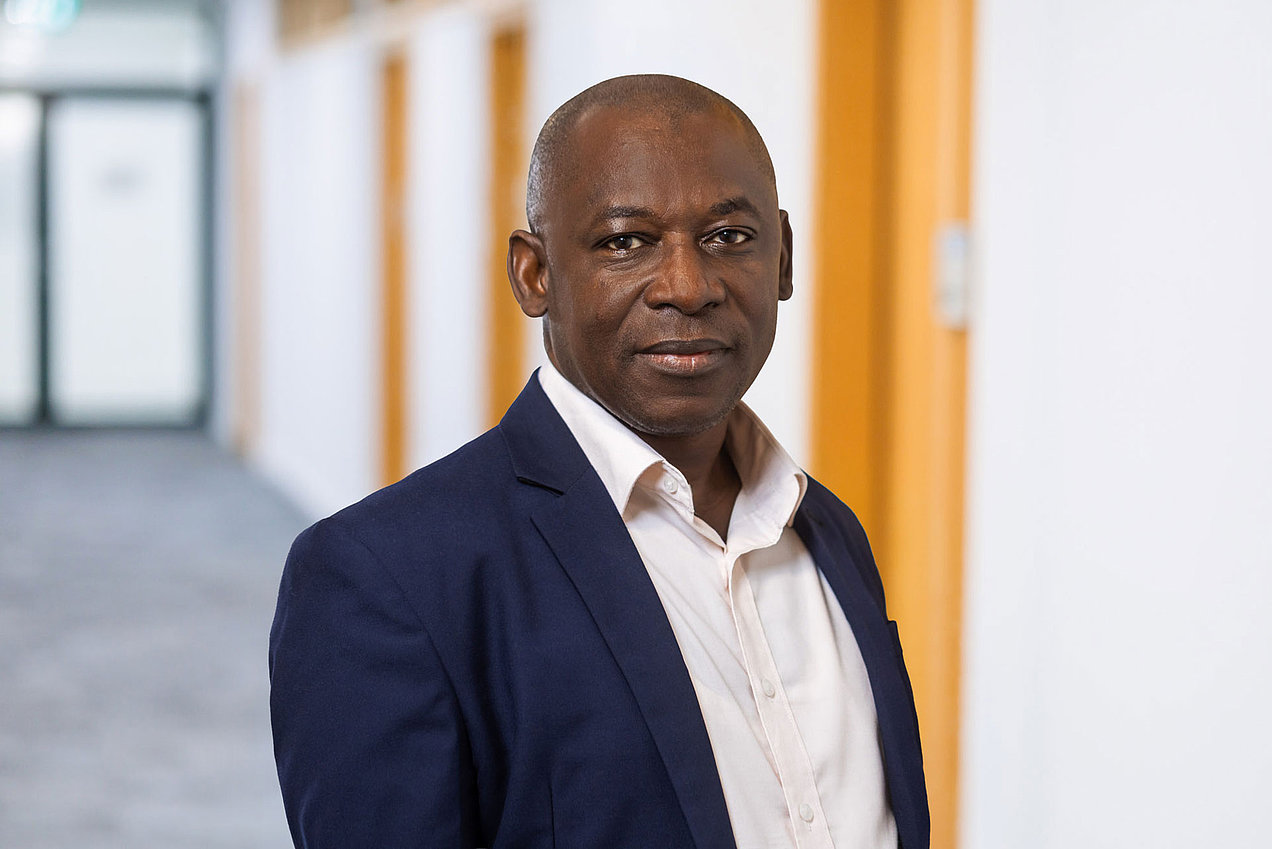
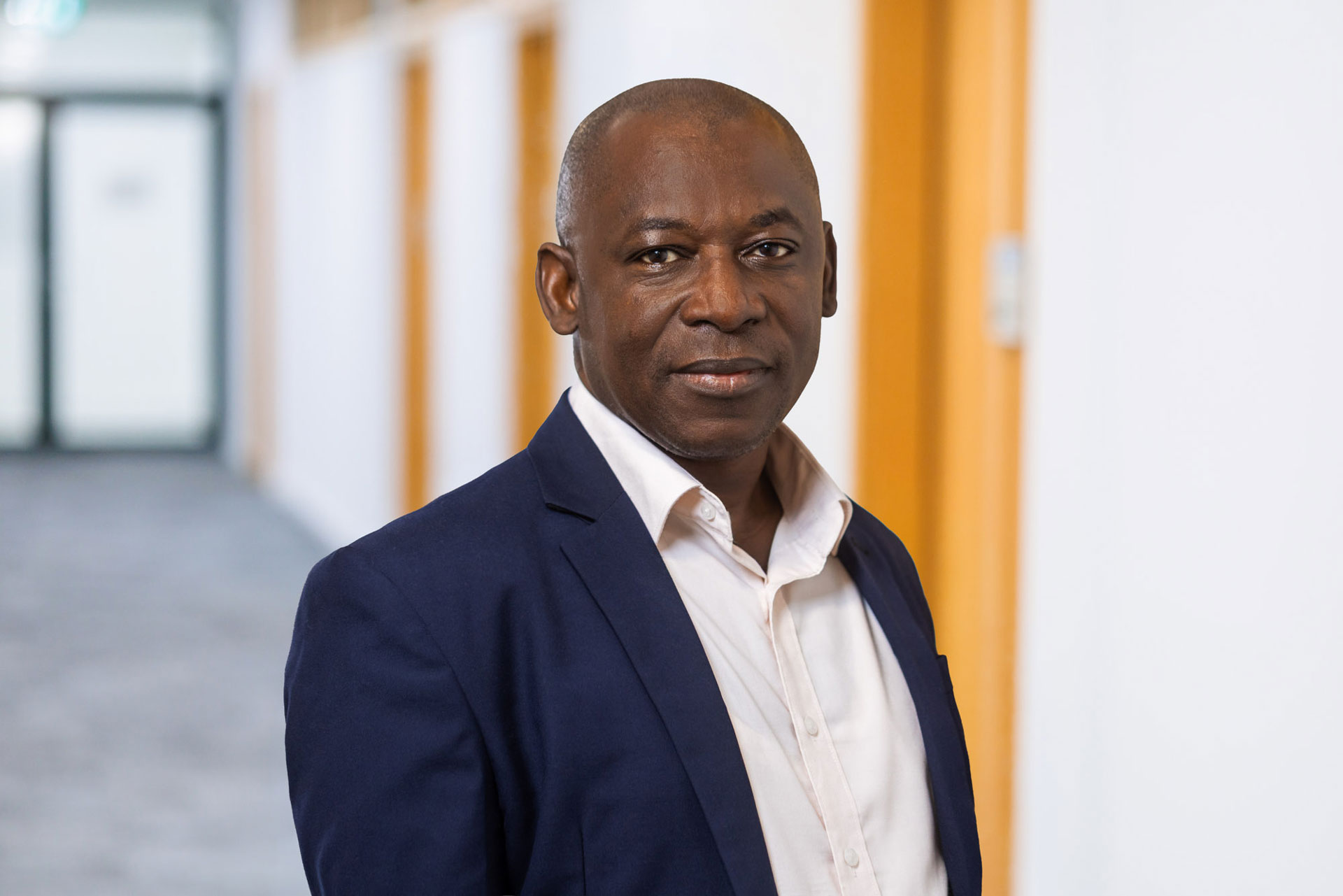
Engaging the public in debates about current societal issues such as environmental problems and migration is a key objective of Prof. Sule Emmanuel Egya. He took up the research professorship ‘Public Social Sciences and Humanities: Key Societal Debates’ in April 2026.

The research professorship bridges the broad spectrums of the social sciences and the humanities, applying rigorous speculative thinking approaches to the analysis of cultural, socio-political, and environmental phenomena and data. It foregrounds the roles of imaginative writing, cultural arts, and media technology in fostering rational debates and cross-disciplinary, public-facing communication. The aim of the professorship is to centre major fault lines of public conflicts about pressing social and environmental issues in such a manner that the public can benefit from research insights, while the academy receives fruitful feedback.
The professorship intends to establish new spaces for debates that accommodate diverse voices, views, and narratives. It seeks to bring on board marginalised positions and repressed knowledge systems. The underlying vision is that of a planet in balance where different systems and epistemologies co-exist on an equal footing and are able to communicate and interact. This also involves recognising the ways in which heterogenous knowledge shapes human and non-human communities.
To achieve these goals, the professorship has the following three inter-related research focus areas.
The central question this focus area seeks to answer is: In what ways might repressed traditional practices, systems, and worldviews of indigenous societies in the Global South, most of them formerly colonised, help us ‘repair’ our relationship with our earth? Working with literary and media data, the aim is to provide a pluriversal terrain of diverse ecological knowledges and practices that might complement universally accepted techno-scientific methodologies as the world grapples with socio-ecological crises.
When cross-border mobilities are discussed in relation to the environment, attention has mostly focused on the ways in which ecological crises have propelled the movement of people. This focus area shifts the paradigm by looking at how embodied environmental practices, techno-scientific beings (such as non-humans sharing space with humans), and natural beings in home communities influence the attitude, behaviour and actions of migrant subjects in their host communities. In what ways might the embodied and material environmentalism, which travels with the migrant, help us understand how the migrant subject accepts or rejects their host community? Answering this question could help societies manage tensions arising from border-related transformations.
The third focus area is centred on the ongoing mineral boom in Africa, which, like the oil boom of the 1960s and 1970s, is wrapped in a rhetoric of developmentalism. This rhetoric is privileged over the realities that constitute the negative effects of the mineral boom. These effects include arbitrary and unregulated digging of pits, destruction of water bodies, air pollution, illegal mining and black-market racketeering, child labour, insecurity, and the wiping-out of entire villages where minerals are found. The professorship is interested in historically and theoretically contextualising the conditions of mineral extractions related to the energy transition, but also in the acts of cultural struggle that manifest in the emerging literary, artistic, and filmic works about the underside of the mineral boom in Africa.
Prof. Sule Emmanuel Egya took up the research professorship in mid-April 2026. Tanja Literski joined the team as administrative assistant in July 2026.