• Research Group

Global Sustainability Governance

This research group investigates the politics of sustainability and (post-)growth in leading international organisations. Rather than asking whether green growth is feasible or whether instead post-growth is required for socio-ecological transformations, it focuses on the lessons that specific organisations at the supra- or international level draw from current sustainability debates for their work. The research group will thus contribute to further academic and public dialogue on global unsustainability as one of the most pressing problems of our age.

News & Highlights

Research Profile

The junior professorship examines practices of governing (un)sustainability in global politics. The associated research group takes the green growth versus post-growth debate as a starting point to analyse how international organisations position themselves on sustainability questions. The aspired innovation of the group’s research is to illuminate the grey areas and render visible the nuances of these organisations’ policy stances, which can be more complex than simple endorsements or rejections of the growth paradigm. Most notably, organisations may support post-growth ideas under a variety of labels – that is, without invoking the contested language of “post-growth” or even “degrowth”. 

While the professorship is broadly situated in the intersecting fields of International Relations and International Political Economy, its theoretical and methodological approach is interdisciplinary, drawing especially on scholarship in ecological economics, (organisational) sociology and sustainability studies. One of its ultimate goals is to contribute socially relevant research that helps society as a whole to transition to a truly sustainable world.

The professorship is based at the Institute for Socio-Economics (IFSO) of the University of Duisburg-Essen. Matthias Kranke was appointed to the professorship in April 2025.


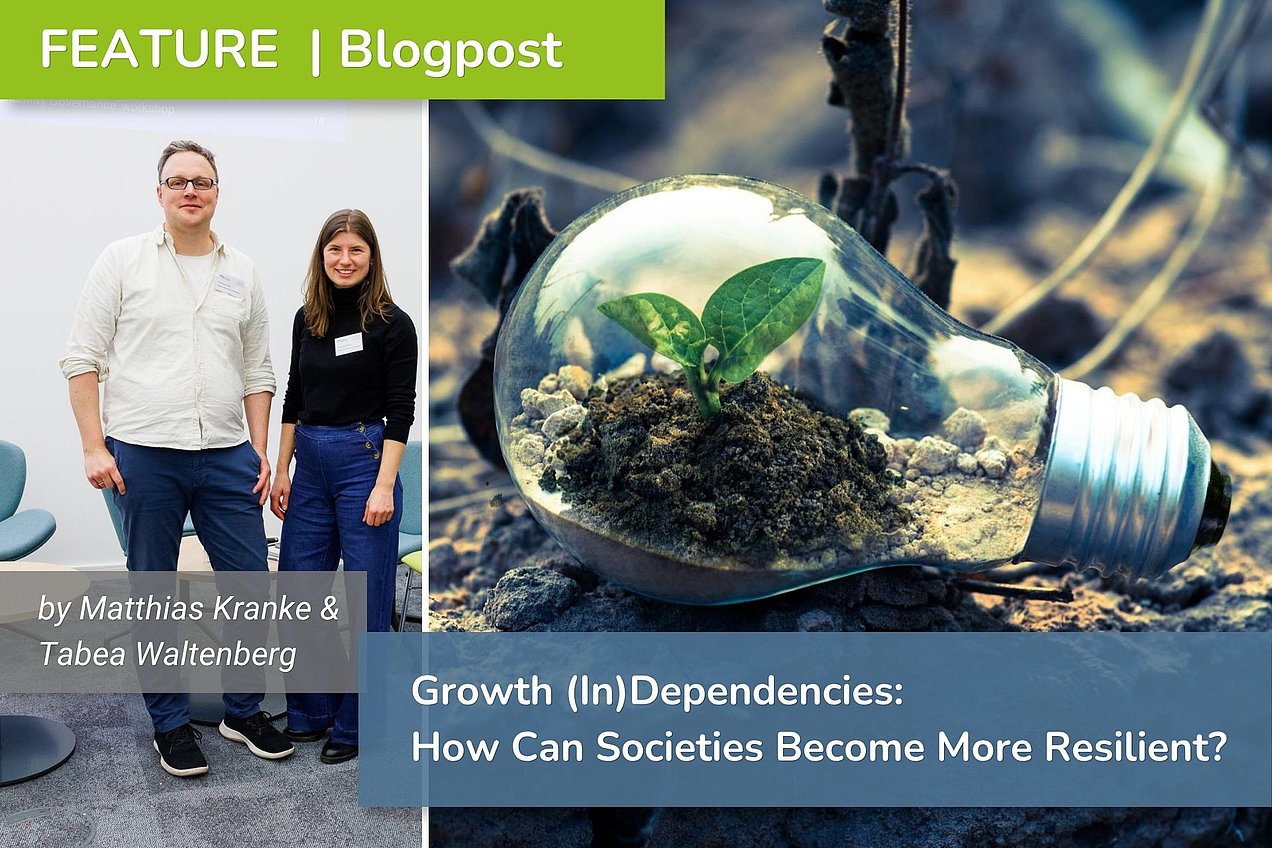
a lightbulb lying on sand, filled with soil and a small green plant growing from it

Team

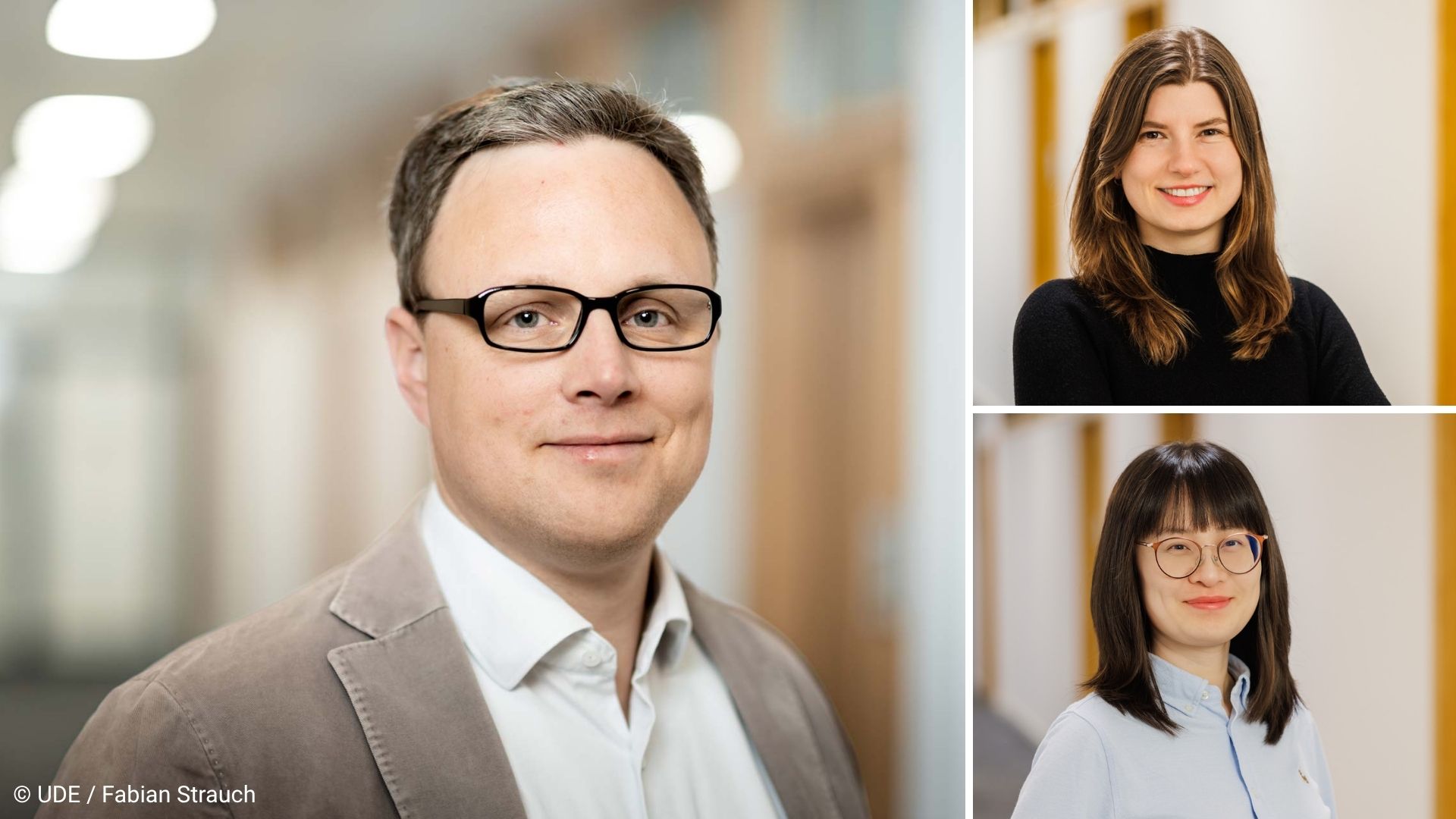
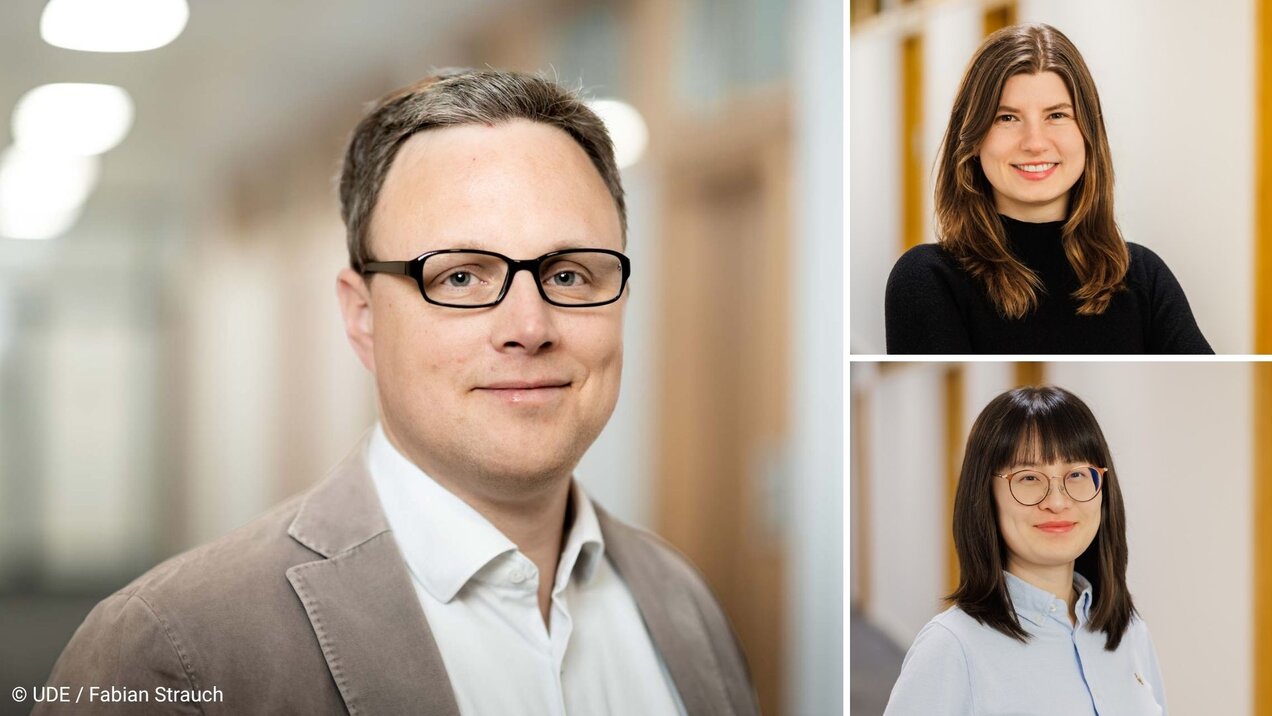
Prof. Matthias Kranke took up the position of the junior professorship in April 2025. He leads the research group 'Global Sustainability Governance'. Tabea Waltenberg and Lichen Tian joined the team as doctoral researchers in May and October 2025 respectively.

Detailed information about the staff members of the research group is available on the team page.
Team

collage with portrait photos of team members © Photo Kranke: Fabian Strauch

Publications

  • 2026
  • #Article
  • #RG Kranke
  • #peer-reviewed
Janischewski, AnjaBohnenberger, KatharinaKranke, MatthiasVogel, TobiasDriouich, RiwanFroese, TobiasGerold, StefanieKaufmann, RaphaelKeyßer, LorenzNiethammer, JannisOlk, ChristopherSchmelzer, MatthiasYürük, AslıLange, Steffen

Janischewski, Anja et al.

Defining growth dependence

Many socio-economic systems require positive economic growth rates to function properly. These growth dependencies pose serious challenges given uncertainty about future growth rates and the role of economic growth as a driver of environmental crises. Thus, identifying and transforming socio-economic systems that currently rely on growth for their adequate functioning is a crucial step towards effective sustainability transformations. To facilitate conceptual clarity, we propose a general definition and framework for operationalizing the concept of “growth dependence” through four elements: (1) the system under investigation, (2) the unit of growth measurement, (3) the meaning of “growth”, and (4) the functions or properties of the system relevant for human well-being. We illustrate the impact of varieties in definitions on assessment outcomes by applying the framework to areas widely seen as growth-dependent: labor markets, social insurance and public finance. Our framework helps researchers to develop a more coherent understanding of growth dependence, a prerequisite for assessing policy options towards growth independence.

In: Sustanability Science | 2026

  • #In book
  • #RG Kranke
Kranke, Matthias

Kranke, Matthias

International Organizations

In: Stockemer, Daniel; Sawyer, Stephen W.; Gagnon, Audrey (ed.): IPSA Companion to Political Science | Cham: Springer Nature | 2026 | pp. 1-4

  • #Article
  • #RG Kranke
Cornel, BanKranke, Matthias

Cornel, Ban / Kranke, Matthias

Macro-critical but market-centric: the IMF’s half-turn on climate

This article examines the evolving climate policy stance of the International Monetary Fund (hereafter the IMF or the Fund), highlighting an evolution towards greater acceptance of climate policy, as well as tensions between its expanded green rhetoric and the practical constraints of its fiscal mandate. Using document analysis and, for contextualisation, a handful of semi-structured interviews with IMF officials, we argue that, in the post-pandemic period, the Fund has expanded the ambitious climate rhetoric it had adopted shortly before the pandemic. However, we also provide evidence from different types of IMF loan arrangements to show that the translation of these commitments into substantive policy advice into lending operations has remained uneven at best. The IMF’s increasing emphasis on the macro-criticality of climate change has been implemented more systematically under the new, climate-sensitive Resilience and Sustainability Facility (RSF) than under standard loan facilities. While the IMF’s capacity to marry fiscal stability with climate action in operations varies with the type of loan instrument deployed, our analysis suggests that the Fund has layered climate concerns onto an otherwise largely unchanged neoliberal toolbox. As a result, its ‘climate turn’ has been no more than a half-turn, grounded in an embrace of green neoliberalism.

In: Third World Quarterly | 2026 | pp. 1-18

  • #Article
  • #RG Kranke
Kranke, MatthiasSimangan, Dahlia

Kranke, Matthias / Simangan, Dahlia

Wanted? The Elusiveness of (Post-)Growth in Anthropocene Research

There is now wide agreement that the Earth has entered a new geological epoch as a result of human activities, which is often encapsulated in the concept of the “Anthropocene.” Meanwhile, there remains considerable debate about the impact of economic growth on planetary ecosystems. In this article, we bring these two aspects together by exploring patterns and biases of knowledge production on the Anthropocene in International Relations (IR) as a discipline with a mandate to study “the global.” We grasp general publishing patterns through a bibliometric analysis of journal articles in IR during the 2000–25 period, which reveals that the increasing focus on the Anthropocene still leaves (post-)growth questions largely sidelined. A closer reading of the ten most-cited articles in the sample further indicates that growth is at best an afterthought in much IR scholarship on the Anthropocene. Only when considering additional contributions, including from the cognate field of International Political Economy (IPE), with an explicit interest in (post-)growth, do links between the Anthropocene and the pursuit of growth emerge. The ideational and material dynamics involved in this pursuit thus remain strangely absent from mainstream IR debate about the causes and consequences of the Anthropocene.

In: New Global Studies | 2026 | pp. 1-21

  • 2025
  • #Article
  • #RG Kranke
  • #peer-reviewed
Campbell-Verduyn, MalcolmKranke, Matthias

Campbell-Verduyn, Malcolm / Kranke, Matthias

(Post-)growth infrastructures

This introductory paper outlines and situates the special issue’s core concept of growth infrastructures, defined as socio-material arrangements oriented towards or facilitating the pursuit of economic growth. We argue that the quest for continuous economic growth is not merely a matter of policy or institutional design, but instead more deeply embedded in intersections of ‘hard’ physical objects and ‘softer’ social relations. Mobilizing scholarship from across the social sciences, we bridge the study of infrastructures with the study of (post-)growth, two research agendas whose disconnect has inhibited deeper insights into the infrastructural relations underpinning (post-)growth regimes. Deliberate foregrounding of the relational underpinnings of growth is necessary, we contend, to better account for how infrastructures and the politics of (post-)growth are socio-materially entangled.

In: Economy and Society 54 | 2025 | pp. 597-619

  • #Book
  • #RG Kranke
Campbell-Verduyn, MalcolmKranke, Matthias

Campbell-Verduyn, Malcolm / Kranke, Matthias (ed.)

(Post-)Growth Infrastructures. Economy and Society 54(4) (Special Issue)

London: Taylor & Francis | 2025

  • #Article
  • #RG Kranke
  • #peer-reviewed
Kranke, Matthias

Kranke, Matthias

Boundary work against identity stress: atrocity stories among the Bretton Woods twins

How do transnational actors handle institutional configurations in which they need or are expected to work together, even though cooperation is likely to diminish their distinctiveness? For officials of international organizations (IOs) whose mandates and memberships overlap, this tension can induce lasting identity stress. In this article, I argue that one way for IO officials to cope with this stress is by mobilizing ‘atrocity stories’ as boundary work devices. To exemplify the dynamics surrounding this widely overlooked inter-organizational practice, I examine a prominent case of ‘twin’ organizations: the relationship between the International Monetary Fund (IMF) and the World Bank. I draw on more than 40 semi-structured interviews to demonstrate that both IMF and World Bank officials field seemingly trivial atrocity stories to shore up their organizational identities while acknowledging obvious ideational and operational similarities between the IOs. Thus, they not only determine what are shared tasks and what are not, but also delineate who they are as representatives of two routinely and closely interacting IOs. The analysis clarifies how a reliance on atrocity stories can help actors to tame the identity stress that stems from their interactions.

In: International Affairs 101 | 2025 | pp. 841-858

  • #Article
  • #RG Kranke
  • #peer-reviewed
Hofius, MarenKranke, Matthias

Hofius, Maren / Kranke, Matthias

Boundary work and the (un)making of global cooperation: mapping the terrain

While borders are on the rise in both political practice and academic research, more mundane practices of boundary work continue to make, remake and unmake transnational knowledges, spaces and identities. In this special section, we argue that global politics unfolds through boundary work, an understudied but highly effective set of ordering practices that shape the conditions for and dynamics of global (non-)cooperation. We leverage recent innovations in the study of boundary work in other fields to transcend the conventional portrayal of boundaries as instruments of exclusion and competition. Instead, we equally attend to their potential to facilitate inclusion and cooperation between otherwise differently positioned actors. Building on this conceptual foundation, the contributions to this collection offer novel, empirically grounded insights into diverse types of boundary work (competitive, collaborative and configurational) across several important transnational domains and institutional sites. These insights will be of particular relevance to practitioners of global politics, who regularly confront boundaries. Overall, we encourage scholars of International Relations to pay more attention to the constitutive effects and dynamics of boundary work in global politics.

In: International Affairs 101 | 2025 | pp. 761-778

  • #In book
  • #RG Kranke
Kranke, Matthias

Kranke, Matthias

From good to bad? The contested desirability of economic growth

Are policies in pursuit of economic growth good or bad? This question continues to divide thinkers, especially against the backdrop of escalating socio-ecological problems. In this chapter, I approach the polarized debate about growth through a constructivist lens that regards its (un)desirability as a social fact. I undertake an exploratory analysis of the policy position of the German Federal Ministry for Economic Affairs and Climate Action (BMWK) under the leadership of Robert Habeck from the Green Party. The empirical evidence leads me to argue that the BMWK remains firmly in the pro-growth camp. Notably, the ministry insists that ‘sustainable growth’ can be attained with the right policies. It does not even entertain growth-critical ideas at a time when post-growth arguments are gaining more traction. Overall, the chapter suggests that growth-friendly policies are not good or bad as such, but certain social groups deem them to be good or bad.

In: Roberge, Ian / McKeen-Edwards, Heather / Campbell-Verduyn, Malcolm (ed.): Ineffective Policies: Causes and Consequences of Bad Policy Choices | Bristol: Bristol University Press | 2025 | pp. 31-45

  • #Article
  • #RG Kranke
  • #peer-reviewed
Bosi-Moreira, BrunaKranke, Matthias

Bosi-Moreira, Bruna / Kranke, Matthias

Global Green Visions and World Order in the Anthropocene

This special issue on what we call global green visions offers a vantage point for understanding global environmental governance in the Anthropocene through the lens of world order(s). Specifically, we suggest in this introduction that a variety of international and transnational actors craft green visions, thereby not only outlining what (un)sustainability means for them but also promoting distinct conceptions of future world order. In other words, ideas about sustainability are not politically innocent; instead, each explicitly or implicitly revolves around a particular conception of world order. The special issue bridges and complements existing work in international relations and global environmental politics by examining how the global green visions of various actors interact with understandings of world order, rather than merely acknowledging that claims about what is “sustainable” and “unsustainable” are contested. In fact, global green visions are contested precisely because they entail renegotiations of how to govern under the increasingly difficult conditions of the Anthropocene.

In: Global Environmental Politics | 2025 | pp. 1-10

  • #Article
  • #RG Kranke
  • #peer-reviewed
Campbell-Verduyn, MalcolmKranke, Matthias

Campbell-Verduyn, Malcolm / Kranke, Matthias

Post-growth tokens or token post-growth? Bitcoin, alt-coins and infrastructural evolution in digital finance

This paper examines the paradoxical (post-)growth trajectory of Bitcoin, the first ‘cryptocurrency’, as a case of infrastructural change in digital finance. Bitcoin's founding phase revolved around the principles of self-governance and self-limitation, which combined to create a commitment to degrowing the financial system and limiting monetary production to impede accumulation. Yet growth logics soon began to unfold after Bitcoin's creation in 2009. How and why did that shift occur, and with what implications? We rely on white papers and outputs of alt-coin founders to trace the socio-technical relations underpinning the emergence and expansion of ‘alt-infrastructures’ oriented around growth. We demonstrate how what was originally designed as a post-growth infrastructure largely, albeit not fully, succumbed to conventional growth dynamics over a fairly short period.

In: Economy and Society 54 | 2025 | pp. 765-788

  • #In book
  • #RG Kranke
Bosi-Moreira, BrunaKranke, Matthias

Bosi-Moreira, Bruna / Kranke, Matthias

World (Re)Ordering through Green Growth and Degrowth Futures

In: Wilson Rowe, Elana / Beaumont, Paul / de Oliveira Paes, Lucas (ed.): Governing Nature and the Making of World Order | Bristol: Bristol University Press | 2025 | pp. 127-142