
by Matthias Kranke & Tabea Waltenberg

Can economic growth and environmental sustainability be reconciled? Matthias Kranke and Tabea Waltenberg review the insights gained at their workshop on how growth dependencies may be rethought and reduced – to make societies more resilient and economies more sustainable.

In November 2025, our research group ‘Global Sustainability Governance’ gathered over 30 researchers from all levels of experience (from Master’s students to professors) and various research institutions in Germany and abroad to discuss current work within an interdisciplinary setting. Entitled ‘Growth (In)Dependencies’, the workshop invited contributions from scholars working in diverse fields, including heterodox economics, International Relations, philosophy, and sustainability studies, and provided a space to exchange views on research and practice relating to growth (in)dependencies.
What primarily motivated our team to organise this event was the observation of a continued bifurcation of the research field, with one camp tacitly or openly accepting (green) growth and another calling for going beyond growth. To put it simply, the big question here is whether continuous economic growth and environmental sustainability can be reconciled or not. Debates about growth (in)dependence can bridge the stark differences between green growth and post-growth approaches to some extent. In fact, contributions to the growth-critical literature repeatedly identify growth dependencies as major obstacles to realising much-needed sustainability transformations. For example, scholars discuss the growth dependence of social security systems, public services, sectors of the economy and the military. Yet research on growth (in)dependencies is still in its infancy. Consequently, there is little consensus which measures could free contemporary societies from growth lock-ins to help overcome the widely unquestioned acceptance of economic growth as a policy goal.
Growth dependencies can be analysed at various levels: the international, the supra-national (that is, European), the national and the local level. The contributions to the workshop yielded several key insights, including:
Across the different contributions, three major conclusions emerged.
Overall, the workshop offered both abstract and practical lessons about how growth dependencies may be rethought and reduced. In doing so, the event permitted glimpses into potential future societies in which low or even zero growth would not have dramatic consequences.
The workshop was co-organised by Matthias Kranke and Tabea Waltenberg with support from the other members of the research group team: Isabell Daniels, Jassin El-Kordy and Lichen Tian. It was the first event of the annual international workshop series on ‘Global Sustainability Governance’. The next workshop, planned to take place in November 2026, will focus on transnational planning in the context of the global ecological crisis.
Conte Grand, Mariana (2016): ‘Carbon emission targets and decoupling indicators’, Ecological Indicators, 67, pp. 649–656. DOI: https://doi.org/10.1016/j.ecolind.2016.03.042
Corlet Walker, Christine / Druckman, Angela / Jackson, Tim (2024): ‘Growth dependency in the welfare state – An analysis of drivers in the UK’s adult social care sector and proposals for change’, Ecological Economics, 220, 108159. DOI: https://doi.org/10.1016/j.ecolecon.2024.108159
European Commission (2016) ‘European Semester thematic factsheet: Resource efficiency’, 16 November, Brussels: European Commission, https://commission.europa.eu/document/download/708b320b-5494-4b1d-85cf-ed2013e6dfce_en?filename=european-semester_thematic-factsheet_resource-efficiency_en.pdf (accessed 23 July 2026).
Gerber, Julien-François / Raina, Rajeswari S. (2018): ‘Post-growth in the Global South? Some reflections from India and Bhutan’, Ecological Economics, 150, pp. 353–358. DOI: https://doi.org/10.1016/j.ecolecon.2018.02.020
Hardt, Lukas / O’Neill, Daniel W. (2017): ‘Ecological macroeconomic models: Assessing current developments’, Ecological Economics, 134, pp. 198–211. DOI: https://doi.org/10.1016/j.ecolecon.2016.12.027
Jackson, Tim (2016): Prosperity without Growth: Foundations for the Economy of Tomorrow, 2nd edition. Abingdon: Routledge.
Janischewski, Anja et al. (2026): ‘Defining growth dependence’, Sustainability Science, 21(3), pp. 1311–1327. DOI: https://doi.org/10.1007/s11625-026-01808-w
Kallis, Giorgos et al. (2025): ‘Post-growth: The science of wellbeing within planetary boundaries’, The Lancet Planetary Health, 9, pp. e62–e78. DOI: https://doi.org/10.1016/S2542-5196(24)00310-3
Keyßer, Lorenz / Steinberger, Julia / Schmelzer, Matthias (2025): ‘Economic growth dependencies and imperatives: A review of key theories and their conflicts’, Ecological Economics, 238, 108745. DOI: https://doi.org/10.1016/j.ecolecon.2025.108745
OECD (2011): Towards Green Growth. Paris: OECD Publishing.
Tapio, Petri (2005): ‘Towards a theory of decoupling: degrees of decoupling in the EU and the case of road traffic in Finland between 1970 and 2001’, Transport Policy, 12(2), pp. 137–151. DOI: https://doi.org/10.1016/j.tranpol.2005.01.001
UNEP (2011): Towards a Green Economy: Pathways to Sustainable Development and Poverty Eradication. Nairobi: United Nations Environment Programme.
van Eynde, Reo et al. (2026): ‘What is required for a post-growth model?’, Ecological Economics, 243, 108928. DOI: https://doi.org/10.1016/j.ecolecon.2026.108928
Wiman, Laua (2024): ‘Are pensions “growth-dependent”?’, Sustainability: Science, Practice and Policy, 20(1), 2372874. DOI: https://doi.org/10.1080/15487733.2024.2372874
World Bank (2012): Inclusive Green Growth: The Pathway to Sustainable Development. Washington, DC: World Bank.
 ©
© UDE/Fabian Strauch
©
© UDE/Fabian Strauch
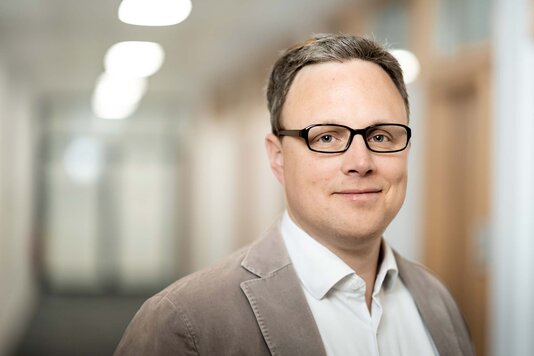
Prof. Matthias Kranke
Junior Professor | Research Group 'Global Sustainability Governance'
Phone: +49 201 183 65 67
Matthias Kranke has been Junior Professor of Global Sustainability Governance since April 2025. His current research focuses on the global governance of intersecting social, economic and ecological issues. Within this scope, Matthias pays particular attention to the tensions between the norm of economic growth and the goal of socio-ecological sustainability, asking how much traction ideas beyond growth have gained in key sites of global governance. Trained in International Relations and International Political Economy, he regularly draws on insights from other fields, such as ecological economics, (organisational) sociology or sustainability studies. His interdisciplinary orientation is reflected in collaborations with colleagues working in fields as diverse as environmental psychology, forest and environmental policy, history, and social policy. When conducting empirical research, Matthias primarily uses qualitative methods, especially document analysis, (elite) interviews and participant observation. He has accordingly published in leading disciplinary and interdisciplinary journals, including Environmental Innovation and Societal Transitions, European Journal of International Relations, Global Policy, Global Society, International Affairs, New Political Economy, Review of International Political Economy and Review of International Studies.
Before his appointment to the College, Matthias Kranke worked as a postdoctoral researcher at the University of Kassel and at the University of Warwick, UK, where he completed his PhD in 2017, and Freie Universität Berlin. He was also a Fellow at the Freiburg Institute for Advanced Studies (FRIAS) and a Senior Research Fellow at the Centre for Global Cooperation Research.
Website

Tabea Waltenberg
Doctoral Researcher | Research Group 'Global Sustainability Governance'
Tabea Waltenberg joined the College for Social Sciences and Humanities as a doctoral researcher in May 2025 as part of the research group ’Global Sustainability Governance’. In her dissertation project, she researches post-growth ideas and policy in international organisations with a focus on the United Nations.
Tabea Waltenberg studied Economics (BSc) and Economic Psychology (MSc). Before joining the College, she worked at the intersection between science, civil society and policy as a research assistant in various organisations. At the ZOE Institute for Future-fit Economies, her work focused on EU-policymaking beyond growth. At the Science Shop Bonn, she worked on citizen engagement in international and national sustainability projects. The implementation of the Agenda 2030 and its 17 Sustainable Development Goals in Germany and abroad were at the centre of her position at the Sustainable Development Solutions Network (SDSN) Germany, hosted by the German Institute of Development and Sustainability (IDOS).
Tabea Waltenberg’s main research interests encompass post-growth / degrowth, sufficiency, sustainable development, sustainability policy, and socio-ecological transformation.
 Back to FEATURES