
The ways in which the media report on migration influences how audiences understand its causes and consequences. This interactive workshop brings together journalists, researchers, students, and policymakers to examine how media frames around climate-induced migration are produced, negotiated and used. Participants are invited to co-develop evidence-based and responsible approaches to reporting on migration in the context of climate change.
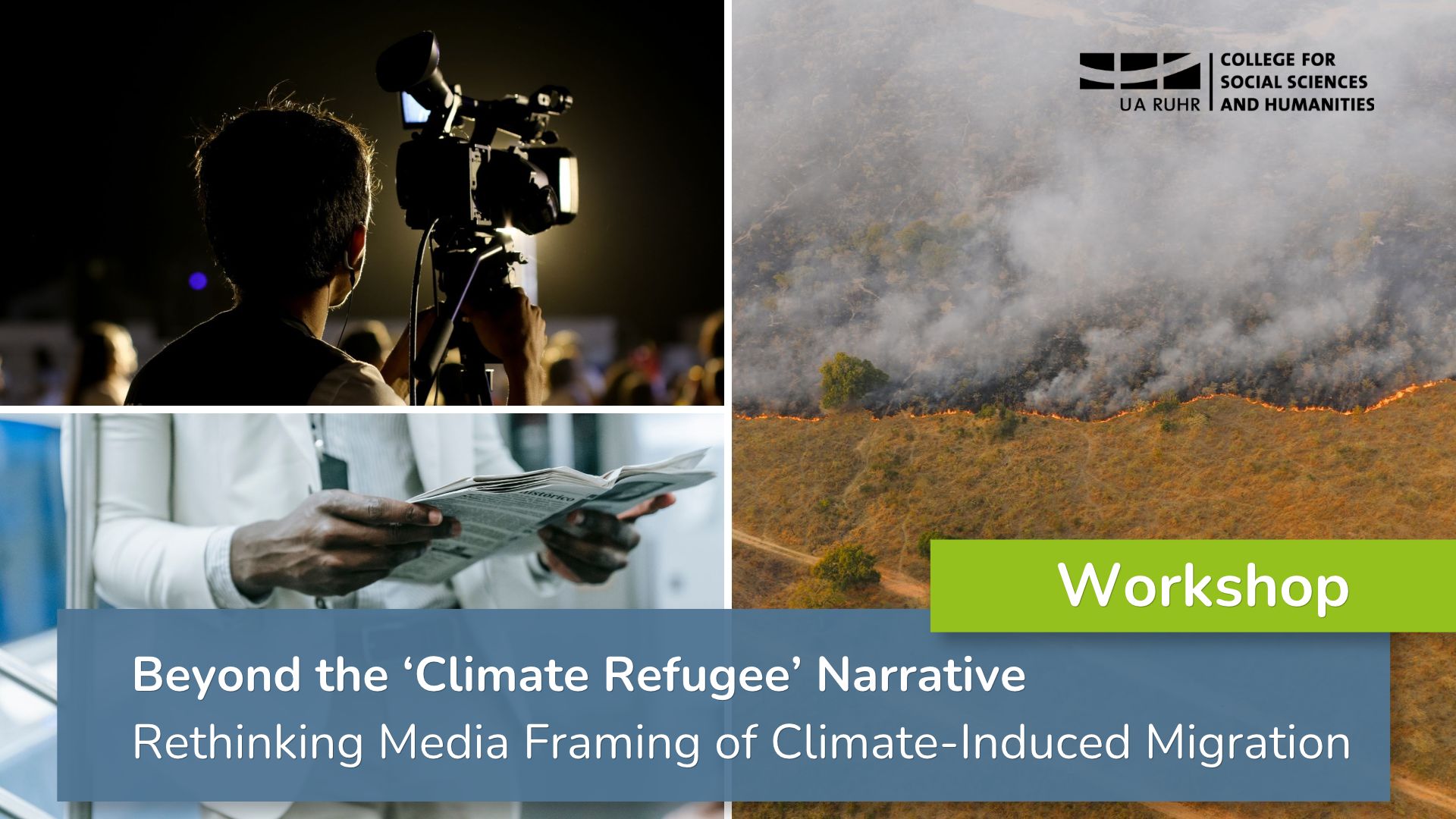
Climate-related migration has been an important topic for discussion across policy, academic and media spaces over the years. The fact that certain communities and individuals are more vulnerable to the impacts of climate change than others shows that the relationship between climate change, its impacts and migration cannot be viewed in isolation from social systems. While actors in several domains contribute to different conceptualisations of climate-induced migration, the media can strongly influence how audiences understand the causes and consequences of migration, as well as possible responses, through the way the issue is framed. Research has shown that climate-related migration is often portrayed in an apocalyptic way, and refugees are seen as victims and a threat to security. Such narratives can oversimplify the issue and reinforce stereotypes. In the same vein, researchers often struggle to communicate scientific uncertainties and complex findings that are useful and accessible to journalists. Journalists, on the other hand, face practical challenges in translating complex climate migration research into compelling stories.
This interactive hybrid workshop will bring together journalists, communication researchers, journalism students, climate migration researchers and policymakers to examine how media frames around climate-induced migration are produced, negotiated and used. Through presentations from experts, reflections from practitioners, and a collaborative frame-building exercise, participants are invited to jointly develop accurate, evidence-based, ethical and engaging approaches to reporting on climate migration.
The programme will be available soon.
 ©
© eventfotograf.in
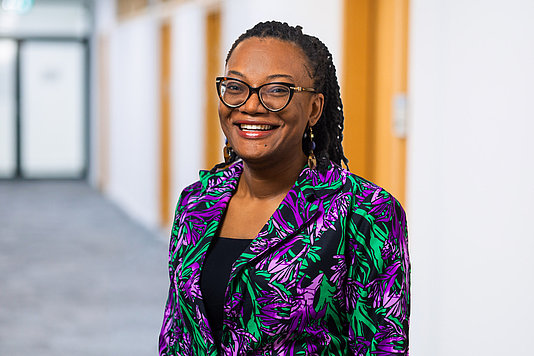
Prof. Ijeoma D. Ajaero
University of Nigeria (Nigeria) | Communication Studies, Media Sociology
E-mail: ijeoma.ajaero@college-uaruhr.de
Ijeoma D. Ajaero holds a PhD in Mass Communication (Environmental Communication), which was partly funded with a grant from the Transdisciplinary Training for Resource Efficiency and Climate Change Adaptation in Africa (TRECCAfrica) and the Tertiary Education Trust Fund (TETFund). She was a visiting research fellow with the Demography and Population Studies Programme of the University of the Witwatersrand (South Africa) and a postdoctoral research fellow in the Department of Strategic Communication, University of Johannesburg (South Africa). Presently, she is an associate professor in the Department of Mass Communication, University of Nigeria, Nsukka, and a senior research associate at the University of Johannesburg.
Ijeoma D. Ajaero has served as a research assistant for several Environmental Impact Assessments (EIA) and as a member of the research team on the Stop Impunity in Nigeria (SIN) campaign. In addition, she is a co-principal investigator for a project supported by the Global Excellence and Stature (GES) 4.0 Grant of the University of Johannesburg titled ‘Indigenous Knowledge and Use of Digital Technologies in Multimodal, Multisectoral Intervention: Reimagining Climate Change Communication Strategies in Southern Nigeria’ (2025–2027). Her areas of research include environmental and health communication, media sociology, gender studies, peace and conflict reporting, media ethics, political communication, human trafficking, and social media.
Website
 ©
© Institut für Journalistik TU Dortmund
Prof. Susanne Fengler
TU Dortmund University | Journalism Studies
E-mail: Susanne.fengler@tu-dortmund.de
 ©
© Institut für Journalistik TU Dortmund
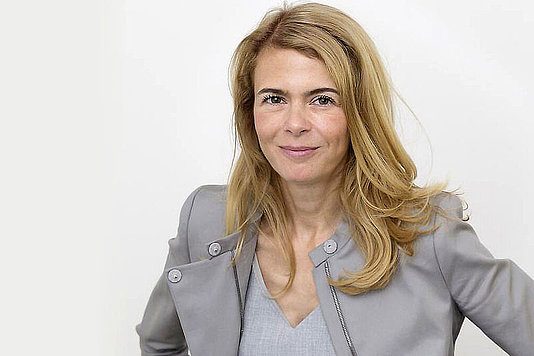
Prof. Susanne Fengler
TU Dortmund University | Journalism Studies
E-mail: Susanne.fengler@tu-dortmund.de
Susanne Fengler is Professor of International Journalism at TU Dortmund University and Scientific Director of the Erich Brost Institute for International Journalism. Her research focuses on comparative journalism studies, media accountability, media development cooperation, migration and journalism, and the economics of journalism.
She has coordinated and led numerous international research projects funded by the European Union, Horizon 2020, the Volkswagen Foundation, UNESCO, the German Federal Foreign Office, the German Academic Exchange Service (DAAD) and other organisations. Her current work includes projects on journalism education, media accountability, migration, disinformation and democratic resilience, with a particular focus on Europe and Sub-Saharan Africa.
Susanne Fengler is the Scientific Director of the European Journalism Observatory (EJO) and has published extensively on media accountability, journalism ethics and comparative media systems. She has edited several influential books, including the Global Handbook of Media Accountability and the European Handbook of Media Accountability. Her research has received international recognition, including the MERCUR Science Award and the Günter Wallraff Prize for Journalism Criticism.
Alongside her academic work, she actively contributes to international scholarly networks, editorial boards and advisory committees, fostering collaboration between journalism research, education and professional practice worldwide.
Website
https://en.journalistik-dortmund.de/about-us/staff/professors/prof-dr-susanne-fengler
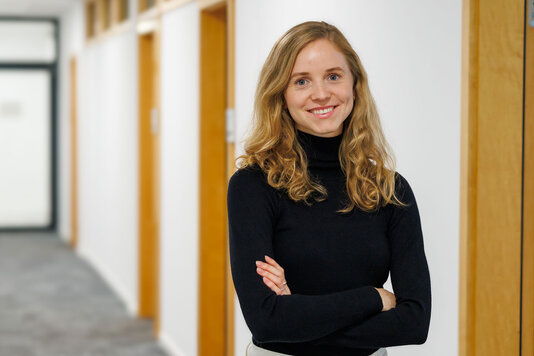
Dr Merle van Berkum
TU Dortmund University | Erich Brost Institute for International Journalism
E-mail: merle.vanberkum@tu-dortmund.de
Merle van Berkum is a postdoctoral researcher and project leader at the Erich Brost Institute for International Journalism in Dortmund. She was the project leader of the AMAZE! project, funded by the German Foreign Office, and served as a senior researcher in the EU-funded project PROMPT (Predictive Research On Misinformation and narrative Propagation Trajectories). She earned her PhD from City St. George’s, University of London (UK), where she analysed global climate change coverage with a focus on national interests and international relations.
Website