
Despite the impacts of climate change on migration especially in sub-Saharan Africa, studies on how the media frame the linkages between climate change and migration in the region are generally lacking. It has been observed that Nigeria is deeply affected by climate-change-induced migration, but mass communication research has not sufficiently tackled climate change coverage in Nigeria. With regard to a country where there is a high probability for climate change disasters, which exacerbate migration, there is urgent need to properly articulate and address the mitigation, resilience, coping and adaptation issues associated with the linkages between climate change and migration in Nigeria. Consequently, the objectives of the project are to: 1) map climate change disasters in various parts of the country as covered by the media; 2) highlight migration dynamics caused by climate change in the Nigerian media; 3) appraise the sources of news stories on climate-change-induced migration in the media; and 4) identify the tone of coverage on climate change and migration issues.
This project will be premised on the framing theory, which suggests that how the media frame the linkages between climate change and migration will affect public perception of the issue, thereby instigating preventive and mitigative actions. The research design will employ content analysis and document analysis involving the collection of data from published literature, eight selected newspapers and two television websites. Data analyses will be carried out using descriptive and framing analysis (of selected newspapers and TV stations). By studying media coverage of climate-change-induced migration in Nigeria, this study will shed more light on media effort and how it can be improved for a robust communication of climate change impacts and for better policy decisions with regard to issues relating to the links between climate change and migration in the country.
 ©
© eventfotograf.in
©
© eventfotograf.in
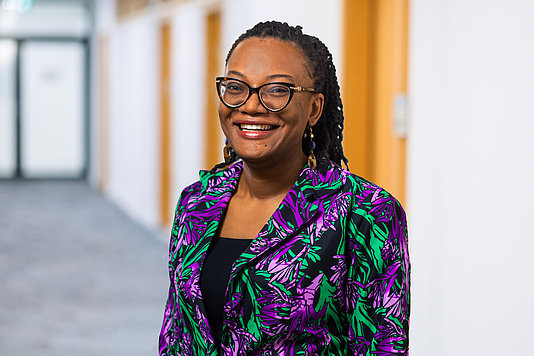
Prof. Ijeoma D. Ajaero
University of Nigeria (Nigeria) | Communication Studies, Media Sociology
E-mail: ijeoma.ajaero@college-uaruhr.de
Ijeoma D. Ajaero holds a PhD in Mass Communication (Environmental Communication), which was partly funded with a grant from the Transdisciplinary Training for Resource Efficiency and Climate Change Adaptation in Africa (TRECCAfrica) and the Tertiary Education Trust Fund (TETFund). She was a visiting research fellow with the Demography and Population Studies Programme of the University of the Witwatersrand (South Africa) and a postdoctoral research fellow in the Department of Strategic Communication, University of Johannesburg (South Africa). Presently, she is an associate professor in the Department of Mass Communication, University of Nigeria, Nsukka, and a senior research associate at the University of Johannesburg.
Ijeoma D. Ajaero has served as a research assistant for several Environmental Impact Assessments (EIA) and as a member of the research team on the Stop Impunity in Nigeria (SIN) campaign. In addition, she is a co-principal investigator for a project supported by the Global Excellence and Stature (GES) 4.0 Grant of the University of Johannesburg titled ‘Indigenous Knowledge and Use of Digital Technologies in Multimodal, Multisectoral Intervention: Reimagining Climate Change Communication Strategies in Southern Nigeria’ (2025–2027). Her areas of research include environmental and health communication, media sociology, gender studies, peace and conflict reporting, media ethics, political communication, human trafficking, and social media.
Website
 ©
© Institut für Journalistik TU Dortmund
©
© Institut für Journalistik TU Dortmund
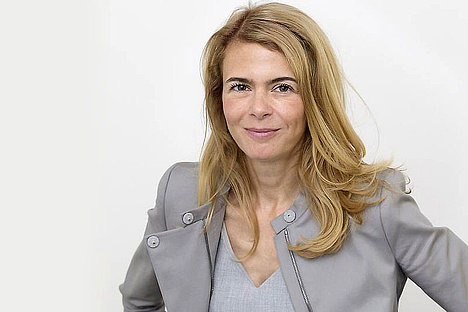
Prof. Susanne Fengler
TU Dortmund University | Journalism Studies
E-mail: Susanne.fengler@tu-dortmund.de
 ©
© Institut für Journalistik TU Dortmund
©
© Institut für Journalistik TU Dortmund
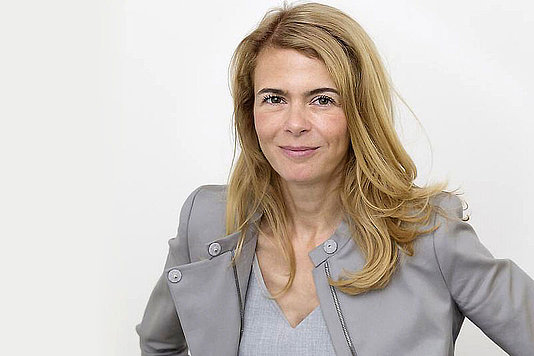
Prof. Susanne Fengler
TU Dortmund University | Journalism Studies
E-mail: Susanne.fengler@tu-dortmund.de
Susanne Fengler is Professor of International Journalism at TU Dortmund University and Scientific Director of the Erich Brost Institute for International Journalism. Her research focuses on comparative journalism studies, media accountability, media development cooperation, migration and journalism, and the economics of journalism.
She has coordinated and led numerous international research projects funded by the European Union, Horizon 2020, the Volkswagen Foundation, UNESCO, the German Federal Foreign Office, the German Academic Exchange Service (DAAD) and other organisations. Her current work includes projects on journalism education, media accountability, migration, disinformation and democratic resilience, with a particular focus on Europe and Sub-Saharan Africa.
Susanne Fengler is the Scientific Director of the European Journalism Observatory (EJO) and has published extensively on media accountability, journalism ethics and comparative media systems. She has edited several influential books, including the Global Handbook of Media Accountability and the European Handbook of Media Accountability. Her research has received international recognition, including the MERCUR Science Award and the Günter Wallraff Prize for Journalism Criticism.
Alongside her academic work, she actively contributes to international scholarly networks, editorial boards and advisory committees, fostering collaboration between journalism research, education and professional practice worldwide.
Website
https://en.journalistik-dortmund.de/about-us/staff/professors/prof-dr-susanne-fengler