
How do adopted persons form a sense of belonging between biological origins, cultural affiliations and social relationships? This interdisciplinary symposium brings together scholars, students, and persons concerned to examine the historical, political and social processes through which identity, kinship and cultural belonging are constructed and contested in the context of transnational adoption.
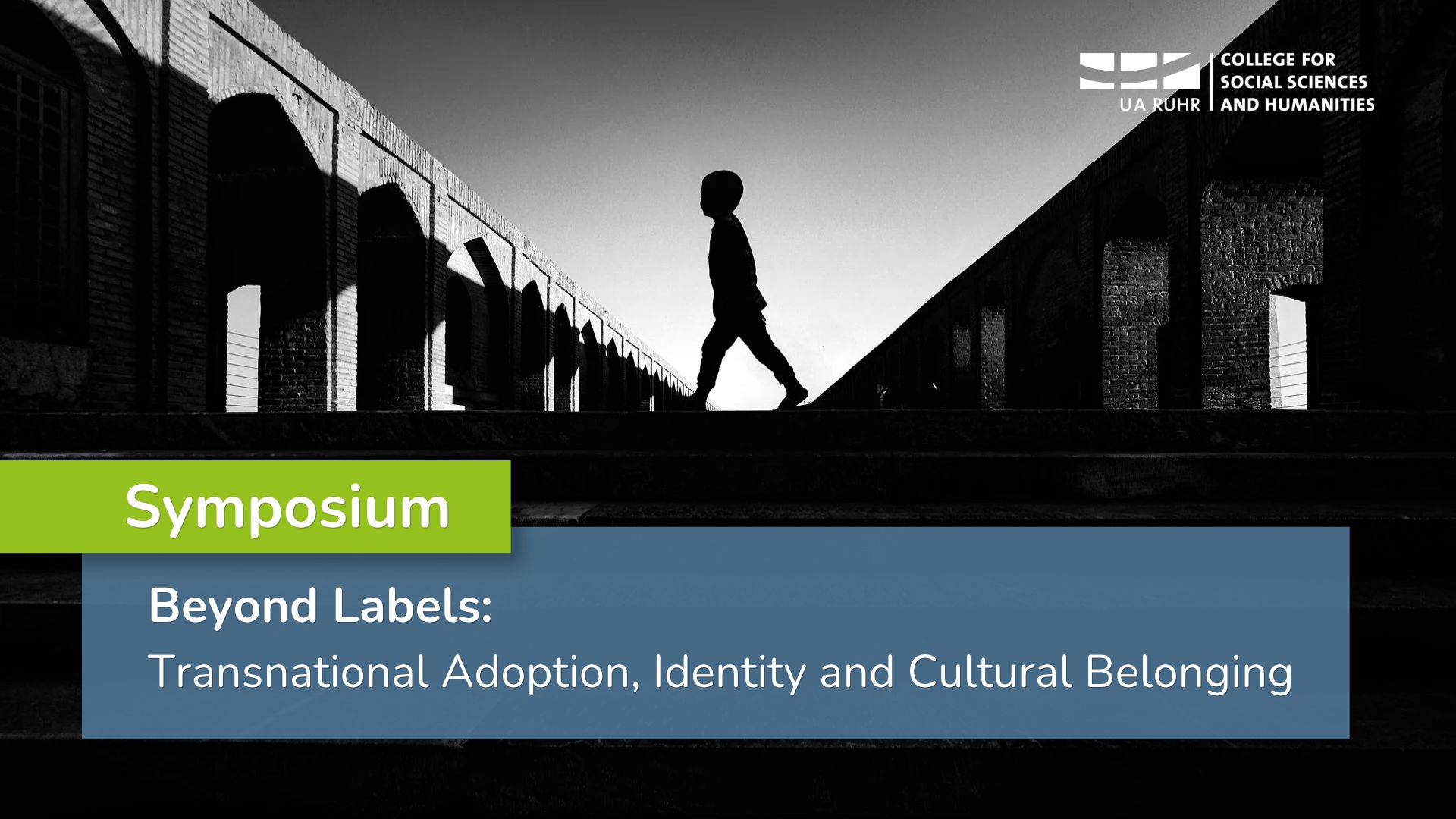
Transnational adoption is more than the movement of children across national borders. It is embedded in historical inequalities, political decisions, institutional practices and contested understandings of family, identity and cultural belonging. It raises fundamental questions about who has the authority to define a child’s origins, determine familial relationships, claim cultural affiliations and establish the conditions under which individuals are recognised as belonging.
For adoptees, identity formation may involve negotiating multiple histories, languages, cultural affiliations and familial relationships. Biological origins, adoptive family relationships and cultural attachments do not necessarily converge into a singular or coherent sense of identity. Instead, belonging may be continuously formed through memory, everyday practices, social recognition and encounters with institutions.
These questions also extend beyond transnational adoption. Debates surrounding adoption by same-sex couples, changing family structures and the recognition of diverse forms of kinship expose the normative assumptions through which societies distinguish legitimate from illegitimate families. They invite us to reconsider the relationship between biological relatedness, social parenthood, legal recognition and lived experiences of family.
This interdisciplinary symposium brings together historical, sociological, and anthropological perspectives to examine how identity, kinship and belonging are shaped by relations of power in the context of adoption. It seeks to move beyond essentialist understandings of cultural identity and conventional definitions of family, asking instead how identities and familial relationships are constructed, negotiated, contested and recognised.
Through academic presentations, a moderated panel discussion and group discussion, the symposium will create a space for critical dialogue among scholars, students, and people with personal or professional engagement with adoption.
The symposium seeks to advance an interdisciplinary understanding of the historical, political and social processes through which identity, kinship, family and cultural belonging are constructed and contested. By bringing together research on inter-country adoption, cultural identity and diverse family structures, it aims to challenge conventional assumptions about biological origins, cultural authenticity and legitimate forms of kinship.
It will provide an opportunity to identify common theoretical concerns across different fields, particularly the politics of recognition, institutional power, social parenthood and the negotiation of belonging. The exchange between academic research and lived experiences will also help foreground perspectives that are frequently marginalised in dominant discussions of adoption and family.
Beyond fostering intellectual exchange and future research collaborations, the symposium aims to lay the foundation for an edited academic volume bringing together selected scholarly contributions. The proposed publication could develop the symposium’s central concerns into a broader critical discussion of transnational adoption, identity, kinship, family diversity and belonging across national and cultural boundaries.
The programme will be available soon.
 ©
© eventfotograf.in
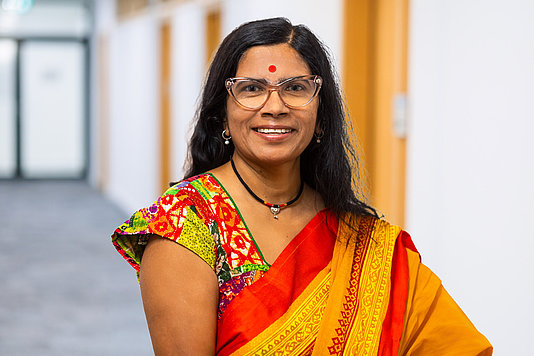
Prof. Zobaida Nasreen
University of Dhaka (Bangladesh) | Anthropology
Zobaida Nasreen is Professor of Anthropology at the University of Dhaka (Bangladesh) and was a Fulbright Scholar in the anthropology department of Rice University, USA (2018–2019). She received her PhD in social anthropology from Durham University (UK) as a commonwealth scholar. After obtaining a Master’s degree in anthropology from Jahangirnagar University (Bangladesh), she completed her Master’s degree in development studies at Hiroshima University (Japan) on a Japanese government scholarship. Her doctoral research at Durham University was on ‘The Indigeneity Question: State Violence, Forced Displacement and Women’s Narratives in the Chittagong Hill Tracts of Bangladesh’ and her areas of interest include anthropology of violence, forced displacement, sexuality and masculinity, social memory, social movements, as well as indigeneity and identity politics.
Zobaida Nasreen has co-edited Political Violence in South Asia with Ali Riaz and Fahmida Zaman (Routledge 2018) and authored 12 books including Stories of Gender Diversity (2019), Anthropological Explorations (2018), Women’s Journey against All Odds (2013), Poverty and Health: Women in Tanneries (2008), Martyred Women of the Liberation War (2008), Hajong Women in the Labour Market (2008), Indigenous Women in the Liberation War (2008), and The Marginalisation Discourse of Ethnic People in the Northern Part of Bangladesh (2006, with Mesbah Kamal and Eshani Chakraborty). She has published in various local and international journals and has worked as a consultant for several national and international organisations, including United States Agency for International Development (USAID), International Labour Organization (ILO), Oxfam Great Britain, DASCOH foundation, United Nations Development Programme (UNDP), United Nations Population Fund (UNFPA), ActionAid, and Bangladesh Rural Advancement Committee (BRAC). She has also been writing columns since 1996 for a number of daily newspapers and provides expert opinion on current social and political issues on BBC Bangla Service and Voice of America (VOA) Bangla.
Website
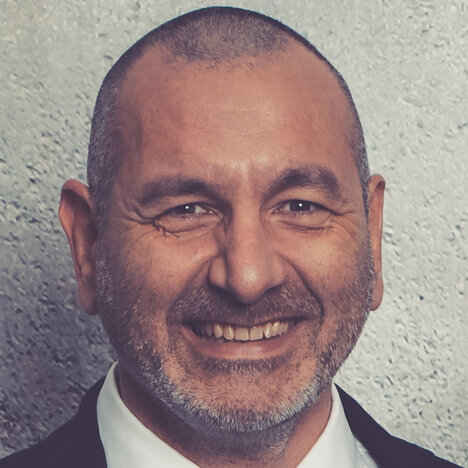
Prof. Christian Gudehus
Ruhr University Bochum | Social Science, Social and Cultural Psychology
E-mail: christian.gudehus@rub.de

Prof. Christian Gudehus
Ruhr University Bochum | Social Science, Social and Cultural Psychology
E-mail: christian.gudehus@rub.de
Christian Gudehus is a social scientist with a particular interest in social and cultural psychology. Together with Pradeep Chakkarath, he has been publishing the journal HARM as an open-access publication since January 2022. He also founded the journal Trauma Kultur Gesellschaft (trauma culture society) together with colleagues from the clinical field and the social sciences and humanities. He is also a permanent fellow at the Hans Kilian and Lotte Köhler Centre (KKC) for Social and Cultural Psychology and Historical Anthropology located at Ruhr University Bochum, where he teaches and researches with a focus on collective violence, its conditions, its events and its consequences.
Website
https://www.sowi.ruhr-uni-bochum.de/lehre/sopsan/gudehus.html.en