
This project examines the history and changing meanings of waste disposal sites in Germany’s Ruhrgebiet (Ruhr area), especially coal mine tailings piles, steel mill slag heaps, and municipal and industrial waste landfills. Altogether, the Ruhr area has an impressive range of disposal sites, many of them so high as to have taken on names that reflect their elevation. Examples of these sites are the Hansa coking plant in Dortmund, the Thyssen mill in Duisburg, and the various rehabilitated tailings piles that dot the horizon, particularly to the north in Bottrop.
This project looks beyond the infrastructure of industrial production – the mills, mines, and coking plants – and considers the infrastructure of disposal. Many former sites of production have become museums or in some other way celebrate industrial heritage, and collectively they have come to define the new green Ruhr area. So too do rehabilitated waste sites offer new meanings for the region’s landscape. This research examines the changing ideas attached to spaces as they evolve from active waste disposal sites to sites of recreation and artistic expression. Ruhr communities use these renewed landscapes to tell new stories about themselves.
These wastescapes simultaneously speak to transition and permanence. Containing closed disposal sites with impermeable caps allows them to become useful in new ways, but the process also holds the waste still upon the landscape, forcing communities to domesticate their historical waste. Historically, waste disposal emphasised discarding, moving unwanted material downstream or hiding it out of sight. But in the Ruhrgebiet, waste heaps have created landmarks, virtual mountains of waste.
The project examines these waste sites, such as Bottrop’s Prosper tailings pile, home of the Tetrahedron, and Halde Haniel, part of the Ruhr ‘mountain range’, seeking to understand how art and nature have come together to revalue the land. To this end, the researchers conduct interviews and record their observations of and conversations with users of these sites.
 ©
© eventfotograf.in
©
© eventfotograf.in
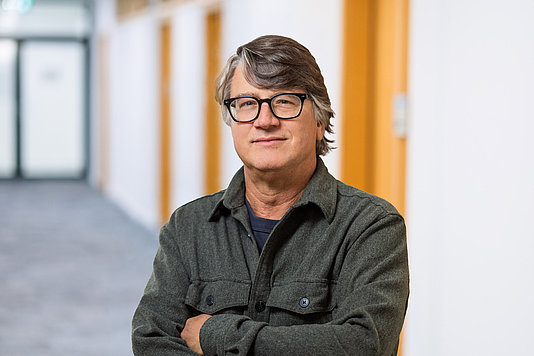
Prof. David Stradling
University of Cincinatti (USA) | History, Environmental History
David Stradling is the Zane L. Miller Professor of Urban History at the University of Cincinnati (USA), where he has a joint appointment in the Department of History and the School of Environment and Sustainability. He has taught urban and environmental history for over twenty-five years, and he is the author of several books, including The Nature of New York: An Environmental History of the Empire State (Cornell University Press 2010), Making Mountains: New York City and the Catskills (University of Washington Press 2007), Smokestacks and Progressives: Environmentalists, Engineers and Air Quality in America, 1881-1951 (Johns Hopkins University Press 1999), and, with Richard Stradling, Where the River Burned: Carl Stokes and the Struggle to Save Cleveland (Cornell University Press 2015). He is writing a global history of dredging which describes the long history of cities attempting to deal with the mobility of nature, a critical issue in the current age of climate change. It will be published by the University of Chicago Press.
Website
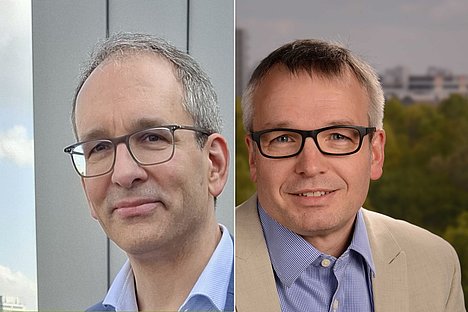 ©
Photo Gurr: © Ute Schneider
Photo Wiechmann: © TU Dortmund / U. Grützner
©
Photo Gurr: © Ute Schneider
Photo Wiechmann: © TU Dortmund / U. Grützner
Prof. Jens Martin Gurr & Prof. Thorsten Wiechmann
University of Duisburg-Essen & TU Dortmund University | British and Anglophone Literature and Culture & Spatial Planning
 ©
© Ute Schneider
©
© Ute Schneider
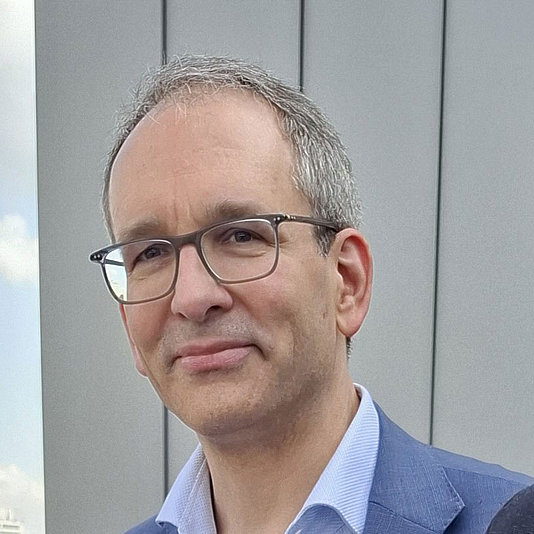
Prof. Jens Martin Gurr
University of Duisburg-Essen | British and Anglophone Literature and Culture
E-mail: jens.gurr@uni-due.de
Jens Martin Gurr has been Full Professor of British and Anglophone Literature and Culture at the University of Duisburg-Essen since 2007. Fields of research include British, American and Anglophone literature and culture from the 17th to the 21st century, urban literary and cultural studies, theories and practices of modelling, the literary history of ideas, research on conflicts, conflict regulation and democratic education in plural societies, Enlightenment research, public functions of narrative, memory studies, and research on the role and functions of literature and of literary studies.
Jens Gurr is the author or co-author of seven monographs, most recently Understanding Public Debates: What Literary Studies Can Do (Routledge 2024) and Enlightenment Controversies: Literary Self-Critique and Present-Day Debates (forthcoming with de Gruyter in August 2026). He is currently working on a monograph tentatively entitled Literary Studies in the Age of AI, Populism and Anti-Academic Resentment and is heading an interdisciplinary project on ‘Cultures of Compromise’. Jens Gurr is a member of the board of trustees (Kuratorium) of the Volkswagen Foundation and of the university council (Hochschulrat) of the University of Duisburg-Essen.
Website
 ©
© TU Dortmund / U. Grützner
©
© TU Dortmund / U. Grützner
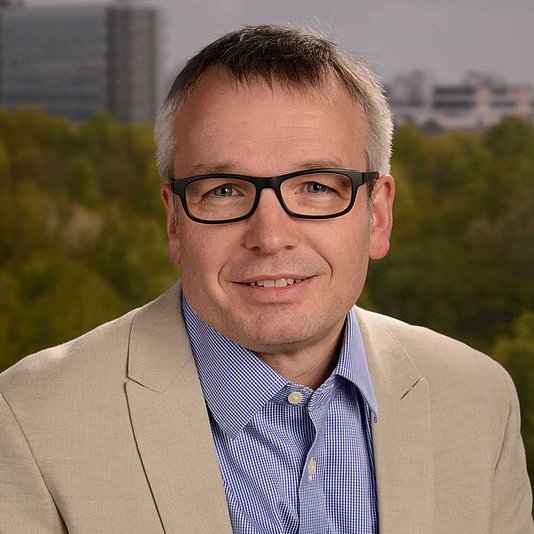
Prof. Thorsten Wiechmann
TU Dortmund University | Spatial Planning
Thorsten Wiechmann is Professor of Spatial Planning and Planning Theory at the School of Spatial Planning at TU Dortmund University, where he served as Dean from 2018 to 2022. Previously, he held the Chair of Spatial Planning at TU Dresden and was Director of the Institute of Geography. His research focuses on strategic spatial planning, metropolitan governance, and the transformation of cities and regions under conditions such as demographic change and structural uncertainty. A particular interest lies in the role of future visions, scenarios, and strategic foresight in planning processes. Recently, he has also worked extensively on the application of artificial intelligence in spatial planning. He has led numerous national and international research and practice projects and has published more than 100 academic works.
Website
https://rop.raumplanung.tu-dortmund.de/en/working-group/team/prof-dr-habil-thorsten-wiechmann