
The Russian invasion of Ukraine has triggered furious debates. No theoretical or historical concepts have been used more frequently in these debates than the I-words such as imperial, imperialist, anti-imperialist, and post-imperial, and the related C-words such as colonisation, decolonisation, postcolonial, and colonialism. Controversies abound – in the wartime context, even theoretical and historical concepts undergo weaponization. Some believe that Eastern Europe and Northern Eurasia belong to a different world than the West – a world that, allegedly, has not known colonisation. In fact, we see persistent patterns of colonisation and recolonisation, and we need a fresh revision of these basic concepts. This requires work on many levels – theoretical and empirical, fundamental and applied – that would revise the meaning and usage of I- and C-concepts in their application to Eastern Europe and Northern Eurasia. Postcolonial and decolonial approaches, which have been developed mostly in Latin America and South Asia, over-generalise the experience of formerly colonial countries that have been politically independent for a long time. Applying these approaches to Eastern Europe is hard. While it makes full sense to talk about postcolonial Ukraine, talking about postcolonial Russia sounds premature. Parts of the Russian Federation, Belarus, and the occupied parts of Ukraine are still subjects of imperial rule, and applying decolonial or postcolonial templates to these countries or regions has been deceptive. Arguably, one cannot talk about the postcolonial condition in a political situation that has not undergone effective decolonisation or national emancipation.
This project will trace the global history of the imperial-colonial cluster of concepts; test these concepts in the ongoing political situation that is marked by decolonial and / or revanchist wars in Eastern Europe, the Middle East, and South Asia; work on a comparative history of adopting, adjusting or denying this conceptual cluster in Russian and Chinese scholarship of the 21st century; elaborate the concept of revanchism as a particular case of imperialism, and revanchist war as a specific stage of imperialist war; and, finally, revise the conceptual apparatus of critical theory in its analysis of war, peace, and polycrisis of the 21st century.
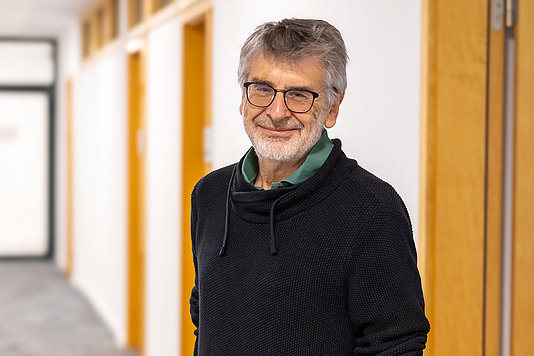
Prof. Alexander Etkind
Central European University (Austria) | Cultural and Political History
Alexander Etkind is Professor at the Department of International Relations at the Central European University in Vienna (Austria), where he is also Director of the Open Society Hub for the Politics of the Anthropocene. Previously, he was Professor of History at the European University Institute at Florence, Italy (2013–2022), and before that at Cambridge University, UK (2004–2013). Alexander Etkind completed his PhD in Russian cultural history in Helsinki (Finland, 1998) and supervised more than 30 PhD students in Europe. He is the author of many books on cultural and intellectual history, most recently Nature’s Evil. A Cultural History of Natural Resources (Cambridge: Polity 2021) and Russia against Modernity (Polity 2023, now available in ten languages). His current research interests are climate politics, comparative history of empires, colonialism and decolonisation in Eastern Europe, and critical theory of revanchism.
Website
 ©
© RUB / Marquard
©
© RUB / Marquard
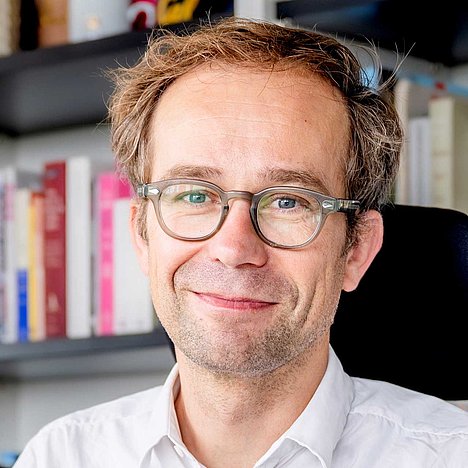
Prof. Sören Urbansky
Ruhr University Bochum | Eastern European History
E-mail: soeren.urbansky@rub.de
 ©
© RUB / Marquard
©
© RUB / Marquard
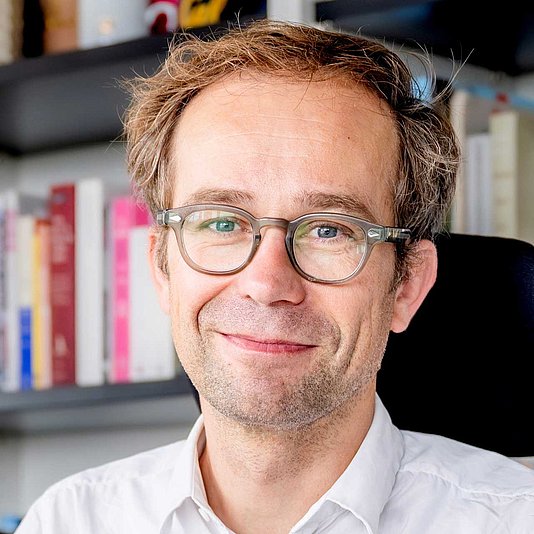
Prof. Sören Urbansky
Ruhr University Bochum | Eastern European History
E-mail: soeren.urbansky@rub.de
Sören Urbansky is Professor of Eastern European History at Ruhr University Bochum. He specialises in Sino-Russian relations, with research interests in migration, infrastructure, racism, and border history. Previously, he headed the Pacific Office of the German Historical Institute Washington, based at the University of California, Berkeley (USA). He has also held research and teaching positions at the universities of Freiburg, Cambridge, and Munich, and has been a visiting scholar at Academia Sinica in Taipei (Taiwan) and Hokkaido University in Sapporo (Japan).
Sören Urbansky is the author of four monographs, including Beyond the Steppe Frontier: A History of the Sino-Russian Border (Princeton University Press 2020) and Entangled Empires: Four Centuries of China–Russia Relations (with Martin Wagner, Polity 2026).
Website
https://www.oeg.ruhr-uni-bochum.de/oeg/personen/urbansky.html.en