
This project proposes a new approach to the philosophy of technology and design practice, grounded in anthropological reflection in and on action. It draws on feminist science technology and society studies (STS) scholarship, particularly agricultural activist Susan Leigh Star’s work on infrastructure, alongside indigenous knowledge systems and key contemporary philosophical perspectives.
The project explores the frontiers of holistic planetary infrastructures (i.e., permacomputing, feminist economies, community-led networks) to intervene in the growth logic that drives the computation marketplace for Climate-Resilient Development and examines how computational arts are sustained not through the preservation of static technological artefacts, but through the fora of affective infrastructure.
The project responds to the Intergovernmental Panel on Climate Change (IPCC) statement that “there is a rapidly narrowing window of opportunity to enable climate resilient development” (2023), in the wake of global commitments to a climate-neutral economy by 2050 as delineated in the United Nations’ Our Common Agenda (OCA). The OCA seeks to strengthen and accelerate key multilateral agreements, particularly the 2030 Agenda to “make a tangible difference in people’s lives”. As the world races toward Net Zero by 2030, the IPCC warns of unprecedented and complex challenges in accelerating transition pathways. Achieving climate-neutral emissions targets requires not only carbon reduction, but also profound transformations in cultural awareness and digital capability. Rather than existing as inert resources awaiting extraction or translation, human beings are conceived as a part the constellations of many entities embedded within the site of computing arts practice. These perspectives challenge neo-colonial habits that separate matter from context-based meaning, infrastructures from the mediums and material frequencies on which they operate.
The project ‘Autoluminescence’ seeks to raise awareness of how low-emission computing arts practices, through experiential learning, conversation circles, and the sharing of digital and climate literacy skills, can profoundly influence adaptation behaviours and heighten risk perception among participants. The anticipated research benefits include enhanced capacity for participation in post-carbon digital economies and support for Net Zero infrastructure. By focusing on frameworks for policy actors, the project aims to ensure that its findings are implemented and that the challenges identified are clearly understood by decision-makers.
 ©
© eventfotograf.in
©
© eventfotograf.in
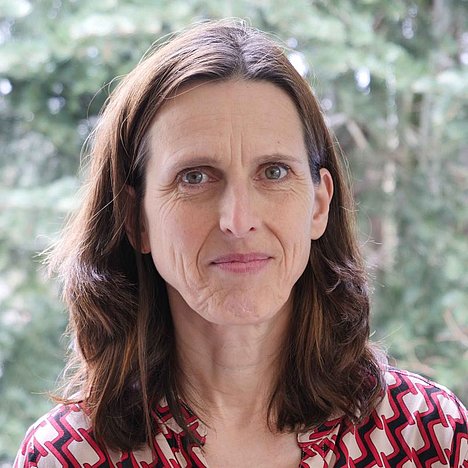
Dr Nancy Mauro-Flude
RMIT University (Australia) | Design Anthropology, Computing Arts
Nancy Mauro-Flude is a transdisciplinary researcher with expertise in computing arts, anthropology, and feminist science and technology studies (STS). She applies multitrophic approaches in regenerative design and making, working from Southern Oceania, Lutruwita / Tasmania, and guided by indigenous knowledge systems and experiential learning to foster eco-social cohesion. Over the past two decades, Nancy has made significant contributions to female-led web server initiatives and aesthetic engagement with open source technologies, mobile Linux, and wireless systems. She is co-founder and Secretary of the Community Network Infrastructures Special Interest Group, established with support from the Internet Society Foundation.
Nancy Mauro-Flude is a Regenerative Future Fellow at RMIT University (Australia), contributor to the Master of Design Technology and Innovation programme in RMIT’s College of Design and Social Context, and affiliated with the Post Carbon Research Centre. Her design research develops custom-built tools, cooperative situations, and participatory social sculptures that bring diverse communities together through performance, co-design, and collective inquiry. With expertise in wireless Linux systems, community networking, and free and open-source software, she explores holistic and vernacular computing, maintenance rituals, digital stewardship, and the material and social conditions of life at the edge of networked systems.
Website
 ©
© CAIS
©
© CAIS
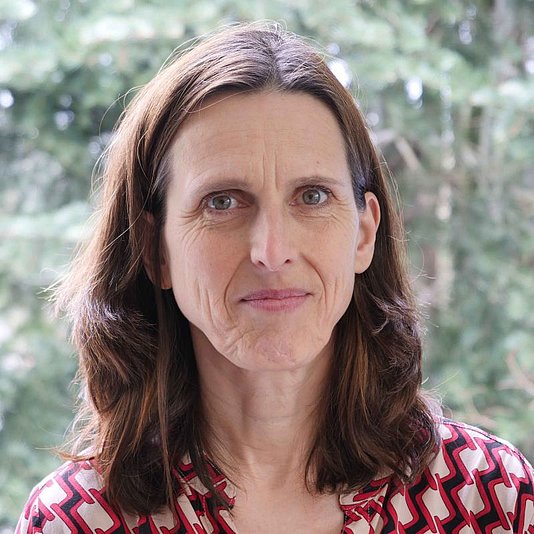
Prof. Estrid Sørensen
Ruhr University Bochum | Anthropology of Knowledge
E-mail: estrid.sorensen@rub.de
 ©
© CAIS
©
© CAIS
Prof. Estrid Sørensen
Ruhr University Bochum | Anthropology of Knowledge
E-mail: estrid.sorensen@rub.de
Estrid Sørensen is a professor of anthropology of knowledge at Ruhr University Bochum. She has conducted research within a wide field of science and technology studies, including educational technologies, media harm discourses, cyber security, and digital methods. Most recently she has turned towards researching computing infrastructures. Her ethnographic and historical research addresses both scientific and corporate data centres as well as high-performance computing, and inquires the co-enactment of knowledge production and planetarity. She has recently coined the notion of ‘planetary scientific knowledge’ to conceptualise science as not only social and material, but as ontologically planetary.
Recent publications:
Sørensen, Estrid (2026): ‘Servers’, in: Hogan, M. / Stefan, L. / Ongweso, E. (eds.): Predictions: From Speculative Ethnography to Apocalyptic Testimony. Lancaster: Mattering Press, pp. 120–126.
Çelik, Leman / Laser, Stefan / Sørensen, Estrid / Abels, Sandra (2026): Staying with the Planet: The University That Tried to Reckon with Ecological Reality, Challenged Excessive Data Infrastructures, and Nurtured a Few Alternatives Not Planned For. Bielefeld: transcript.
Sørensen, Estrid (2026): ‘Die Als-ob, die Langsame und die Planetare Universität: Drei Modi möglicher Universitäten‘, In: Breil, P. / Sprenger, F. (eds.): Virtuelle Universität – Geistes- und gesellschaftswissenschaftliche Zugänge. Bielefeld: transcript, pp. 493–500.
Sørensen, Estrid (2025): ‘Erzählungen durch Daten: distanzierte, engagierte, responsable, kollektive und planetare‘, In: Holfelder, U. / Peball, P. W. / Schemmer, J. / Schönberger, K. (eds.): Alltage und Kultur/en der Digitalität. Wien: Selbstverlag des Vereins für Volkskunde, pp. 33–52.
Website
https://www.sowi.ruhr-uni-bochum.de/cupak/team/sorensen.html.en