
Recently, Europe has witnessed profound geopolitical shifts and domestic political realignments, many of which have brought (im)migration to the forefront of public and scholarly debates. Asian Minorities occupy a unique and paradoxical position in these debates. On the one hand, a prevalent and often celebrated discourse surrounding ‘model minorities’ emphasises the educational achievements and upward social mobility of youth from Asian ethnic backgrounds in Europe, frequently citing these indicators as evidence of successful social integration. On the other hand, across many European countries, immigration – including that from Asian regions – has become a deeply politicised and contested issue. Right-wing parties in particular have moved the issue to the centre of public discourse and often portrayed it as a principal source of social instability, fragmentation, and conflict, which is frequently grounded in selective anecdotal accounts and misinterpretations or distortions of empirical data. Transcending these one-dimensional myths, the research project seeks to understand the multiplicity of lived experiences and subject-making processes of individuals growing up in Asian minority communities within European societies. Situated in a childhood sociological paradigm, it seeks to critically examine how these individuals negotiate identity, belonging, and agency within the intersecting structures of family, community, and broader socio-political contexts.
This project aims to make a meaningful contribution to the emerging field of Asian-European childhood studies through: 1) surveying the state of research to identify theoretical and empirical gaps; 2) conducting a pilot study to generate data and methodological insights for future funding applications; and 3) fostering a scholarly community centred on migration, childhood and identity. It contributes to a deeper understanding of the nuanced and heterogeneous experiences of growing up as Asian minority members across Europe, challenging reductive and homogenising narratives often associated with immigrant populations. Ultimately, the project will facilitate sustained academic exchange and interdisciplinary dialogue across national and institutional boundaries, produce policy-relevant research findings informing issues of migration, integration, and minority citizenship; and support the long-term wellbeing, recognition, and societal momentum of Asian-European communities.
 ©
© eventfotograf.in
©
© eventfotograf.in
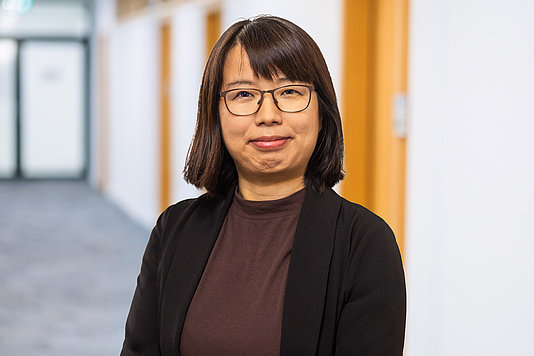
Prof. Xiaorong Gu
University of Suffolk (UK) | Sociology, Childhood Studies, Asian Studies
E-mail: xiaorong.gu@college-uaruhr.de
Xiaorong Gu is a sociologist of childhood, youth and education, currently working as a senior lecturer at the University of Suffolk (UK), where she leads research on global childhood studies and childhood theories. Earlier in her career, she was Lecturer in English Literature at Sun Yat-sen University (China) from 2008 to 2012. After completing her PhD in sociology at the National University of Singapore in 2017, she held research positions at the Asia Research Institute, National University of Singapore, and on the ‘Doing Intimacy’ project at SOAS, University of London (UK). She has also undertaken academic visits at institutions including the University of Manchester (UK) and the University of Duisburg-Essen (Germany).
Xiaorong Gu’s research examines children’s and youth’s migration and mobilities, education, socio-emotional lives, relationships, disabilities and wellbeing, as well as their positioning in relation to families, educational institutions and the nation state. Her work focuses on contemporary China from a comparative Asian perspective and is grounded in methodological pluralism. She has guest-edited special issues for Child Indicators Research and Current Sociology and is co-editor of The Emerald Handbook of Childhood and Youth in Asian Societies (2023). Her research article ‘“Save the children!”: Governing Left-behind Children through Family in China’s Great Migration’ was shortlisted for the 2023 SAGE Current Sociology Best Paper Prize, and she was named Sociologist of the Month by Current Sociology in April 2023.
Website
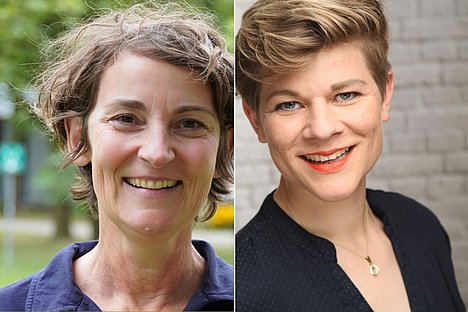
Prof. Alexandra König & Prof. Jessica Schwittek
University of Duisburg-Essen & TU Dortmund University | Educational Sciences, Sociology
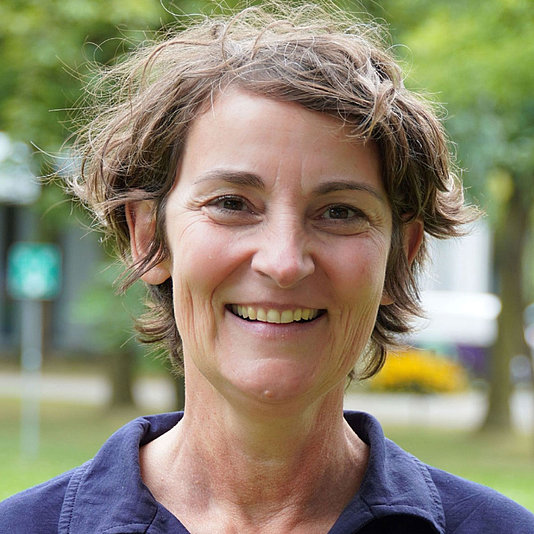
Prof. Alexandra König
University of Duisburg-Essen | Educational Sciences, Sociology
E-mail: alexandra.koenig@uni-due.de
Alexandra König is Professor of Socialisation Research at the Faculty of Educational Sciences of the University of Duisburg-Essen. She examines socialisation processes in different phases of life (especially childhood and adolescence), in different socialisation settings (family, school, the workplace, university, peers) and on the basis of diverse research objects (taste, education, professional fields) and relations (especially relations to animals). Central to her research is an interactionist and inequality-analytical perspective.
Currently she is studying the question how ‘good parenting’ or ‘good childhood’ are defined from different perspectives. She approaches this question primarily in two projects funded by the German Research Foundation (DFG), using examples of different phenomena: the EliA project on parenthood in the adoption process – is investigating how ‘good parents’ are sought for a child given up for adoption in the adoption process. In the TraNa project on self-positioning in transnational spaces that focuses on children's narrations and narrations about children living in transnational families, she is looking at how children in Poland whose parents work (temporarily) abroad experience their transnational family life and how they position themselves in the transnational space.
Website
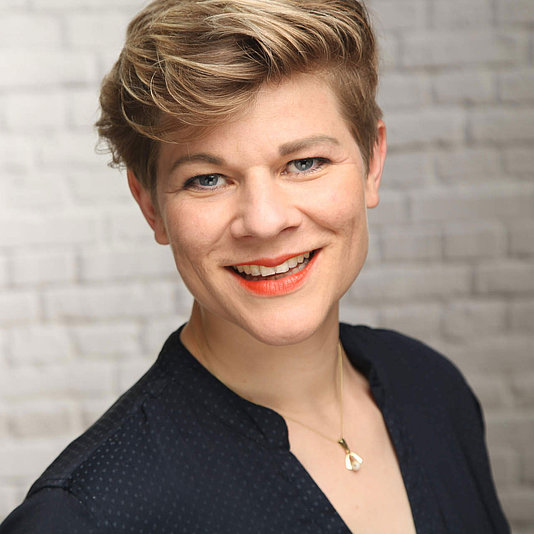
Prof. Jessica Schwittek
TU Dortmund University | Educational Sciences, Sociology
E-mail: jessica.schwittek@tu-dortmund.de
Jessica Schwittek is Junior Professor of Sociology of Migration with a Focus on Family at TU Dortmund University whose work explores how children and young people experience growing up in contexts of migration, transnational family life, and social inequality. Her research combines qualitative and participatory methodologies to foreground young people’s own perspectives on belonging, family relationships, identity, and everyday social worlds.
Her current research focuses on children living in transnational families, examining how they position themselves across national borders and negotiate family, care, and social belonging. As Co-Principal Investigator of the German-Polish research cooperation ‘Self-Positioning in Transnational Spaces’ (TraNa), funded by the German Research Foundation (DFG) and the National Science Centre Poland (NCN), she investigates children's narratives and the social processes shaping transnational childhoods.
Beyond transnational childhoods, her work addresses refugee childhoods, migration, friendship, intergenerational relations, and childhood research across Europe and Asia. Through interdisciplinary and international collaborations, she contributes to advancing child-centred research methodologies and to a deeper understanding of how global mobility and social change transform families’ and children's lives and educational experiences.
Website