
By Wivian Weller & Nicolle Pfaff
 ©
© Pexels / Mikkel Kvist
In the spring 2024, a video that showed young people singing racist slogans to a popular song’s melody was widely circulated via social media. The song’s repeated use in connection with racist content turned it into a code for far-right ideology. In their essay, education scholars Nicolle Pfaff and Wivian Weller analyse how transnational ideological views of nationalism and the social devaluation of groups spread via social media and how this can contribute to radicalisation of young people.
Wivian Weller is Professor of Sociology of Education at the University of Brasília, Brazil, and a recognised expert in international comparative research on schools and youth. From March to August 2026, she was a Senior Fellow at the College for Social Sciences and Humanities. Nicolle Pfaff is Professor of Educational Sciences at the University of Duisburg-Essen, where she heads the Migration and Inequality Research Working Group. They collaborated on the topic of youth radicalisation in right-wing movements and organised a workshop on transnational far-right youth activism in June 2026.
 ©
© Pexels / Mikkel Kvist
Neo-conservative, right-wing and far-right movements are nationalist in orientation. They delegitimise international cooperation, transnational mobility and migration, and pluralistic societies. However, this does not mean that right-wing actors themselves do not have international networks. Transnational structures within far-right youth movements and the radicalisation of young people encompass diverse phenomena, including campaigns on social media, transnational narratives and myths, international network meetings, and the formation of far-right groups in the context of migration like the ‘Graue Wölfe’ [‘grey wolves’] in Germany.
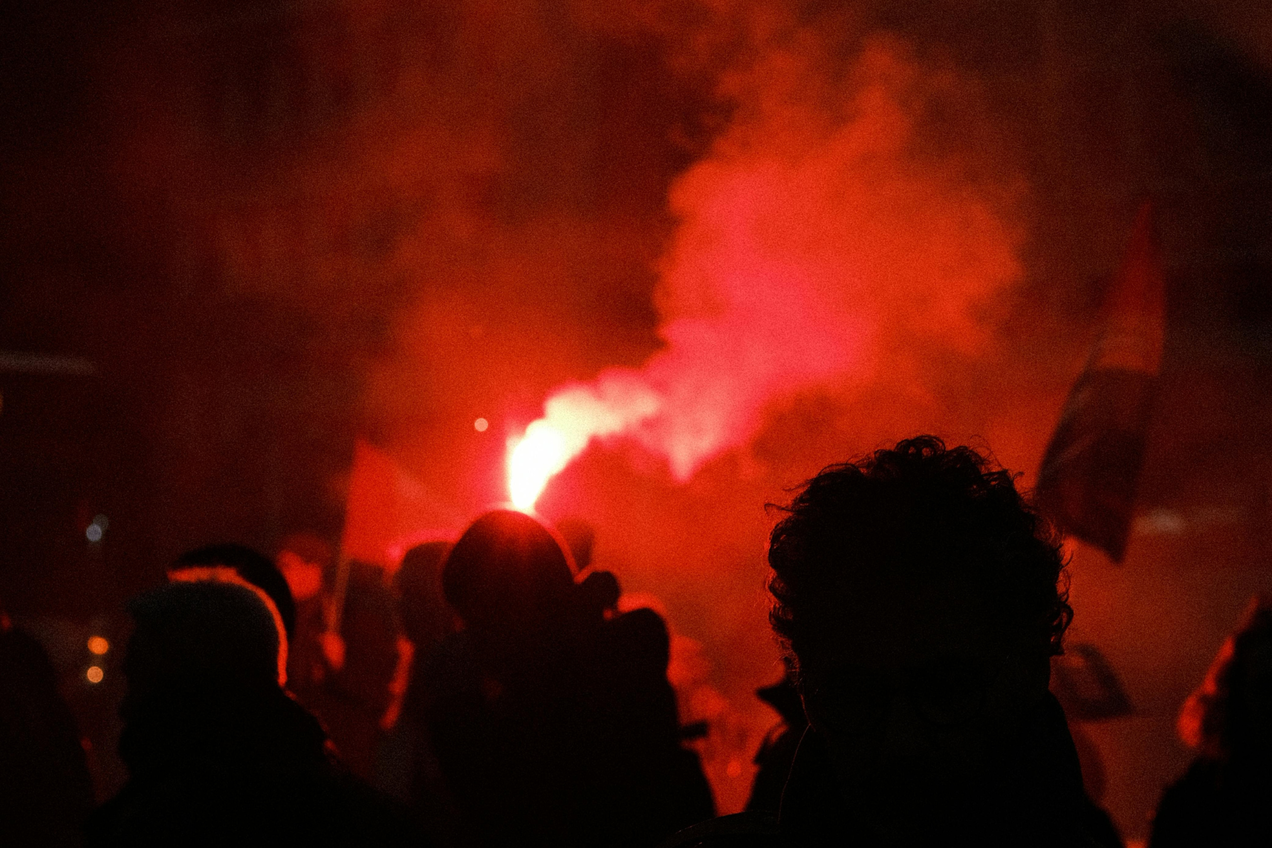
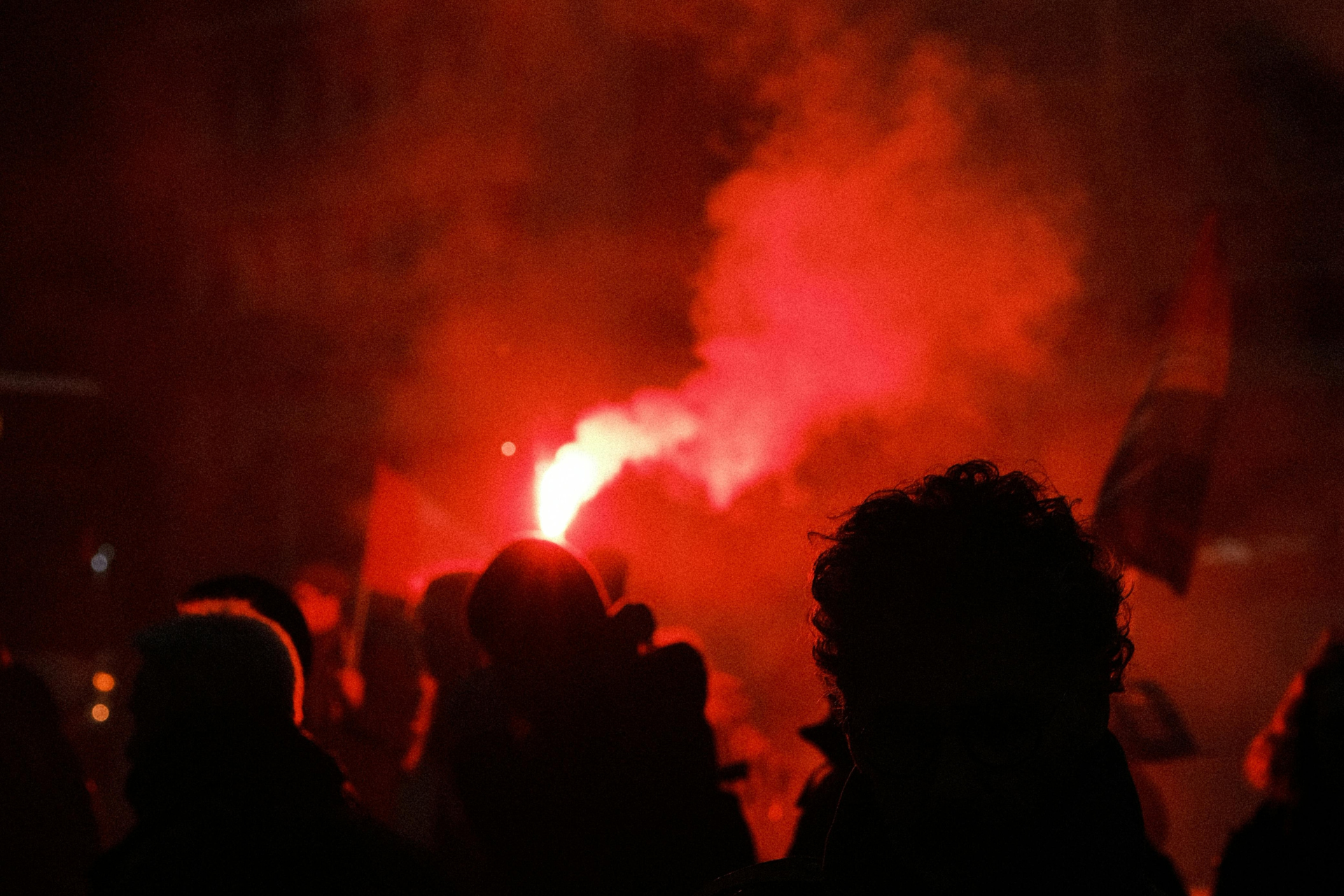
A TikTok video illustrates how far-right radicalisation takes place within youth groups and might even become a transnational phenomenon. In the spring of 2024, the video attracted broad attention and evoked criticism in Germany. It showed young people dancing in a club on the North Sea Island of Sylt – known as a luxury holiday destination – to the well-known song ‘L’Amour Toujours’ by the Italian pop singer Gigi d’Agostino. To the tune of this song, which is more than 20 years old, the young people bellowed the fascist Nazi slogan ‘Germany for the Germans – foreigners out’. Although the video was heavily criticised in Germany and charges of incitement to hatred were even brought against some of the young people, a social media trend was born. Videos by far-right influencers subsequently used the song in digital activism to promote their content. They could rely on young people immediately thinking of the racist slogan without it needing to be quoted. This bricolage worked not only on social media but had an impact far beyond it.
In schools across Germany, pupils threatened classmates from families who had migrated to Germany by humming the song or even muttering the racist slogan. Teachers often failed to intervene because they did not perceive anything unlawful to be taking place. However, through its reception within hooligan groups, the trend also became a transnational phenomenon. The Hungarian hooligan group ‘Carpathian Brigade’ sang the song at a Nations League match in Munich. Austrian fans used it during a match against Turkey in Leipzig. The trend was thus actively propagated by right-wing actors, employing both collective and digital forms of activism at national as well as international occasions.
At the same time, the trend became a call to action for many young people. From a sociology of knowledge perspective, following Karl Mannheim and the work of sociologist Ralf Bohnsack and his colleagues in Berlin, ‘actionism’ refers to collective action in which participants’ bodies of knowledge become consolidated. In the case of the racist TikTok trend ‘L’Amour Toujours’, constant exposure to far-right content causes certain ideas – such as that of a homogeneous Germany – to become ingrained in young people’s thinking. This works particularly well because algorithms highlight polarising or derogatory content that generates a high level of interaction.
Research into social media and its effects points, for example, to cascades of attention in which rituals have an actionist effect. Insults, shaming and polarising narratives create so-called filter bubbles, within which certain values and world views become entrenched.
At the same time, young people are also invited to participate via social media. They are encouraged to ‘like’ posts, whilst influencers and even AI bots ask for opinions in comment sections to generate interaction. But even the passive act of scrolling transforms into a sense of active belonging once one can understand the hidden codes and messages. When, for example, codes are used instead of openly racist text to create a trend, this generates widely accessible insider knowledge. As a young person, one then realises that ‘Döp dö dö döp’ is actually a code for a Nazi slogan. One can use this code in the real world as a racist insult without facing any direct consequences. This is because, unlike the Nazi slogan ‘Germany for the Germans’, this code is not a criminal offence. Trends on social media, so-called ‘hashtag activism’, encourage people to post similar content. Both actions – humming the code in public or using the hashtag to spread coded racism – cross the line into activism. The trend has become a cipher for far-right ideology.
For conservative young men in particular, the digital space is becoming an expanded sphere of political experience. Unlike at school or within the family, their nationalist thinking is not criticised here, but rather reinforced within corresponding filter bubbles. This has been observed, for example, by the Halle-based education researcher Marco Schott and his colleagues, who examine political socialisation in youth groups. The Brazilian psychologist Beatriz Beesen has studied right-wing influencers in Germany and Brazil. In her analyses, she shows that for many young people in both countries, right-wing groups provide a space in which they can discuss societal issues and find a sense of belonging. Both presented their findings at the workshop on Transnational Youth Activism and Radicalisation at the College for Social Sciences and Humanities on 9 and 10 June 2026. Beatriz Beesen also argued there that far-right digital spaces are becoming public spheres in which young people experience a sense of agency. At the conference, the German educational researcher Anette Gräfe-Geusch examined the profile of a young female far-right influencer who, amongst other things, gains attention and reach by networking with far-right politicians across Europe.
Agnieska Pasieka and Emre Arslan presented their findings about networking activities at transnational events and within transnational movements during the workshop. Agnieska Pasieka’s research focuses on network meetings of far-right European youth organisations, with a particular emphasis on Italian, Polish and Hungarian groups. Her work shows that, for example, heroic narratives and strategies for engaging with young people are shared amongst these groups. Emre Arslan is conducting research in Germany on young people within the Turkish far right. His analyses suggest that transnational radicalisation, in the context of migration, capitalises on young men’s experiences of exclusion in Germany.
At the international workshop and through collaboration at the College, it became clear that modes of radicalisation in physical and digital spaces can be examined as the active involvement of young people in far-right movements. In this context, the shift from mere actionism to genuine activism is understood as radicalisation. From a contemporary diagnostic perspective, this raises the question of how far-right positions can become normalised in a societal climate in which diversity and justice have long been core values.
To find answers to this question, we believe it is necessary to examine transnational far-right narratives, such as anti-wokeness, anti-migration or anti-feminism. When comparing Germany and Brazil, discursive differences become apparent. Whilst far-right actors in Brazil focus on an anti-left campaign, the main focus in Germany is on agitating against migration. Common to both discourses is the involvement of neo-conservative groups and the significance of anti-feminist agendas within far-right movements. In addition to transnational far-right narratives, further patterns of transnationalisation become apparent in the formation of digital and personal networks, for example through social media trends or events bringing together far-right youth groups. Through these, far-right movements foster a sense of belonging, facilitate ideologically charged public spheres and exchange ideas, knowledge and resources.
Research into the far-right radicalisation of young people presents a number of methodological challenges, such as gaining access to the research field and specific actors, or engaging with misanthropic ideologies. Through our collaboration at the College and the workshop with international colleagues, we were able to systematically discuss these complex requirements and exchange experiences with different approaches and perspectives from an international viewpoint. The space for thought and exchange created at the College enabled us to develop a transnational research design and to explore prospects for further collaboration. In a planned binational research project, we are investigating how right-wing political ideologies become normalised in different youth milieus. This empirically reconstructive project aims to shed light on the effects of far-right ideologies on generational development and to highlight the importance of global political responses to this trend.

Prof. Wivian Weller
University of Brasília (Brazil) | Education, Sociology of Education
Wivian Weller is a full professor at the Faculty of Education at the University of Brasília (Brazil) and a research fellow of the National Council for Scientific and Technological Development (CNPq). She obtained a Bachelor's and a Master's degree in Science in Education as well as a doctorate in Sociology from Freie Universität Berlin (Germany). She was a visiting scholar at the Graduate School of Education at Stanford University (USA) from 2012 to 2013 and at the Department of Sociology at the University of Campinas (Brazil) from 2019 to 2020.
Wivian Weller’s research focuses primarily on the sociology of education and educational inequalities as well as international comparative school and youth research. She has analysed political and educational orientations as well as the participation of young people in formal education in Brazil, Germany and China. She has also conducted empirical studies on several reform initiatives in school and higher education systems. Another focus of her work is devoted to theoretical and methodological issues, and the development of praxeological sociology of knowledge and the documentary method. She was responsible for introducing the documentary method, based on Karl Mannheim's sociology of knowledge and developed for reconstructive social research by Ralf Bohnsack, to Brazil in the early 2000s. She has published articles, books and book chapters in English, German, Mandarin, Portuguese and Spanish.
Website
 ©
© Daniel Schumann
Prof. Nicolle Pfaff
University of Duisburg-Essen | Educational Studies; Migration and Inequality Research
E-mail: nicolle.pfaff@uni-due.de
 ©
© Daniel Schumann
Prof. Nicolle Pfaff
University of Duisburg-Essen | Educational Studies; Migration and Inequality Research
E-mail: nicolle.pfaff@uni-due.de
Nicolle Pfaff leads the working group ‘Migration and Inequality Research’ at the Faculty of Education at the University of Duisburg-Essen. Her research focuses on educational inequality from a spatial and institutional perspective. She also works on political learning of young people. Her current research involves studies on (anti-)discrimination and youth, urban segregation and education, and trust in education. During the last years she published several studies on how young people learn to deal with discriminatory knowledge and habitualise discrimination-critical thinking and behaviour. In the fields of youth and school research, she argues against research perspectives that are shaped by methodological nationalism and argues for engaging with transnational and diversity-oriented perspectives.
Recent editorial projects include co-edited anthologies on youth research (Pädagogische Institutionen des Jugendalters in der Krise (2024) and Jugend(en). 70. Beiheft der Zeitschrift für Pädagogik (2024)) as well as a co-edited volume on (de)institutionalisation of education, (De)Institutionalisierung von Bildung und Erziehung (2024).
Website
https://www.uni-due.de/biwi/migrations-ungleichheitsforschung/pfaff.shtml
 Back to FEATURES