
By Daniel Chigudu & Martina Brandt
The population of sub-Saharan Africa aged 60 and over, roughly 50 million in 2020, is expected to triple by 2050. In this policy brief, Daniel Chigudu and Martina Brandt examine how governance and social protection can be redesigned to meet this challenge without eroding the intergenerational ties that have long sustained older Africans. Based on a synthesis of demographic, epidemiological, clinical, and policy evidence, the brief proposes an integrated agenda, setting out specific recommendations for the closing years of the UN Decade of Healthy Ageing.
Population ageing has long been treated as a phenomenon of the Global North. Yet the demographic profile of sub-Saharan Africa (SSA) is changing far faster than its policy architecture suggests. The number of people aged 65 and over in the region is projected to rise from roughly 32 million in 2019 to more than 100 million by 2050, and to around 460 million by 2100. The broader over-60 population, roughly 50 million in 2020, is expected to triple by 2050 (Duhon et al. 2025).
What makes the African transition distinctive is not its scale alone but its speed and the conditions under which it unfolds. France had almost 150 years to adapt as the share of its population aged 60 and over rose from 10 to 20 percent (World Health Organization 2018); several African countries face a window of just two to three decades. This compression leaves little time to build the institutions that wealthier societies developed over generations – and it coincides with a heavy double burden of communicable and non-communicable diseases, the erosion of informal family care, persistent gendered disadvantage, and some of the lowest social protection coverage in the world.
The convergence is sharp. Only about a third of older persons in Africa – 31.8 percent in 2023, up from 25.6 percent in 2015 – receive an old-age pension, the lowest rate of any world region, and coverage across SSA is lower still (International Labour Organization 2024); average payouts in countries with comprehensive data fall well below decent-living thresholds; and most national ageing policies are weakly implemented and inadequately financed. At the same time, the period since 2020 has produced a remarkable cluster of opportunities: the UN Decade of Healthy Ageing (2021–2030); the World Health Organization (WHO) Integrated Care for Older People (ICOPE) framework; the entry into force, on 4 November 2024, of the African Union (AU) Protocol on the Rights of Older Persons in Africa; the revised 2022 AU Policy Framework on Ageing; and a new generation of African evidence.
|
|
|
|---|
Sources: Population figures and projections from United Nations, Department of Economic and Social Affairs, Population Division (2019), as compiled by Adebowale et al. (2021) and Duhon et al. (2025); comparative ageing speed from World Health Organization (2018); pension coverage and adequacy from International Labour Organization (2024), International Social Security Association (2023) and Mostert et al. (2025); policy instruments from African Union (2016; 2022) and World Health Organization (2017; 2020). See Table 1 and the reference list for full details.
This brief asks how governance and social protection in SSA can be redesigned to deliver on these commitments without rupturing the intergenerational fabric that has historically sustained older Africans. It synthesises demographic, epidemiological, clinical, and policy evidence into a single, integrated agenda and proposes practical, measurable recommendations for the closing years of the Decade of Healthy Ageing.
Although SSA’s age structure remains the youngest in the world, ageing within the region is rapid and uneven. In 2019, Nigeria, Ethiopia, South Africa, the Democratic Republic of Congo and Tanzania hosted the largest absolute numbers of older persons. Southern Africa already has the highest share of older people; Western and Central Africa have the lowest. This heterogeneity matters for policy: Mauritius, Cape Verde and South Africa, with stronger administrative capacity, can invest in age friendly infrastructure now, while countries such as Uganda, Burkina Faso and Angola have perhaps three decades to build institutions before their older populations expand sharply.
Region / Country | 65+ population in 2019 (M) | Projected 65+ population 2050 (M) | Share 65+ 2019 (%) | Pension coverage |
|---|---|---|---|---|
|
|
|
|
|
|
|
|
|
|
|
|
|
|
|
|
|
|
|
|
|
|
|
|
|
|
|
|
|
|
Rwanda |
|
|
|
|
Sources: Adebowale et al. (2021) drawing on UN World Population Prospects; International Labour Organization (2024); International Social Security Association (2023); HelpAge International; Solanki et al. (2019); Hazell et al. (2025). Figures are indicative and rounded
Older Africans face communicable and non-communicable diseases at the same time. In a nationally representative South African study, hypertension was the most prevalent chronic condition (46 percent), followed by diabetes (23 percent), with the odds of multimorbidity rising sharply with age (Hazell et al. 2025); more than half of South Africans aged 60 and over live with multiple chronic conditions. Diabetes alone cuts disability-free life expectancy by several years in rural settings, and dementia is projected to grow by around 200 percent in southern Africa and over 300 percent in central, western and eastern Africa by 2050 (Ageing in Africa 2025).
Gender shapes ageing at every turn. Women live longer, make up the majority of older adults, and provide most unpaid care – yet they enter old age with lower lifetime earnings, limited access to pensions, and fewer land and property rights. Across 14 SSA countries, women average a healthy life expectancy of just 57 years, leaving roughly five years in poor health before pension eligibility (Mostert et al. 2025); for many men, death arrives before eligibility at all.
Evidence-based ageing policy is hampered by a striking data deficit: a 2024 review identified only seven ageing-related cohort studies across the entire continent – only two with an explicit focus on ageing – compared with 74 in the United States of America alone (Ageing in Africa 2025). Before 2024, the only African study harmonised with the US Health and Retirement Study was HAALSI – Health and Ageing in Africa: A Longitudinal Study of an INDEPTH Community in South Africa, confined to a single rural subdistrict in Mpumalanga. A second-generation cohort, the Longitudinal Study of Health and Ageing in Kenya (LOSHAK), and a Rwandan stepwise programme are now beginning to extend this base beyond southern Africa.
 ©
Pexels / Catalin M
At the continental level, three instruments now anchor ageing policy: the original 2002 AU Policy Framework on Ageing; the AU Protocol on the Rights of Older Persons (adopted 2016, in force since November 2024); and the revised 2022 AU Policy Framework. These are mutually reinforcing in principle, but their integration in practice remains weak – more than two-thirds of AU Member States have yet to ratify the Protocol, and even ratifiers face substantial work in domestication, financing and monitoring.
National ageing policies exist in Ghana, Mozambique, South Africa, Uganda, Tanzania and Rwanda, with drafts in other countries – but the gap between adoption and implementation remains wide. Even in South Africa, older people frequently describe primary care as inaccessible, indifferent or disrespectful. Health systems are not designed for older patients with multiple chronic conditions: Cameroon, with nearly 30 million people, had fewer than three geriatricians and a single dedicated geriatrics unit as of 2020, and geriatric content is minimal across most medical curricula (Ntsama Essomba et al. 2020).
The social-protection picture combines pockets of innovation with widespread structural exclusion. Only 8.4 percent of the labour force contributes to a pension scheme (International Labour Organization, 2014). Yet South Africa’s Older Persons Grant reaches around 4.3 million beneficiaries; Mauritius, Lesotho and Mozambique demonstrate the feasibility of near-universal social pensions; Kenya’s Inua Jamii scheme became universal for those aged 70 and over in 2018; and several countries are extending contributory pensions to informal-sector workers. The building blocks exist – what is missing is integration, adequacy and reach
The WHO defines healthy ageing as developing and maintaining the functional ability that enables wellbeing in older age – a product of an individual’s intrinsic capacity and the environment around them. This reframes ageing away from disease and decline toward capability and participation, and locates its determinants in the structural conditions that surround people across the whole life course.
A life-course lens is especially important in SSA, where childhood undernutrition, adolescent exposure to HIV, gendered constraints on education, and decades of physically demanding informal work all shape the capacity people bring to later years. Evidence from the HAALSI cohort shows that early-life conditions – particularly self-rated childhood health – are consistently associated with ageing in good health decades later. Investments in child health and girls’ education are therefore also investments in the cognitive function, mobility and dignity of older adults in 2050.
 ©
Pexels / Gabby K
Contemporary syntheses identify 10 interrelated determinants of healthy ageing – physical activity, diet, self-awareness, outlook, life-long learning, faith, social support, financial security, community engagement and independence. The African evidence maps closely onto these, but with distinctive weightings:
Income security is a clinical variable. Pension income is associated with better cognition and lower depressive symptoms – both established dementia risk factors. Delays and inadequacies in social pensions are linked to measurably higher dementia mortality across the region.
Social networks are increasingly long-distance. In rural South Africa, older adults living with HIV who maintained ties to distant kin were over twice as likely to be virally suppressed – distant family members channel remittances, health information and emotional support that local networks, depleted by AIDS-era mortality and labour migration, can no longer reliably supply.
Behaviour change is family-mediated. Among Nigerian retirees, support from family and significant others drove successful ageing both directly and through healthier lifestyles and self-esteem – older adults are embedded in interdependent family systems, not isolated decision-makers.
Physical activity is a high-return, low-cost lever. A structured aerobic-plus-resistance protocol reduces non-communicable disease (NCD) risk factors within weeks, and meeting recommended activity levels is associated with roughly a 25 percent lower incidence of all-cause dementia (Oye-Somefun et al. 2026). In much of the region, walking is a financial necessity rather than a choice, making safe, walkable infrastructure a healthy-ageing priority.
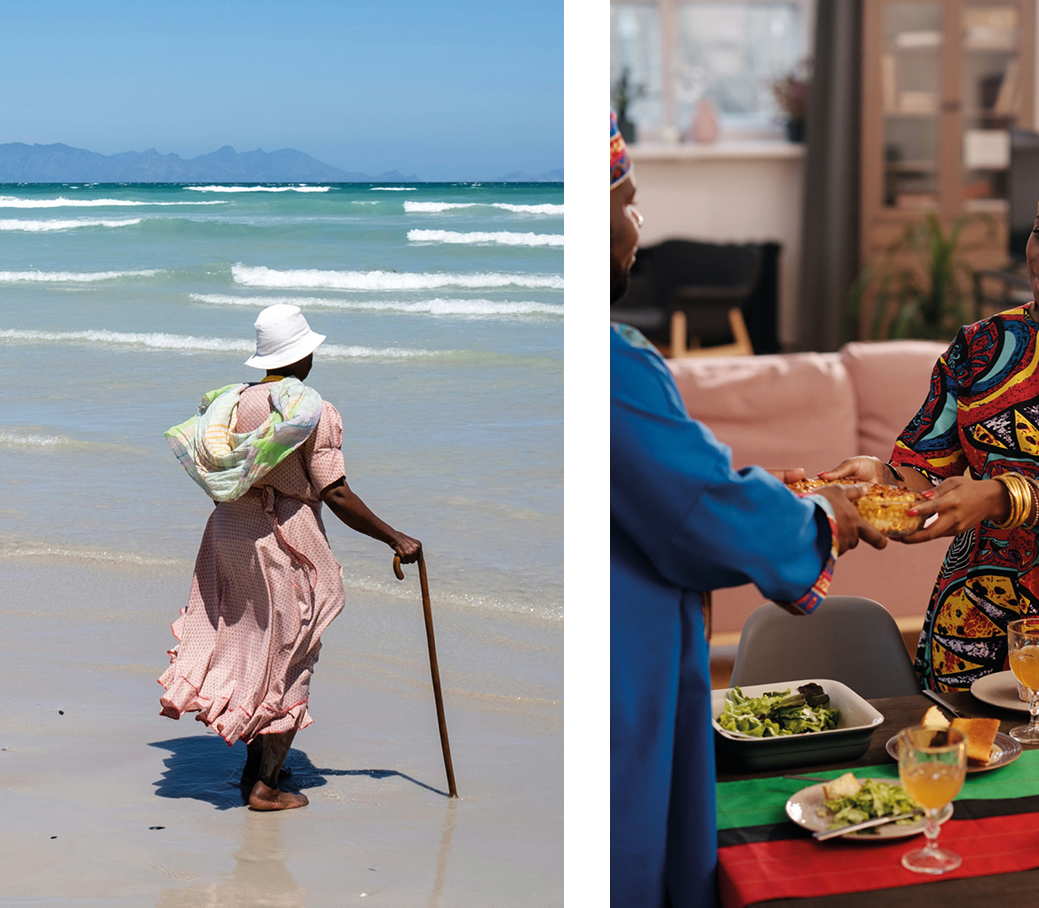
Faith, food and culture matter. Among the longest-lived adults in South Africa’s Joe Gqabi District, longevity was tracked with indigenous leafy-vegetable diets, daily physical work, and a strong spiritual orientation. Healthy-ageing policy in SSA cannot be culturally agnostic; it must engage indigenous knowledge, faith communities and family forms rather than displacing them.
 ©
Unsplash / Filipp Romanovski ; Pexels / Askar Abayev
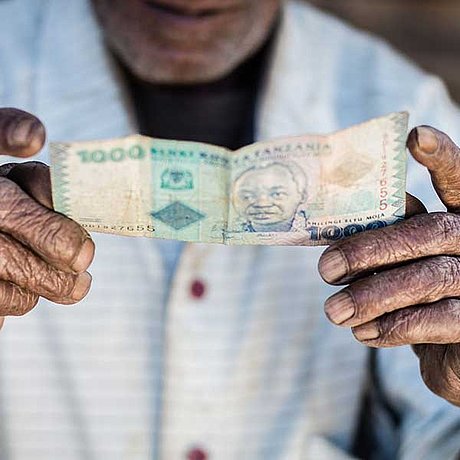
Across 14 sub-Saharan African countries with comprehensive data, the average monthly pension payout is about 57 USD. In Tanzania and Uganda, decent-living income estimates imply a payout of at least 117 USD per month, against an actual average of about 8 USD; only the three highest-paying systems – Seychelles, South Africa and Mauritius – reach an average of 157 USD, a level judged sufficient to support healthy ageing. But the deeper design flaw is timing. In countries including Botswana, Lesotho, Mozambique, Namibia, Eswatini, Nigeria, Kenya, Tanzania and Uganda, the pension eligibility age exceeds male life expectancy at birth: the median man is statistically dead before he qualifies for any benefit at all. This framing has been contested – life expectancy at birth is depressed by early-life mortality, and a man who reaches 45 in Africa can expect to live to around 74, so most men who survive to working age do reach eligibility (Prynn and Walsh 2025).
The three systems with the earliest eligibility and highest payouts – Mauritius, Seychelles and South Africa – are also the only ones associated with declining or stable dementia mortality. When South Africa lowered the male eligibility age from 65 to 60 in 2008, healthcare use rose, cases of depression and traumatic stress fell, deaths among 60-year-old men dropped by around five percent, the poverty gap narrowed by 13 percent, and the income of the poorest five percent rose by half.
|
|
|
|---|
The lesson for policymakers: pension design is not a peripheral concern of fiscal or labour policy – it is a direct instrument of dementia prevention and healthy ageing. Eligibility ages should be benchmarked against local healthy life expectancy rather than imported high-income norms, and payouts raised toward a regional decent-living floor.
Mostert et al. (2025), Alzheimer’s & Dementia; with ILO (2024) and International Social Security Association (2023)
Up to 40 percent of dementia cases worldwide are attributable to modifiable risk factors – physical inactivity, low education, social isolation, unhealthy diet, tobacco and alcohol use, hypertension, diabetes, obesity, depression and hearing loss – and these are common in many SSA settings. Until recently, no large trial had tested whether the multidomain lifestyle approach pioneered by Finland’s landmark FINGER study (the Finnish Geriatric Intervention Study to Prevent Cognitive Impairment and Disability) could work in African populations.
Africa-FINGERS is the first multi-country initiative to fill that gap. Across vanguard sites in Kenya and Nigeria, it recruits 600 at-risk adults aged 50 and over. It randomises them to a structured, locally adapted programme – diet, physical activity (including traditional dance), cognitive enrichment, vascular and metabolic risk management, and structured social engagement – or to a self-guided control arm, over 24 months.
Three features make it significant. First, intervention components are co-designed with community advisory boards, village chiefs, providers and policymakers, and tailored to local languages, food systems, family structures and gender roles. Second, it is harmonised with the Worldwide-FINGERS network, allowing genuine cross-country comparison. Third, by combining the trial with capacity-building – an academy, brain-health registers, a biorepository and Good Clinical Practice training – and with health-economic analysis, it builds the regional research infrastructure whose absence is the binding constraint on evidence-based policy.
|
|
|
|---|
The lesson for policymakers: prevention is feasible and culturally translatable, but only if trials are designed from the outset for integration into primary care and community platforms – not left as time-limited research projects.
Udeh-Momoh et al. (2024), Alzheimer’s & Dementia, on the Africa-FINGERS project
The evidence points toward an integrated policy architecture rather than a series of disease- or sector-specific interventions. The framework treats healthy ageing as the outcome, intergenerational solidarity as the social mechanism, and governance as the lever through which that mechanism is supported, regulated and scaled. Demographic and contextual drivers feed into seven reinforcing pillars, which – mediated by solidarity and scaffolded by public action – deliver functional ability, participation and resilience.
The first five pillars are load-bearing, but they hold only where two enabling pillars run through them. The sixth pillar, professionalism, confronts a workforce deficit that no policy can offset: a region in which Cameroon has fewer than three geriatricians and geriatric content is largely absent from medical curricula needs deliberate investment in geriatric and gerontological training, clear standards of person-centred and dignified care, and an ethical culture that treats older patients as contributors rather than residual claimants on stretched systems. The seventh pillar, statistics, confronts a data deficit that leaves policy flying blind – only seven ageing-related cohorts across the continent, compared with 74 in the United States of America alone. It calls for protecting locally led cohorts and trials, disaggregating routine statistics by 60+, 70+ and 80+ age bands, gender and location, and building African-calibrated indices of healthy ageing and intergenerational solidarity. Professionalism supplies the human capacity to deliver the framework; statistics supplies the evidence to steer it.
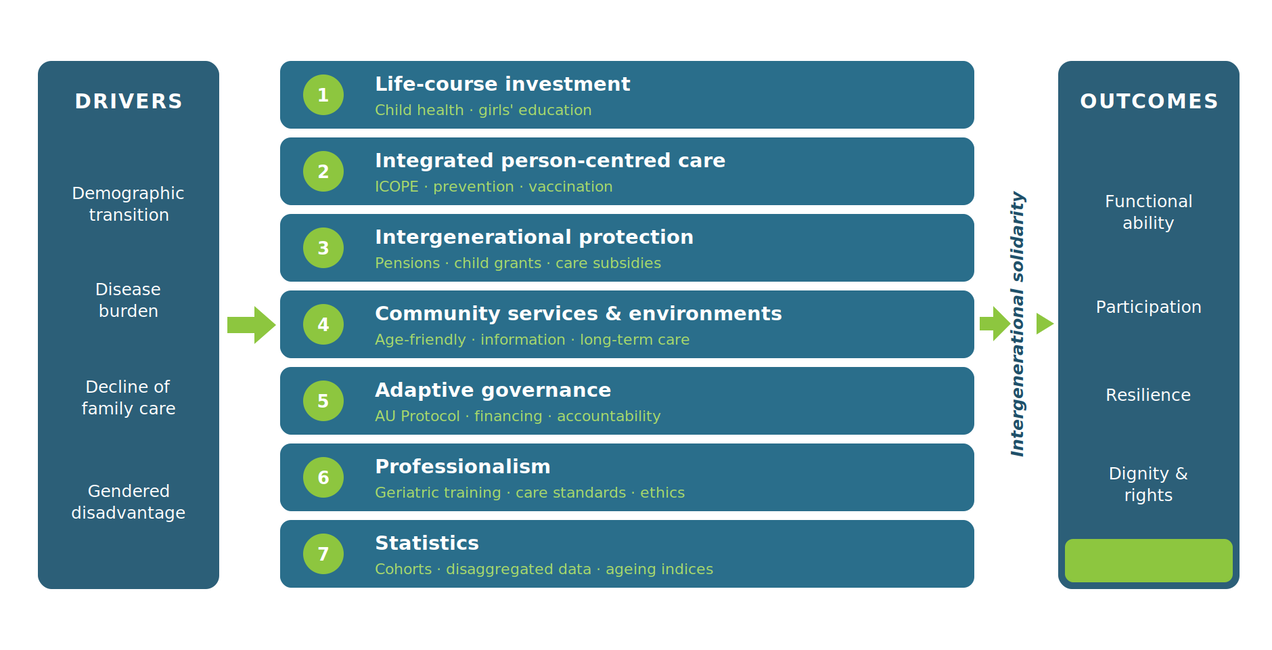
Healthy ageing in SSA is achievable, but only through coordinated action that links seven reinforcing pillars and treats older persons as participants and contributors rather than residual welfare claimants. Drawing on the case studies and evidence above, we offer seven recommendations, each accompanied by an indicative target for 2030 – the closing year of the UN Decade of Healthy Ageing.
 ©
Unsplash / Nappy
The demographic dividend SSA hopes to capture from its youth depends on healthy, secure older parents and grandparents who enable – rather than drain – intergenerational mobility. Delay compounds cost: under-investment shifts the fiscal burden forward and shows up later as dementia, disability and poverty. Older persons are politically under-organised, and ageing ministries are under-funded; raising the political profile of ageing is the precondition for everything that follows.
Target: ≥20 SSA states explicitly mainstream ageing and intergenerational equity in their national
development plans.
Healthy ageing is forged decades before old age. Sustained investment in maternal and child nutrition, early-childhood development, and universal secondary completion – with particular attention to girls – yields a triple dividend: better child outcomes, stronger mid-life productivity, and healthier ageing, especially for women, who are most at risk of later-life dementia and disability. Strengthening birth registration and vital statistics is a cheap, high-return complement.
Target: female secondary completion ≥85 % in ≥20 countries; civil-registration coverage ≥90 % in
≥30 countries by 2030
 ©
Pexels / RDNE
This answers the double burden of disease set out earlier: with more than half of older South Africans living with multiple chronic conditions, but health systems still organised around single diseases and served by a handful of geriatricians, care has to be rebuilt around the whole person. Adapt the WHO ICOPE framework as the organising model for older-adult care at the primary level, shifting attention from organ pathology to the maintenance of intrinsic capacity – mobility, cognition, vitality, hearing, vision, and psychological well-being. Embed life-course vaccination and multidomain dementia risk-reduction (as in Africa-FINGERS) in routine care rather than vertical campaigns, and build explicit pathways for psychosocial, grief and spiritual support. Physiotherapists and community health workers are central, not peripheral, to this workforce.
Target: geriatric training units in ≥25 medical schools; ICOPE pathways adopted in ≥15 countries; elderly immunisation programmes in ≥10 countries
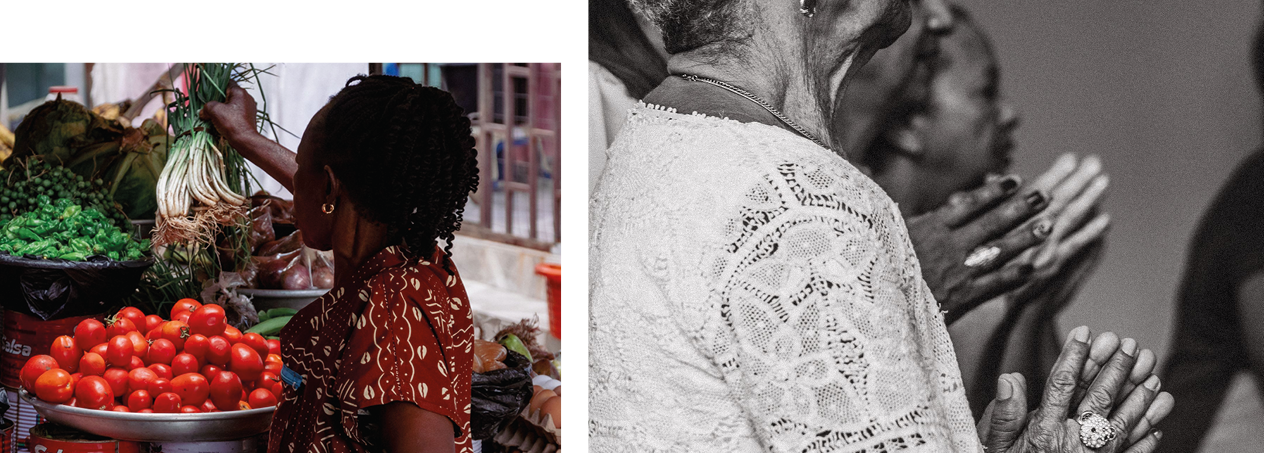
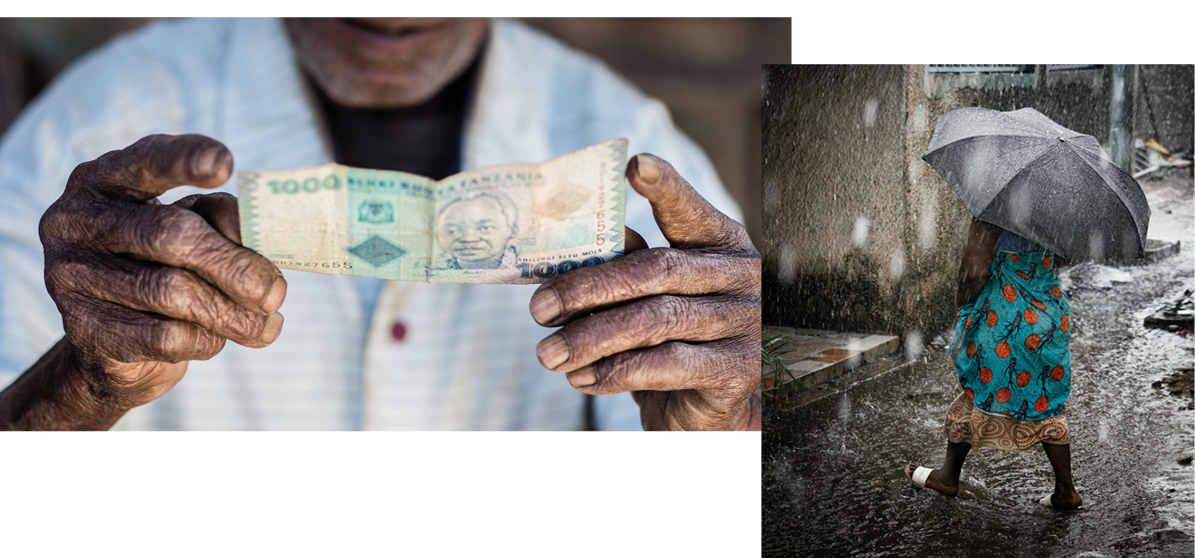
This follows directly from Case Study I: where pension eligibility ages exceed male life expectancy and average payouts of roughly 57 USD sit far below a decent-living floor, income insecurity becomes a measurable driver of dementia mortality – making pension design itself an instrument of healthy ageing. Anchor old-age income security in a non-contributory social pension – universal or quasi-universal, financed from general taxation – and set at a level sufficient for dignity. Calibrate eligibility ages to local healthy life expectancy rather than to Organisation for Economic Co-operation and Development (OECD) norms, and integrate pensions with child grants, transport subsidies, caregiver allowances, and bereavement support into a single ‘cash-plus’ system. Extend contributory schemes to informal-sector workers through mobile-money micropensions, and protect older adults’ income from intra-household appropriation.
Target: pension coverage doubled to ≥35 %; gender gap in receipt halved; eligibility reviewed
against healthy life expectancy in ≥15 countries
 ©
Pexels / Mensa Bonsu; Pexels / Jordan Vilas
Decentralise rehabilitation and primary care along community-oriented lines, and reach the rural and housebound through pop-up vaccination at pension pay-points and faith gatherings – borrowing from the region’s HIV response and COVID-19 roll-out. Apply the WHO age-friendly domains with local calibration: in much of SSA, secure income, employment and accessible housing matter more than imported checklists. Invest in walkable infrastructure, transport subsidies, public libraries and information and communication technology (ICT) systems, multilingual health information, climate-adaptive design, and a long-term-care continuum from home to residential care.
Target: ≥10 countries with national long-term-care strategies; ≥30 cities in the WHO age-friendly network; ≥20 countries with age-friendly housing programmes
Domesticate the AU Protocol on the Rights of Older Persons: review legislation against its standards, establish monitoring through national human-rights institutions, and create dedicated focal points or commissions on ageing with cross-ministry authority. Mainstream ageing across development, health, urban and climate plans. Crucially, pair reform with explicit anti-corruption safeguards – transparent eligibility rules, biometric or mobile-money payment, independent grievance and audit channels – and with consumer voice through older persons’ organisations and participatory monitoring. Universal pensions at modest levels cost an estimated 0.5–1.5 percent of GDP in most African countries, well within reach through moderate tax reform (HelpAge International 2011; International Labour Organization 2014).
Target: ≥35 AU states ratify the Protocol; ≥20 adopt/update national ageing policies; ≥10 with
operational anti-corruption safeguards in pension delivery
 ©
Pexels / Mjombadii; Pexels / Jean Marc Bonnel
The data deficit set out earlier – only seven ageing-related cohorts across the continent, compared with 74 in the United States – is the binding constraint this pillar aims to lift. Evidence-based policy is impossible without regionally grounded data. Protect long-term, locally led investment in cohorts and trials – HAALSI, the new LOSHAK cohort in Kenya, the Rwandan stepwise programme and Africa-FINGERS – against volatile external funding, and treat data sovereignty as a precondition for sound policy. Disaggregate routine statistics by 60+, 70+ and 80+ age bands, gender and rural/urban location, and develop African-calibrated indices of healthy ageing and intergenerational solidarity to track progress.
Target: age-disaggregation in core surveys for ≥80 % of SSA countries; sustained multi-year
funding secured for ≥4 harmonised African cohorts
Sub-Saharan Africa stands at an unusual moment of policy possibility. The demographic transition is real and accelerating; the disease burden is shifting; informal family care is under strain; and global and continental frameworks have converged in ways that legitimate ambitious reform. The entry into force of the AU Protocol, the revised AU Policy Framework, the mid-point of the UN Decade of Healthy Ageing, the launch of Africa-FINGERS, the development of LOSHAK, and a recent wave of pension reforms together create an opening that may not recur.
The agenda set out here rests on a single conviction: the choice is not between traditional family solidarity and modern welfare states, but between a region that builds its institutions before its older population expands and one that builds them, more painfully, afterwards. Public action is needed not to replace the family but to scaffold it – through pensions, care subsidies, accessible services and rightsbased governance.
None of this is easy, and none of it is cheap. But the alternative – drifting into the transition with health systems organised for a younger population, with pension systems whose eligibility ages exceed male life expectancy, and with research infrastructures dependent on volatile external funding – is far costlier in human and fiscal terms. The cultural fabric of African societies, which has long honoured older persons as wisdom-keepers and intergenerational anchors, is an asset rather than an obstacle in this work.
If pursued with seriousness, the policy innovations sketched here would mean that the older Africans of mid-century inhabit societies that recognise their rights, finance their security, and design their environments for their participation. Ageing well in sub-Saharan Africa is, in this sense, not a sectoral concern but a civilisational one – and its foundations must be laid now.
We hope you find this brief useful in that work.
University of South Africa & College for Social Sciences and Humanities, University Alliance Ruhr
Daniel Chigudu is Professor of Political Science and Governance at the University of South Africa. He has been an International Senior Research Fellow at the College for Social Sciences and Humanities, University Alliance Ruhr, Germany, from March to August 2026. His work spans governance, public policy, social development, climate change, peace and conflict studies.
 ©
eventfotograf.in
TU Dortmund University
Martina Brandt is Professor for Social Structure and Sociology of Ageing Societies at TU Dortmund University. She researches and teaches in the field of ageing in Europe and is interested in family and generations, care and well-being, work and health throughout the life course, as well as social inequality in demographic change and in the context of socio-ecological crises.
 ©
Aliona Kardash
This brief draws on a structured synthesis of the demographic, epidemiological, clinical and governance evidence on healthy ageing in sub-Saharan Africa. The authors thank the experts and practitioners consulted during its preparation, and the colleagues working on ageing across the region whose research underpins this synthesis. The authors gratefully acknowledge the members of TU Dortmund University and the College for Social Sciences and Humanities for their constructive input.
This publication was supported by the College for Social Sciences and Humanities, a research institution of the University Alliance Ruhr in Essen, Germany.
In line with the guidelines of the Deutsche Forschungsgemeinschaft (DFG) on the ‘Use of Generative Models for Text and Image Creation in the DFG’s Funding Activities’, the authors disclose the following. The generative AI model Claude Opus 5 (Anthropic) was used to generate the graphic in Figure 1. The conceptual content of the figure – the drivers, the seven policy pillars, the mediating role of intergenerational solidarity and the outcomes – was specified by the authors, who reviewed and approved the resulting image. The use of generative AI was limited to the production of this figure; it did not extend to the analysis, argument or text of the brief, for which the authors take full responsibility.
The figures, case studies and recommendations in this brief are drawn from a structured synthesis of the published demographic, epidemiological, clinical and policy evidence on healthy ageing in sub-Saharan Africa. Key sources include the HAALSI and developing LOSHAK cohorts, the Rwandan stepwise programme, the multi-country Africa-FINGERS trial, pan-African analyses of pension and dementia outcomes, and the African Union Protocol and Policy Framework on Ageing.
Adebowale, Ayo S. et al. (2021): ‘Ageing in sub-Saharan Africa: demographic and historical perspectives’, in: Odimegwu, C. O. / Adewoyin, Y. (eds.): The Routledge Handbook of African Demography. London: Routledge, pp. 679–703. DOI: https://doi.org/10.4324/9780429287213-44
African Union (2016): Protocol to the African Charter on Human and Peoples’ Rights on the Rights of Older Persons in Africa. Addis Ababa: African Union (entered into force 4 November 2024).
African Union (2022): Policy Framework and Plan of Action on Ageing. Revised edition. Addis Ababa: African Union.
Ageing in Africa (2025): ‘Editorial’, The Lancet Healthy Longevity, 6. DOI: https://doi.org/10.1016/S2666-7568(25)00098-4
Duhon, Madeline E. et al. (2025): ‘Preparing for an ageing Africa: data-driven priorities for economic research and policy’, Journal of Political Economy Microeconomics (also published as NBER Working Paper 31750). DOI: https://doi.org/10.1086/737243
Gómez-Olivé, F. Xavier et al. (2018): ‘Cohort profile: Health and Ageing in Africa: a Longitudinal Study of an INDEPTH Community in South Africa (HAALSI)’, International Journal of Epidemiology, 47(3), pp. 689–690. DOI: https://doi.org/10.1093/ije/dyx247
Hazell, Matthew et al. (2025): ‘Prevalence, patterns, and determinants of multimorbidity in South Africa: insights from a nationally representative survey’, PLOS Global Public Health, 5(5), e0004603. DOI: https://doi.org/10.1371/journal.pgph.0004603
HelpAge International (2011): The Price of Income Security in Older Age: Cost of a Universal Pension in 50 Low- and Middle-Income Countries. Discussion Paper. London: HelpAge International.
HelpAge International: Social Pensions Database. London: HelpAge International. Available at: www.pension-watch.net (accessed: 11 Aug. 2026).
International Labour Organization (2014): Social Protection for Older Persons: Key Policy Trends and Statistics. Social Protection Policy Papers. Geneva: International Labour Organisation.
International Labour Organization (2021): World Social Protection Report 2020–22: Social Protection at the Crossroads – in Pursuit of a Better Future. Geneva: International Labour Organisation.
International Labour Organization (2024): World Social Protection Report 2024–26: Universal Social Protection for Climate Action and a Just Transition. Geneva: International Labour Organisation.
International Social Security Association (2023): Social Security Country Profiles. Geneva: International Social Security Association.
Kalu, Michael E. et al. (2021): ‘Setting priorities for ageing research in Africa: a systematic mapping review of 512 studies from sub-Saharan Africa’, Journal of Global Health, 11, 15002. DOI: https://doi.org/10.7189/jogh.11.15002
Mostert, Cyprian M. et al. (2025): ‘Investing in equitable healthy ageing: why Africa must reform social pension schemes to improve Alzheimer’s disease and dementia outcomes’, Alzheimer’s & Dementia, 21(2), e14527. DOI: https://doi.org/10.1002/alz.14527
Nagarajan, Niranjani et al. (2024): ‘Development of the Longitudinal Study of Health and Ageing in Kenya (LOSHAK)’, Innovation in Ageing, 8(4), igad111. DOI: https://doi.org/10.1093/geroni/igad111
Ntsama Essomba, Marie Josiane et al. (2020): ‘Geriatric syndromes in an urban elderly population in Cameroon: a focus on disability, sarcopenia and cognitive impairment’, Pan African Medical Journal, 37, 229. DOI: https://doi.org/10.11604/pamj.2020.37.229.26634
Oye-Somefun, Akinkunle et al. (2026): ‘The relationships between physical activity, sedentary behaviour, sleep, and dementia: a systematic review and meta-analysis of cohort studies’, PLOS One, 21(4), e0343621. DOI: https://doi.org/10.1371/journal.pone.0343621
Prynn, Josephine E. / Walsh, Sebastian (2025): ‘Reply to: Investing in equitable healthy ageing: why Africa must reform social pension schemes to improve Alzheimer’s disease and dementia outcomes’, Alzheimer’s & Dementia, 21(5), e70298. DOI: https://doi.org/10.1002/alz.70298
Solanki, Geetesh et al. (2019): ‘Population ageing in South Africa: trends, impact, and challenges for the health sector’, South African Health Review, 2019(1), pp. 175–182.
South African Social Security Agency (2025): Older Persons Grant beneficiary count (approx. 4.3 million recipients), as reported in National Treasury: Estimates of National Expenditure 2025. Vote 19: Social Development. Pretoria: National Treasury.
Udeh-Momoh, Chinedu T. et al. (2024): ‘Dementia risk reduction in the African context: multi-national implementation of multimodal strategies to promote healthy brain ageing in Africa (the Africa-FINGERS project)’, Alzheimer’s & Dementia, 20(12), pp. 8987–9003. DOI: https://doi.org/10.1002/alz.14344
United Nations, Department of Economic and Social Affairs, Population Division (2019): World Population Prospects 2019. New York: United Nations.
World Health Organization (2017): Integrated Care for Older People (ICOPE): Guidelines on Community-Level Interventions to Manage Declines in Intrinsic Capacity. Geneva: World Health Organisation.
World Health Organization (2018): Ageing. Facts in Pictures. Geneva: World Health Organisation. Available at: www.who.int/news-room/facts-in-pictures/detail/ageing (accessed: 21 Aug. 2026).
World Health Organization (2020): Decade of Healthy Ageing 2020–2030: Plan of Action. Geneva: World Health Organisation.


 Back to FEATURES