
In many democratic countries, the political climate is shifting to the right. This two-day workshop will examine right-wing radicalisation and youth activism in their transnational dimensions. It brings together specialists from different domains conducting research on right-wing extremism among young people, either in specific regional or transnational settings or in an international comparative context.
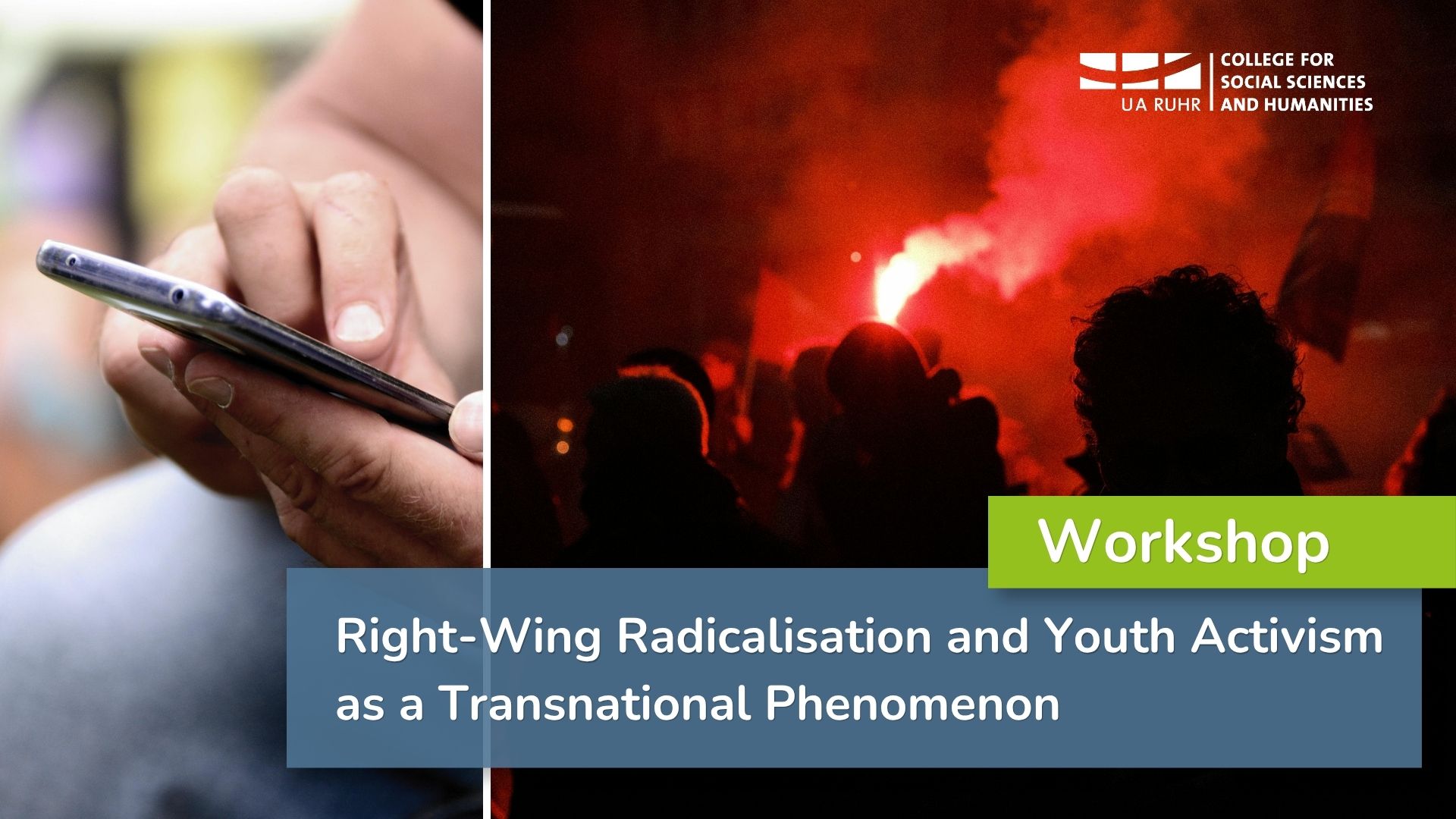
In many democratic countries, the political climate is shifting to the right. As part of the young people tend to identify with nationalist, racist, sexist and anti-migration discourse, concerns are arising about a potential transnational right-wing extremist youth movement. Neoconservative narratives promise straightforward solutions to complex social issues and appeal to the need for belonging and identity in an increasingly complex globalised society. At the same time, these ideas are spreading far beyond national borders via digital networks, turning locally generated content and debates into transnational trends and discourses. Tension arises because nationalism, on the one hand, focuses on distinction from 'the other', yet, on the other hand, is reinforced and replicated through global communication platforms. This enables conservative and radical thoughts to achieve a global reach and deepens existing social polarisation.
This two-day workshop will examine right-wing radicalisation and youth activism in their transnational dimensions. It brings together specialists from different domains conducting research on right-wing extremism among young people, either in specific regional or transnational settings or in an international comparative context. Participants will discuss the functioning, mechanisms and effects of transnational youth right-wing radical phenomena.
Arrival and light refreshments
Opening & Introduction: Transnational Dimensions of Right-Wing Radicalisation and Youth Activism
Wivian Weller, College for Social Sciences and Humanities & University of Brasília (Brazil)
Nicolle Pfaff, University of Duisburg-Essen (Germany)
Young, Patriotic, Radical: Far-Right Orientations in Youth Groups
Marco Schott, Martin-Luther-Universität Halle-Wittenberg (Germany)
Far-Right Iconography, Youth and Education
Annett Graefe-Geusch, Helmut-Schmidt-Universität (Germany)
Break
Turkish Grey Wolves in Transnational Space: Lived Experiences and Identity Shifts
Emre Arslan, Internationale Hochschule (IU) (Germany)
Far-Right Youth Activists in Contemporary Europe (online)
Agnieszka Pasieka, Université de Montréal (Canada)
Break
Dinner
Youth Activism in the Radical Right: Trajectories and Political Clusters in Brazil and Germany
Beatriz Besen, Pontifícia Universidade Católica de São Paulo (Brazil)
Break
Young, Memetic and "Cool": Right-Wing Community in Brazil (online)
Belén Diaz, Freie Universität Berlin (Germany)
Transnationalization of Far-Right Politics: Actors, Repertoires, Mechanism (online)
Batuhan Eren, Scuola Normale Superiore in Florence (Italy)
Concluding Discussion: Transnational Dimensions of Far-Right Youth Activism: Concepts, Methods and Perspectives for Research
Refreshments and farewell
End of workshop

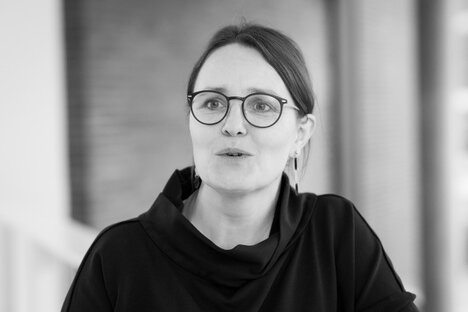
Prof. Wivian Weller
University of Brasília (Brazil) | Education, Sociology of Education
Wivian Weller is a full professor at the Faculty of Education at the University of Brasília (Brazil) and a research fellow of the National Council for Scientific and Technological Development (CNPq). She obtained a Bachelor's and a Master's degree in Science in Education as well as a doctorate in Sociology from Freie Universität Berlin (Germany). She was a visiting scholar at the Graduate School of Education at Stanford University (USA) from 2012 to 2013 and at the Department of Sociology at the University of Campinas (Brazil) from 2019 to 2020.
Wivian Weller’s research focuses primarily on the sociology of education and educational inequalities as well as international comparative school and youth research. She has analysed political and educational orientations as well as the participation of young people in formal education in Brazil, Germany and China. She has also conducted empirical studies on several reform initiatives in school and higher education systems. Another focus of her work is devoted to theoretical and methodological issues, and the development of praxeological sociology of knowledge and the documentary method. She was responsible for introducing the documentary method, based on Karl Mannheim's sociology of knowledge and developed for reconstructive social research by Ralf Bohnsack, to Brazil in the early 2000s. She has published articles, books and book chapters in English, German, Mandarin, Portuguese and Spanish.
Website
 ©
© Daniel Schumann
©
© Daniel Schumann
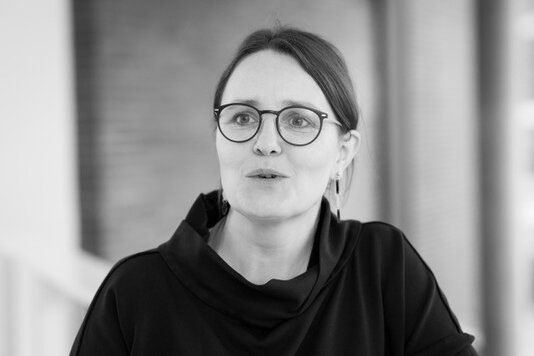
Prof. Nicolle Pfaff
University of Duisburg-Essen | Educational Studies; Migration and Inequality Research
E-mail: nicolle.pfaff@uni-due.de
 ©
© Daniel Schumann
©
© Daniel Schumann
Prof. Nicolle Pfaff
University of Duisburg-Essen | Educational Studies; Migration and Inequality Research
E-mail: nicolle.pfaff@uni-due.de
Nicolle Pfaff leads the working group ‘Migration and Inequality Research’ at the Faculty of Education at the University of Duisburg-Essen. Her research focuses on educational inequality from a spatial and institutional perspective. She also works on political learning of young people. Her current research involves studies on (anti-)discrimination and youth, urban segregation and education, and trust in education. During the last years she published several studies on how young people learn to deal with discriminatory knowledge and habitualise discrimination-critical thinking and behaviour. In the fields of youth and school research, she argues against research perspectives that are shaped by methodological nationalism and argues for engaging with transnational and diversity-oriented perspectives.
Recent editorial projects include co-edited anthologies on youth research (Pädagogische Institutionen des Jugendalters in der Krise (2024) and Jugend(en). 70. Beiheft der Zeitschrift für Pädagogik (2024)) as well as a co-edited volume on (de)institutionalisation of education, (De)Institutionalisierung von Bildung und Erziehung (2024).
Website
https://www.uni-due.de/biwi/migrations-ungleichheitsforschung/pfaff.shtml