
Youth research is still strongly influenced by methodological nationalism, as up to now the nation state is the central field of research in youth studies. However, global crises, generation-specific educational spaces and media experiences, as well as migration and cross-border mobility, are increasingly calling this perspective into question. Transnational research perspectives on youth have only been developed to a limited extent so far. The project addresses this conceptual gap in generation-related social science research. Based on a preliminary study of neo-conservative and right-wing extremist transnational youth movements, an analytical framework for transnationally-oriented youth research will be devised. Theoretical and methodological perspectives on youth are developed based on the concept of generation and are considering structural, socio-cultural, political and discursive aspects. These perspectives assume that the social conditions that constitute youth are increasingly transnational in nature. The approach to transnational youth research will be discussed within the project in a roundtable and a workshop, as well as in a conference paper. Finally, it will be published in a journal article.
With its work on neo-conservative and right-wing extremist movements, the project addresses a topic of high socio-political relevance. Right-wing political movements among young people are both nationalistic and oriented towards transnational structures and forces. Understanding the dynamics at work here is essential for the preservation of democratic structures. Work on this topic allows for interdisciplinary connections to the humanities and social sciences as well as to media and communication studies. The joint analysis of different research data in the preliminary study and the invitation of experts in the field form the core of the research project. The research perspective developed within the project will be transferred to a research proposal.

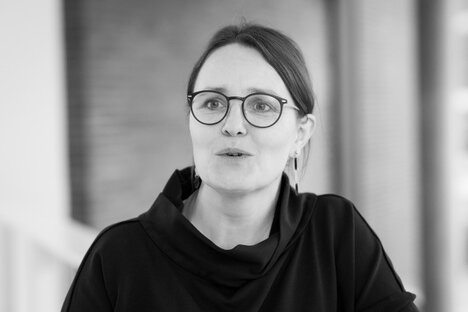
Prof. Wivian Weller
University of Brasília (Brazil) | Education, Sociology of Education
E-mail: wivian.weller@college-uaruhr.de
Wivian Weller is a full professor at the Faculty of Education at the University of Brasília (Brazil) and a research fellow of the National Council for Scientific and Technological Development (CNPq). She obtained a Bachelor's and a Master's degree in Science in Education as well as a doctorate in Sociology from Freie Universität Berlin (Germany). She was a visiting scholar at the Graduate School of Education at Stanford University (USA) from 2012 to 2013 and at the Department of Sociology at the University of Campinas (Brazil) from 2019 to 2020.
Wivian Weller’s research focuses primarily on the sociology of education and educational inequalities as well as international comparative school and youth research. She has analysed political and educational orientations as well as the participation of young people in formal education in Brazil, Germany and China. She has also conducted empirical studies on several reform initiatives in school and higher education systems. Another focus of her work is devoted to theoretical and methodological issues, and the development of praxeological sociology of knowledge and the documentary method. She was responsible for introducing the documentary method, based on Karl Mannheim's sociology of knowledge and developed for reconstructive social research by Ralf Bohnsack, to Brazil in the early 2000s. She has published articles, books and book chapters in English, German, Mandarin, Portuguese and Spanish.
Website
 ©
© Daniel Schumann
©
© Daniel Schumann
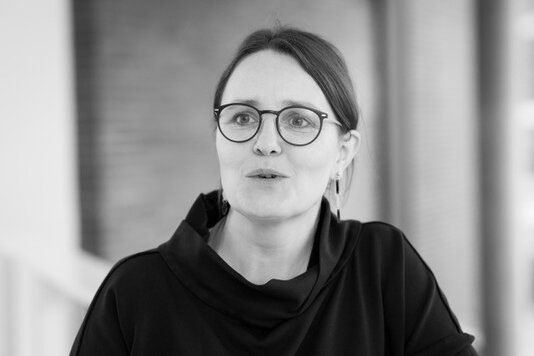
Prof. Nicolle Pfaff
University of Duisburg-Essen | Educational Studies; Migration and Inequality Research
E-mail: nicolle.pfaff@uni-due.de
 ©
© Daniel Schumann
©
© Daniel Schumann
Prof. Nicolle Pfaff
University of Duisburg-Essen | Educational Studies; Migration and Inequality Research
E-mail: nicolle.pfaff@uni-due.de
Nicolle Pfaff leads the working group ‘Migration and Inequality Research’ at the Faculty of Education at the University of Duisburg-Essen. Her research focuses on educational inequality from a spatial and institutional perspective. She also works on political learning of young people. Her current research involves studies on (anti-)discrimination and youth, urban segregation and education, and trust in education. During the last years she published several studies on how young people learn to deal with discriminatory knowledge and habitualise discrimination-critical thinking and behaviour. In the fields of youth and school research, she argues against research perspectives that are shaped by methodological nationalism and argues for engaging with transnational and diversity-oriented perspectives.
Recent editorial projects include co-edited anthologies on youth research (Pädagogische Institutionen des Jugendalters in der Krise (2024) and Jugend(en). 70. Beiheft der Zeitschrift für Pädagogik (2024)) as well as a co-edited volume on (de)institutionalisation of education, (De)Institutionalisierung von Bildung und Erziehung (2024).
Website
https://www.uni-due.de/biwi/migrations-ungleichheitsforschung/pfaff.shtml