
Extreme heat is linked to illness and increased mortality. Both harmful and therapeutic uses and effects of heat are unevenly distributed across societies. This workshop examines heat as an embodied and sensorial experience that shapes health and illness, exhaustion, recovery, and care. A second focus lies on the approach to heat in health governance: how do different conceptions of heat – as risk, hazard, or living condition – influence policies and public health?
 ©
Illustration by © Urvi Sawant, https://behanbox.com/2025/05/04/behanvox-who-is-vulnerable-to-heat-stress
©
Illustration by © Urvi Sawant, https://behanbox.com/2025/05/04/behanvox-who-is-vulnerable-to-heat-stress
Illustration by Urvi Sawant, behanbox.com/2025/05/04/behanvox-who-is-vulnerable-to-heat-stress
Extreme heat is increasingly framed as a public-health problem: measurable exposure is linked to morbidity and increased mortality, and this nexus is addressed through epidemiological evidence, early-warning systems, behavioural guidelines, and policy interventions. This workshop sharpens the focus on health by asking how heat becomes harmful (and at times therapeutic) through historically specific social relations and material arrangements. Heat is approached as a relational and situated phenomenon emerging at the intersection of bodies, environments, infrastructures, labour regimes, technologies, and forms of governance.
Drawing on phenomenological approaches, Science and Technology Studies (STS), medical anthropology, and neo-/new materialist scholarship, the workshop foregrounds heat as an embodied and sensorial experience that shapes health and illness, exhaustion, recovery, and care. It attends to thermal experiences and the various ways they are mediated by building materials, clothing, ventilation, shade, water, tools, urban surfaces, infrastructures, and cooling artefacts such as green spaces, as well as by everyday tactics of coping, pacing, resting, and enduring. Rather than conceiving of the body as a closed biological unit, the focus of interest is how heat shifts bodily boundaries, exposures, and capacities, reshaping rhythms of work and rest, and producing uneven health outcomes over time.
The workshop situates contemporary heat-health paradigms within longer historical and sociocultural trajectories of thermal bodies and climatic medicine, shaped by (post-)colonial medical and labour regimes, racialised and gendered assumptions, and uneven infrastructures of care. While extreme heat is undeniably a major driver of illness and premature death, heat has also been used historically and contemporarily for therapeutic purposes; from climatic and balneological medicine to heat treatments and practices of warming, sweating, and detoxification. Harm and therapy are examined as historically co-constituted and unevenly distributed. Such perspectives denaturalise present-day health metrics and guidelines, historicise and pluralise current conceptions of heat and health, and foreground heat as a form of slow, often normalised violence that accumulates unequally across bodies.
A further focus lies on how heat is politically defined in health governance: is heat framed as a risk, a hazard, an emergency, or a background condition of everyday life? How do these classifications shape responsibility, and which bodies are rendered protectable? The workshop analyses the effects of these definitions on policies as well as on lived experiences of health and illness.
Welcome and Introduction
Elena Beregow, College for Social Sciences and Humanities & TU Dortmund University & University of Duisburg-Essen (Germany)
Sreeparna Chattopadhyay, Senior Fellow, Manipal Academy of Higher Education (India)
Claudia Lang, Maastricht University (Netherlands)
Amita Baviskar, Ashoka University (India)
Chair: Claudia Lang, Maastricht University (Netherlands)
10:25
Heat Stress in Female Farm Labourers and Urban Poor Women: A Silent Public Health Crisis in India
Nidhi Jamwal, independent journalist in Mumbai (India)
11:10
What Do We Talk About, When We Talk About Heat? Unpacking Newspaper Reports on Heat, Gender and Health in India
Sreeparna Chattopadhyay, Senior Fellow, Manipal Academy of Higher Education (India)
11:55
Sweating Inequality: Thermal Bodies and Heat Governance in Urban Pakistan
Adeela Zaka, Quaid-i-Azam University Islamabad (Pakistan) & TU Dortmund University (Germany)
Lunch Break
Chair: Sreeparna Chattopadhyay, Senior Fellow, Manipal Academy of Higher Education (India)
13:50
Cooling the Off-Grid City: Gendered Thermal Injustice and Everyday Heat Governance in Karachi
Nausheen Anwar, International Institute for Environment and Development (UK)
14:35
Thermal Politics: The Past and Future Horizons of Heat in Bengaluru and California
Camille Frazier, California Strategic Growth Council (USA)
15:20
Kuchofuku and the Politics of Thermal Porosity
Elena Beregow, College for Social Sciences and Humanities & TU Dortmund University & University of Duisburg-Essen (Germany)
Coffee Break
Chair: Elena Beregow, College for Social Sciences and Humanities & TU Dortmund University & University of Duisburg-Essen (Germany)
16:35
Thermal Governance and (Dis)Connecting Bodies in Environments
Jiat-Hwee Chang, National University of Singapore (Singapore)
17:20
Burning Sadness in a Heating World: Ayurveda, Mental Distress and Place-Based Grief in Kerala, South India
Claudia Lang, Maastricht University (Netherlands)
Dinner
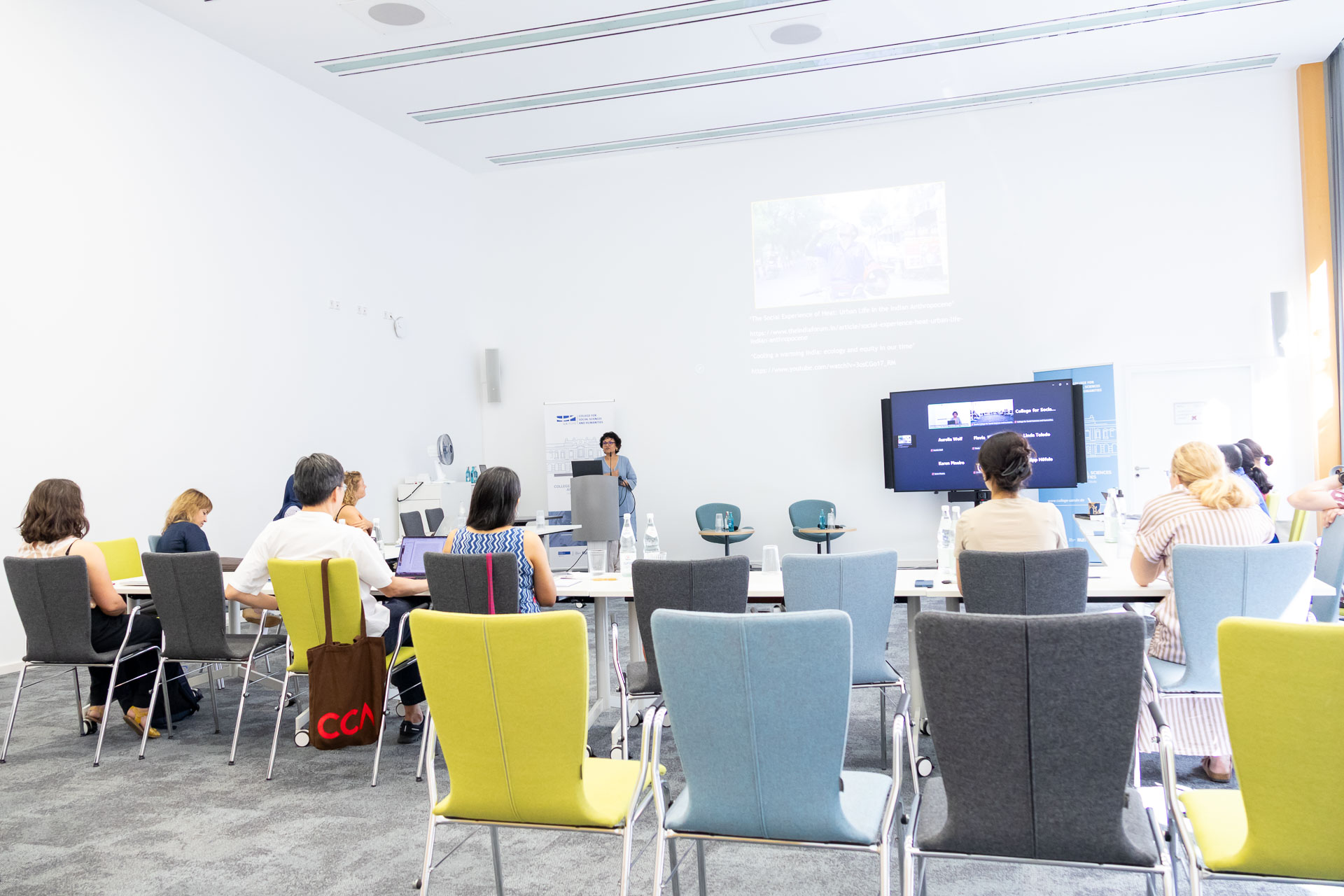
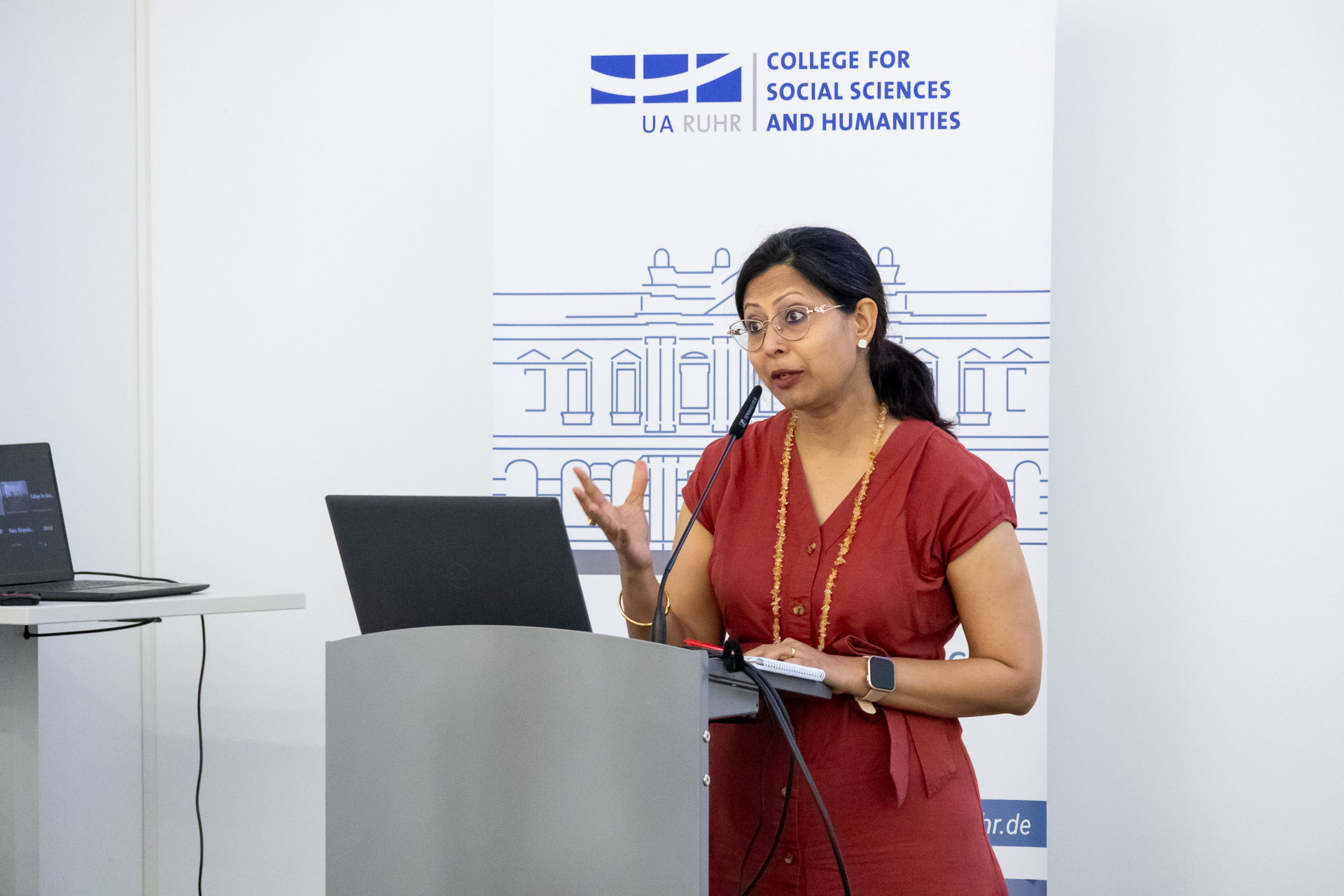
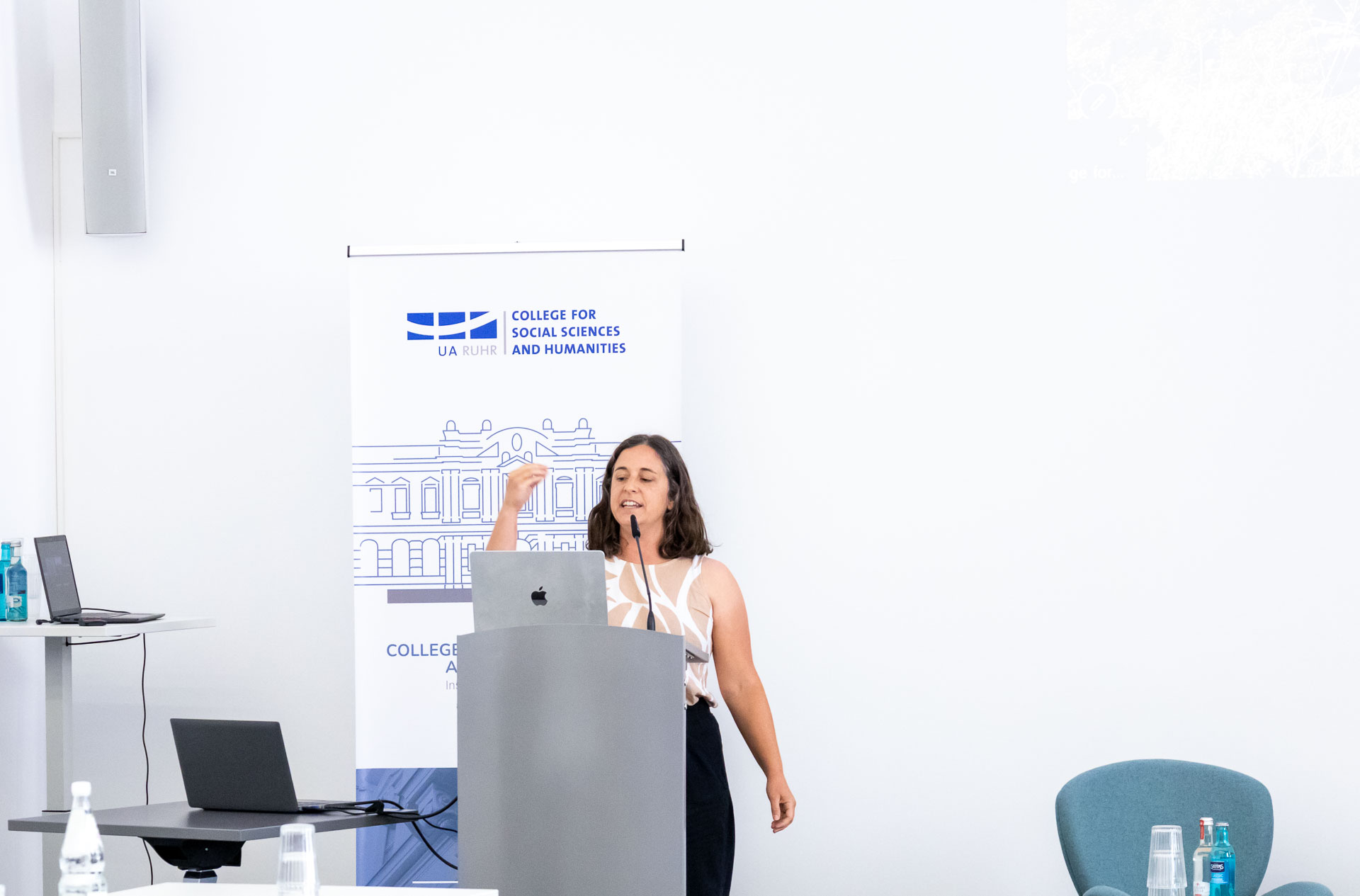
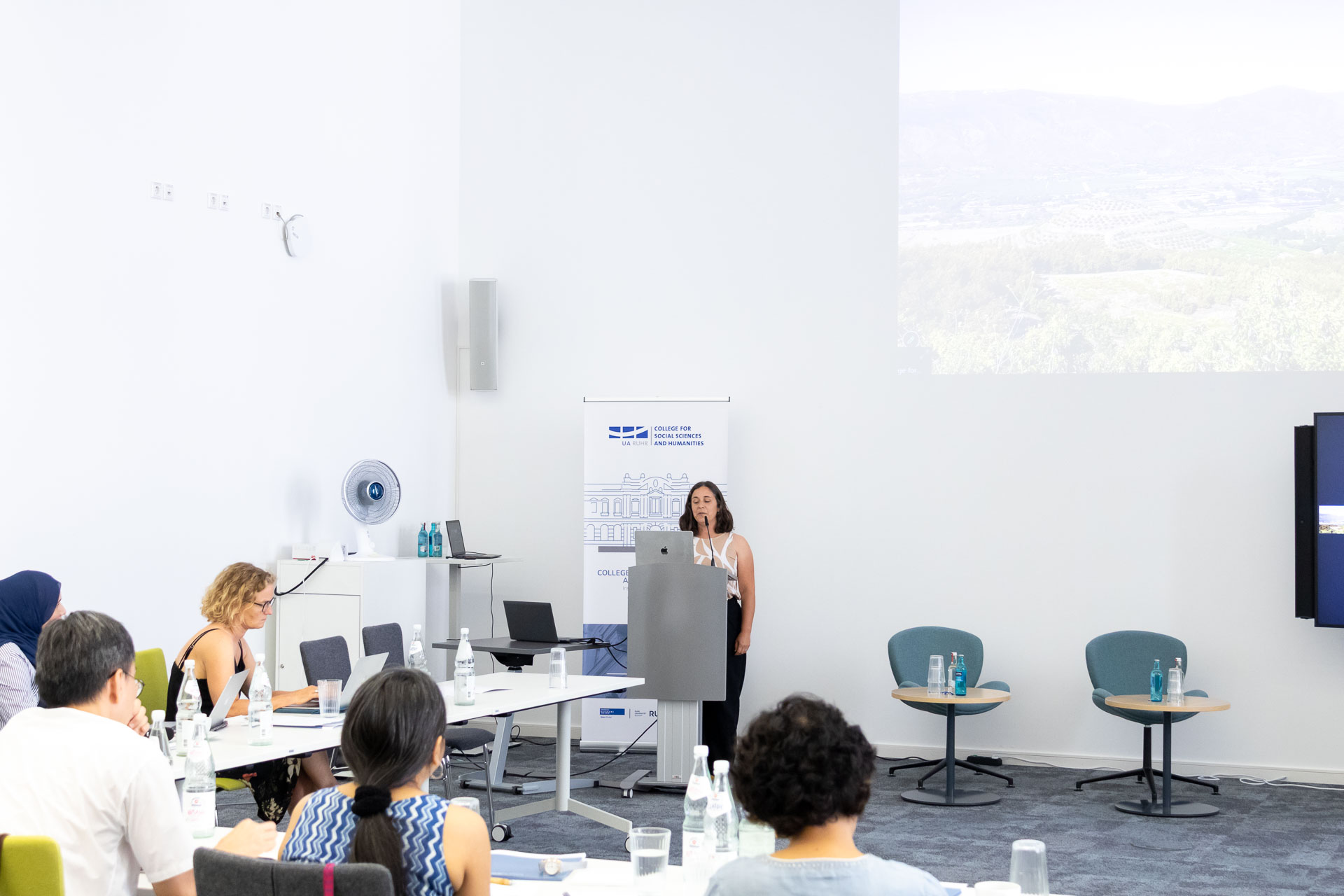
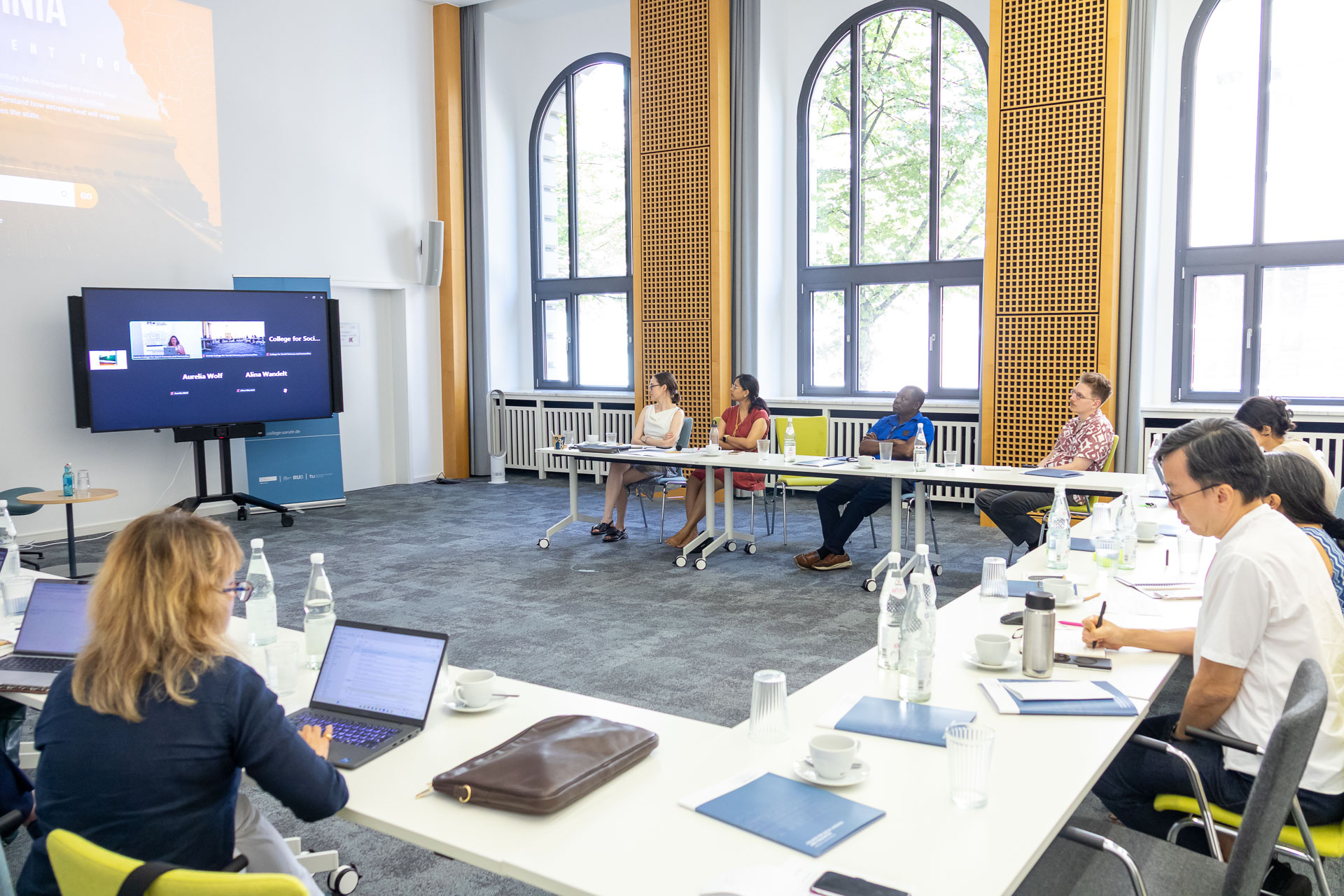
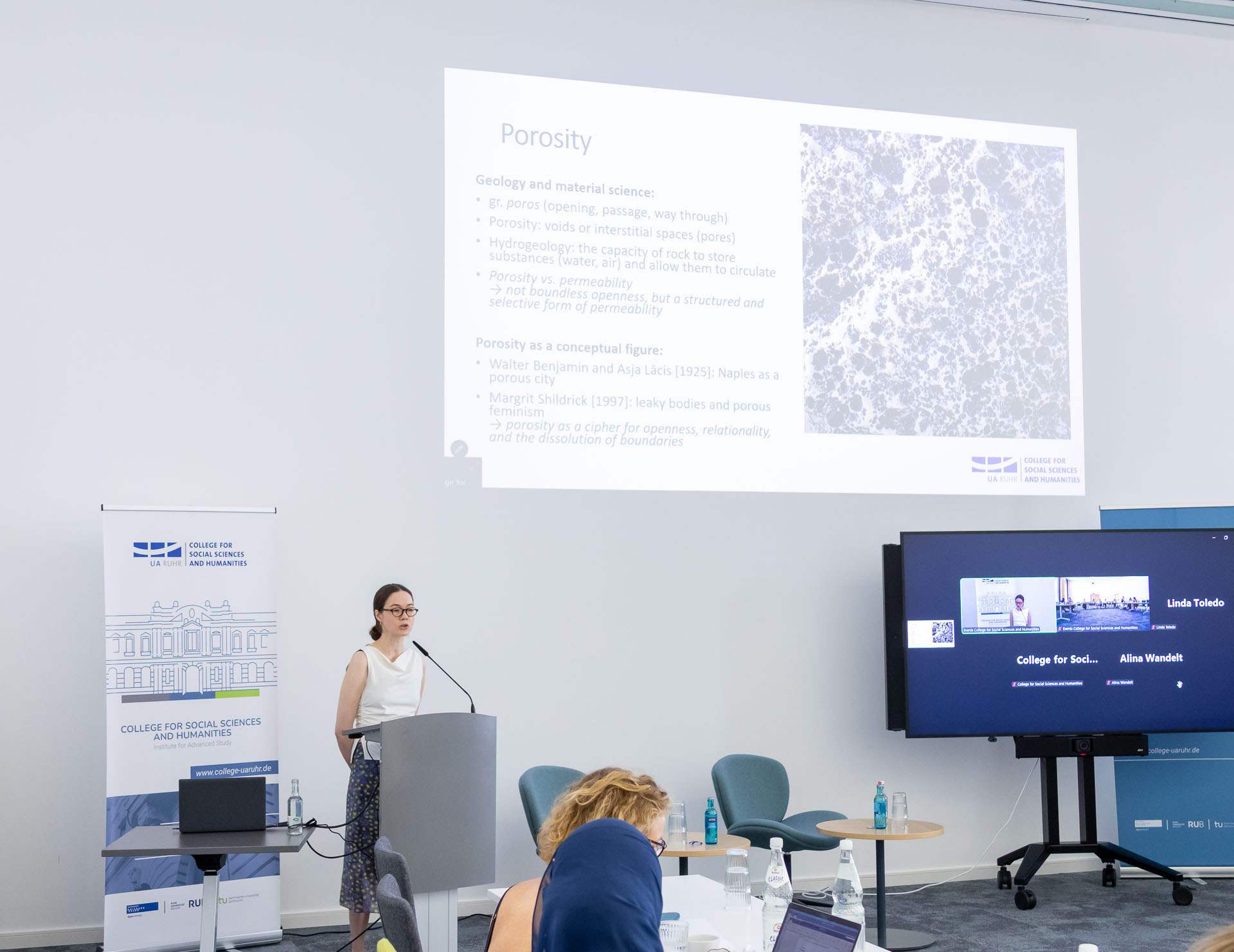
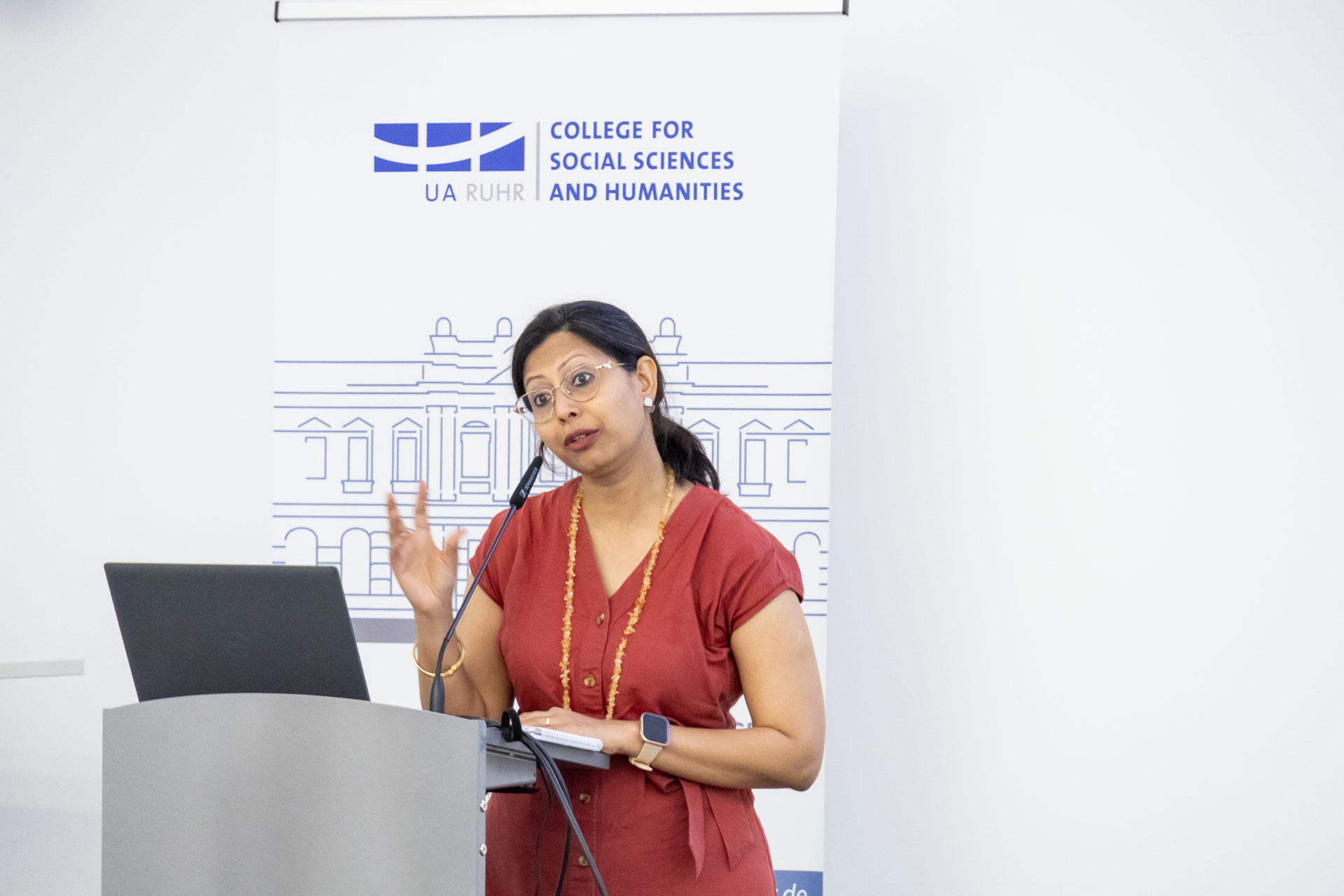
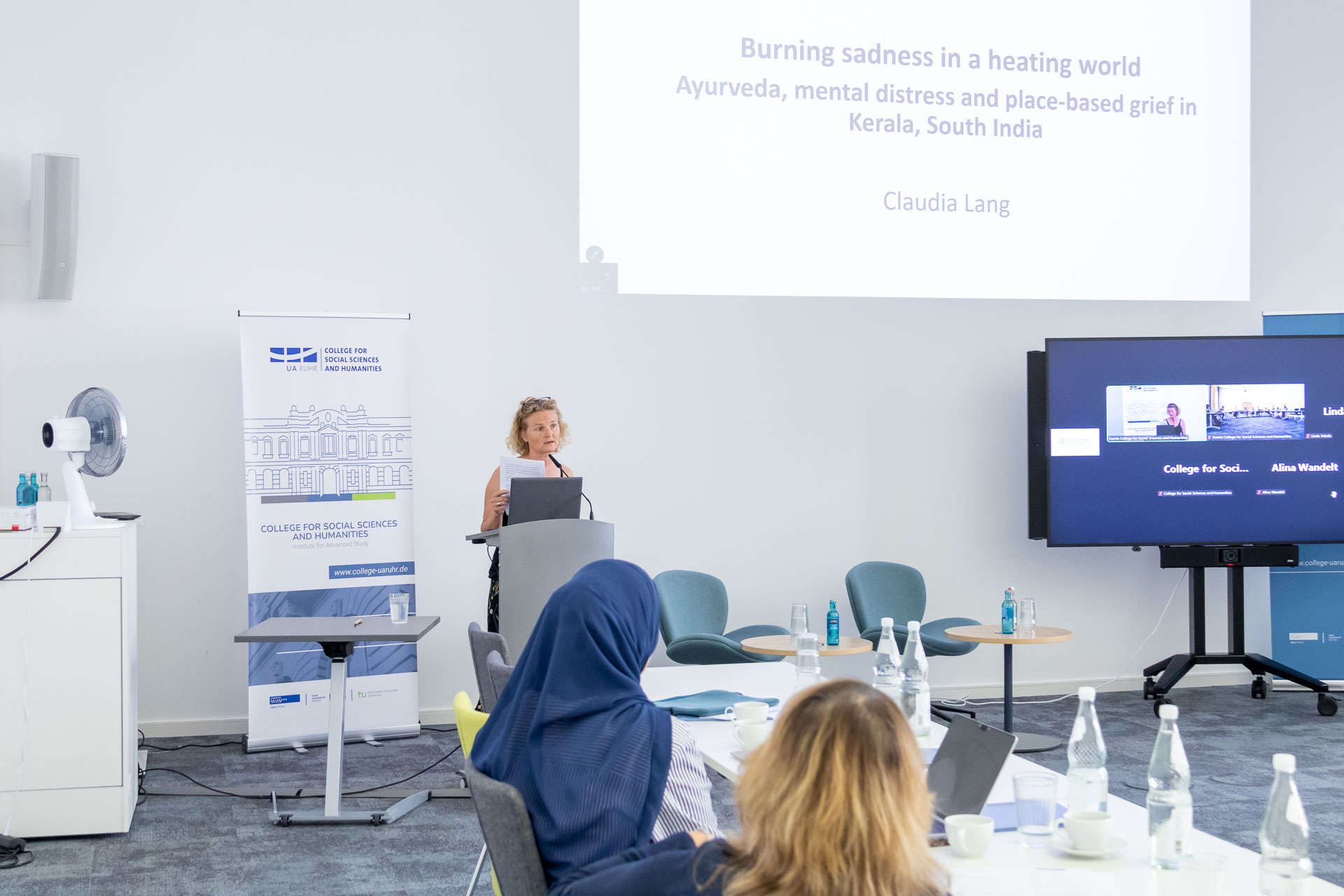
 ©
© UDE / Fabian Strauch
©
© UDE / Fabian Strauch
Prof. Elena Beregow
College for Social Sciences and Humanities & TU Dortmund University & University of Duisburg-Essen | Cultural Sociology
Phone: +49 201 183 65 66
E-mail: elena.beregow@college-uaruhr.de
Elena Beregow is a junior professor at the College for Social Sciences and Humanities, TU Dortmund University and the University of Duisburg-Essen. She leads the research group 'Sweat – Sociology of Transpiration in the Age of Global Warming'. Her research is situated at the intersection of sociological theory and cultural sociology, with a particular interest in the sociology of the senses, metaphors, microbes, and the social dimensions of temperature. She also explores sociological writing and theorising, as well as pop culture, affects, and atmospheres.
Elena Beregow studied sociology in Göttingen, Hamburg, and Copenhagen and completed her PhD at the University of Hamburg with a dissertation on thermal figures in social theory, focusing on fermentation as both a sociological concept and a material practice. From 2020 to 2025 she was a postdoctoral researcher at the University of the Bundeswehr Munich.
Website
Research Group 'Sweat – Sociology of Transpiration in the Age of Global Warming'
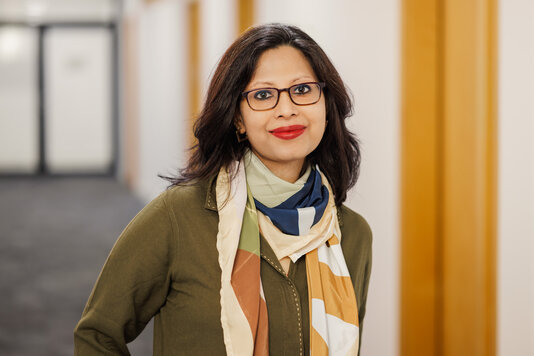
Prof. Sreeparna Chattopadhyay
Manipal Academy of Higher Education (India) | Cultural Anthropology
Sreeparna Chattopadhyay is Associate Professor at the Manipal Law School (India). She holds a Master’s degree and a PhD in Anthropology from Brown University (USA), and a Bachelor’s degree in Economics from St. Xavier’s College, Mumbai (India). Her research, teaching, and advocacy in the last 18 years can be broadly divided into three interlinked themes: 1) Gendered violence such as domestic and sexual violence in India; 2) Intersectional inequities, including those emanating from health systems that tend to disproportionately affect religious minorities and indigenous populations; 3) Analyses of reproduction using a political ecology and a biocultural approach that disentangles the contributions of global health initiatives, local-level technocratic interventions, and the social determinants of health.
Sreeparna Chattopadhyay has received several prestigious awards, including from the US National Science Foundation, the Harry Frank Guggenheim Foundation, and the Population Reference Bureau (USA) to support her work. She has published in multiple international peer-reviewed journals. Her book The Gravity of Hope, which examines the interlinkages between domestic and structural violence, was published in 2024.
Her research has been covered by the US press and international media. She has worked for the government, academia, and non-profit organisations in India, the USA and the UK. She is deeply invested in translational research, and she writes extensively for independent digital platforms and the popular press.
 ©
© UDE / Fabian Strauch
©
© UDE / Fabian Strauch
Prof. Elena Beregow
College for Social Sciences and Humanities & TU Dortmund University & University of Duisburg-Essen | Cultural Sociology
Phone: +49 201 183 65 66
E-mail: elena.beregow@college-uaruhr.de
Maastricht University (the Netherlands) | Department Health, Ethics and Society
& Leipzig University | Department of Anthropology