
This collaborative empirical project maps the complexities of knowledge production related to climate change, with an emphasis on the adverse impacts of extreme heat in India and Germany. The researchers use a qualitative research methodology, narrative synthesis, in order to critically analyse narratives / stories generated by non-academic sources. For instance, they examine reportage and influential digitally mediated content, and their role in shaping public opinions and imagination about a more equitable future. Notwithstanding the plethora of research on academic climate-change knowledge production, little is known about the nature and impact of digitally mediated non-academic information on recipients.
The project will investigate how such narratives on heat are framed and what their ostensible aims are, how the interrelation between heat, labour, gender, health, and the body is described and made visible, and how narratives seek to interpret and make sense through different forms of knowledge (scientific, experiential, traditional). The researchers will also examine constructions of bodily and psychological suffering from extreme heat, and whether these are normalised, depicted as personal discomforts or as signs of vulnerability, or as indicators of broader social and infrastructural tensions. In regard to questions of gender, the project will explore the scope of these narratives in emphasising the gendered impacts of heat and bodily practices and their public visibility. Finally, the project partners will examine whether stories of heat are interlaced with issues of social justice and equity, whether they naturalise the relationship between heat exposure and work, and finally whether they seek to identify the nature and determinants of responsive policy interventions.
The insights from this project are intended to encourage research that investigates the relationships between information consumption, public opinions, civic activism, and accountability mechanisms in the areas of extreme weather events like heatwaves and heat-related adverse impacts.
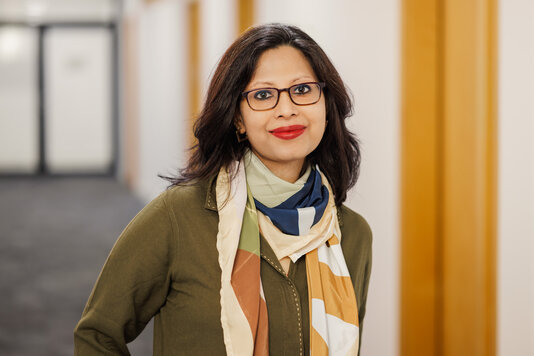
Prof. Sreeparna Chattopadhyay
Manipal Academy of Higher Education (India) | Cultural Anthropology
Sreeparna Chattopadhyay is Associate Professor at the Manipal Law School (India). She holds a Master’s degree and a PhD in Anthropology from Brown University (USA), and a Bachelor’s degree in Economics from St. Xavier’s College, Mumbai (India). Her research, teaching, and advocacy in the last 18 years can be broadly divided into three interlinked themes: 1) Gendered violence such as domestic and sexual violence in India; 2) Intersectional inequities, including those emanating from health systems that tend to disproportionately affect religious minorities and indigenous populations; 3) Analyses of reproduction using a political ecology and a biocultural approach that disentangles the contributions of global health initiatives, local-level technocratic interventions, and the social determinants of health.
Sreeparna Chattopadhyay has received several prestigious awards, including from the US National Science Foundation, the Harry Frank Guggenheim Foundation, and the Population Reference Bureau (USA) to support her work. She has published in multiple international peer-reviewed journals. Her book The Gravity of Hope, which examines the interlinkages between domestic and structural violence, was published in 2024.
Her research has been covered by the US press and international media. She has worked for the government, academia, and non-profit organisations in India, the USA and the UK. She is deeply invested in translational research, and she writes extensively for independent digital platforms and the popular press.
 ©
© UDE / Fabian Strauch
©
© UDE / Fabian Strauch
Prof. Elena Beregow
College for Social Sciences and Humanities & TU Dortmund University & University of Duisburg-Essen | Cultural Sociology
Phone: +49 201 183 65 66
E-mail: elena.beregow@college-uaruhr.de
 ©
© UDE / Fabian Strauch
©
© UDE / Fabian Strauch
Prof. Elena Beregow
College for Social Sciences and Humanities & TU Dortmund University & University of Duisburg-Essen | Cultural Sociology
Phone: +49 201 183 65 66
E-mail: elena.beregow@college-uaruhr.de
Elena Beregow is a junior professor at the College for Social Sciences and Humanities, TU Dortmund University and the University of Duisburg-Essen. She leads the research group 'Sweat – Sociology of Transpiration in the Age of Global Warming'. Her research is situated at the intersection of sociological theory and cultural sociology, with a particular interest in the sociology of the senses, metaphors, microbes, and the social dimensions of temperature. She also explores sociological writing and theorising, as well as pop culture, affects, and atmospheres.
Elena Beregow studied sociology in Göttingen, Hamburg, and Copenhagen and completed her PhD at the University of Hamburg with a dissertation on thermal figures in social theory, focusing on fermentation as both a sociological concept and a material practice. From 2020 to 2025 she was a postdoctoral researcher at the University of the Bundeswehr Munich.
Website
Research Group 'Sweat – Sociology of Transpiration in the Age of Global Warming'