
Africa’s social protection architecture is currently not well equipped to compensate for complex effects of population ageing, climate shocks, and gender inequality. At the same time, some African states are generating innovative policy responses. This interdisciplinary workshop brings together researchers and representatives from international organisations and African Union institutions to advance evidence-based dialogue on demography, social policy, and development studies and generate policy-relevant insights.

Africa is undergoing a profound demographic transformation. By 2050, the continent's population of persons aged 60 and above is projected to exceed 225 million — more than tripling compared to current levels — while simultaneously housing the world's largest and fastest-growing youth cohort. This unprecedented intergenerational co-existence presents both extraordinary opportunity and systemic risk. The continent's social protection architecture, largely inherited from colonial-era frameworks or built incrementally through post-independence reform, remains poorly equipped to absorb the compound pressures of population ageing, climate shocks, widening informality, and persistent gender inequality. At the same time, some African states are generating innovative, home-grown policy responses — from adaptive cash transfer programmes to community-based intergenerational care models — that merit rigorous academic scrutiny and cross-continental dialogue.
Despite the urgency of these challenges, the policy and scholarly conversation on social protection in Africa remains disproportionately fragmented across development economics, public health, and social policy disciplines, as well as between Global South practitioners and Global North academic institutions. This workshop is designed to bridge these divides, foregrounding African realities while drawing on comparative evidence from international social protection systems, global governance frameworks, and the latest demographic research.
This interdisciplinary workshop convenes experienced representatives from international organisations, African Union institutions, global civil society, and leading research universities to advance evidence-based policy dialogue on four interlocking themes: (1) intergenerational dimensions of social protection design and financing; (2) governance architectures for healthy ageing, including universal health coverage, long-term care, and non-communicable disease management; (3) the role of gender, family structure, and informal networks in mediating welfare outcomes across the life course; and (4) resilience-oriented social policy innovations capable of withstanding compound crises — from economic shocks to pandemics and climate-related displacement.
By bringing together high-level voices from the International Labour Organization (ILO), World Health Organization (WHO), the World Bank, HelpAge International, and the African Union Commission alongside German and European academic expertise in demography, social policy, and development studies, the workshop will generate policy-relevant insights and could be a starting point of a sustained international research and policy network on African social protection governance.
Social Protection Floors and Universal Coverage
Drawing on ILO Social Protection Floor frameworks, the workshop examines the feasibility and design of universal, rights-based social protection systems across African contexts characterised by large informal sectors, limited fiscal space, and high dependency ratios.
Healthy Ageing and Integrated Care
Anchored in the WHO AFRO regional health agenda and African Union frameworks, this theme addresses the integration of primary health care, long-term care services, and non-communicable disease responses within Africa's evolving health governance systems.
Intergenerational Solidarity and Family Welfare
Examining how demographic change reshapes intergenerational contracts — including transfers of income, care, and cultural capital — and how public policy can reinforce rather than erode informal solidarity networks in African societies.
Resilience, Governance and Policy Innovation
Analysing adaptive social protection mechanisms — including shock-responsive cash transfers, digital delivery systems, and community-based mutual aid — and the multi-level governance arrangements required to sustain them across national, regional, and continental scales.
The workshop is expected to produce: a policy brief on intergenerational social protection governance for Africa; a curated agenda for a follow-on international conference or an edited volume; and a possible formal arrangement of a North-South research consortium connecting the University Alliance Ruhr (Germany) and partner institutions across sub-Saharan Africa and Europe.
All times are given in Central European Summer Time (CEST).
Martina Brand, TU Dortmund University / University Alliance Ruhr (Germany) |
Daniel Chigudu, University of South Africa (UNISA) & College for Social Sciences and Humanities (Germany)
H.E. Amb. Amma Adomaa Twum-Amoah
African Union Commissioner for Health, Humanitarian Affairs & Social Development (HHS), Addis Ababa (Ethiopia)
Moderators: Martina Brand, TU Dortmund University / University Alliance Ruhr (Germany) |
Daniel Chigudu, University of South Africa (UNISA) & College for Social Sciences and Humanities (Germany)
Extending Social Protection Floors to Africa’s Informal and Migrant Workers
Ricardo Irra Fernández, International Labour Organisation (ILO) (Switzerland)
High levels of monetary and basic needs poverty among older people in Southern Africa amidst the existence of government and inter-generational social protection: implications for searching for new forms of social protection for older people
Isaac Kabelenga, Southern African Think Tank for Ageing Research / University of Zambia (Zambia)
Break
Demographic Change and the Role of Social Protection in Sub-Saharan Africa
Diverging fertility trends, family planning, education of women and girls, social protection across the life course
Catherina Hinz, Director, Berlin Institute for Population and Development (Germany)
Health Inequalities and Access to Care among Older Persons in Sub-Saharan Africa
Stephen Wandera, Makerere University, Kampala (Uganda)
Lunch break
Integrated, Community-Based and Long-Term Care for Older Persons in LMICs
Leon Geffen, Samson Institute for Ageing Research / University of Cape Town (South Africa)
Health Literacy and the Wellbeing Economy: Nordic Health 2030 Lessons
Lars Münter, International Director, Nordic Wellbeing Academy (Denmark)
A Rights-Based Approach to Ageing
Magdalena Smieszek, International Lawyer, Human-Rights Advocate, Scholar & Educator
Moderators: Daniel Chigudu, University of South Africa (UNISA) & College for Social Sciences and Humanities (Germany) |
Martina Brand, TU Dortmund University / University Alliance Ruhr (Germany)
Daniel Chigudu, University of South Africa (UNISA) & College for Social Sciences and Humanities (Germany)
End of workshop
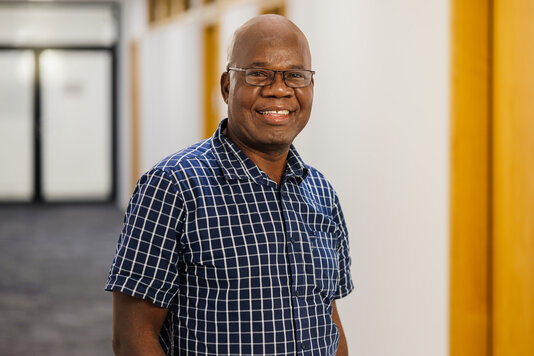
Prof. Daniel Chigudu
University of South Africa (South Africa) | Political Science and Governance
Daniel Chigudu is a political scientist, development practitioner, governance specialist, and Professor of Political Science and Governance at the University of South Africa (UNISA). He holds a PhD in Peace and Conflict Management Studies and has over three decades of professional experience spanning academia, international development, civil society leadership, and policy consulting.
Daniel Chigudu is a specialist in governance, peace and conflict studies, social protection, gender equality, and development evaluation, with a particular focus on African contexts. His scholarly interests centre on how governance systems and social protection policies can address systemic vulnerabilities and promote inclusive, resilient societies. He studied at the University of Zimbabwe and has worked with leading international organisations, including the African Union, UNESCO, Oxfam, and the United Nations Development Programme, across Africa and globally since the early 2000s.
He has authored and edited numerous publications and published over 70 scholarly articles in peer-reviewed journals. His recent research addresses critical development challenges, including peace and security, climate change, migration, gender-based peacebuilding, and human security in Africa. He serves as Editor-in-Chief of the African Journal of Development Studies and has held visiting professorships and research fellowships at academic institutions across Africa and internationally.
 ©
© Aliona Kardash
©
© Aliona Kardash
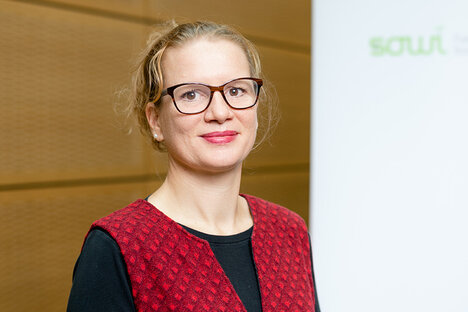
Prof. Martina Brandt
TU Dortmund University | Social Structure and Sociology of Ageing Societies
E-mail: martina.brandt@tu-dortmund.de
 ©
© Aliona Kardash
©
© Aliona Kardash
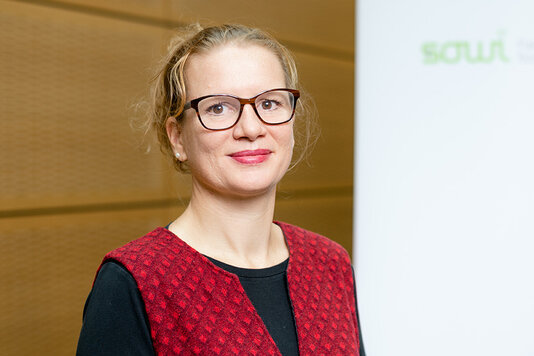
Prof. Martina Brandt
TU Dortmund University | Social Structure and Sociology of Ageing Societies
E-mail: martina.brandt@tu-dortmund.de
Martina Brandt is Professor for Social Structure and Sociology of Ageing Societies at TU Dortmund University, Vice Dean of Research at the Department of Social Sciences, spokesperson of the research training group ‘New challenges in ageing societies’ (Hans Böckler Foundation) and head of the Master's programme ‘Ageing Societies’ at TU Dortmund University. Until 2025, she held the chair of the Expert Commission on the Ninth Government Report on Older People, and she is involved in the central coordination of the Survey of Health, Ageing and Retirement in Europe (SHARE) as Area Coordinator Family and Social Networks. She researches and teaches in the field of ageing in Europe and is interested in family, health and well-being in the life course, care and social support, social inequality and social policy as well as methods of empirical research on ageing.
Website
https://sag.sowi.tu-dortmund.de/en/professorship/team/prof-dr-martina-brandt/