
Since late medieval times, shipping canals have been essential for inland waterway transportation. A considerable number of canal projects were proposed, discussed, and even partially constructed but failed to provide usable waterways. Recent scholarship has explored how canals were a preliminary form of geo-engineering. This interdisciplinary workshop brings together researchers who have worked on the imagination, construction and operation of artificial inland waterways throughout history.
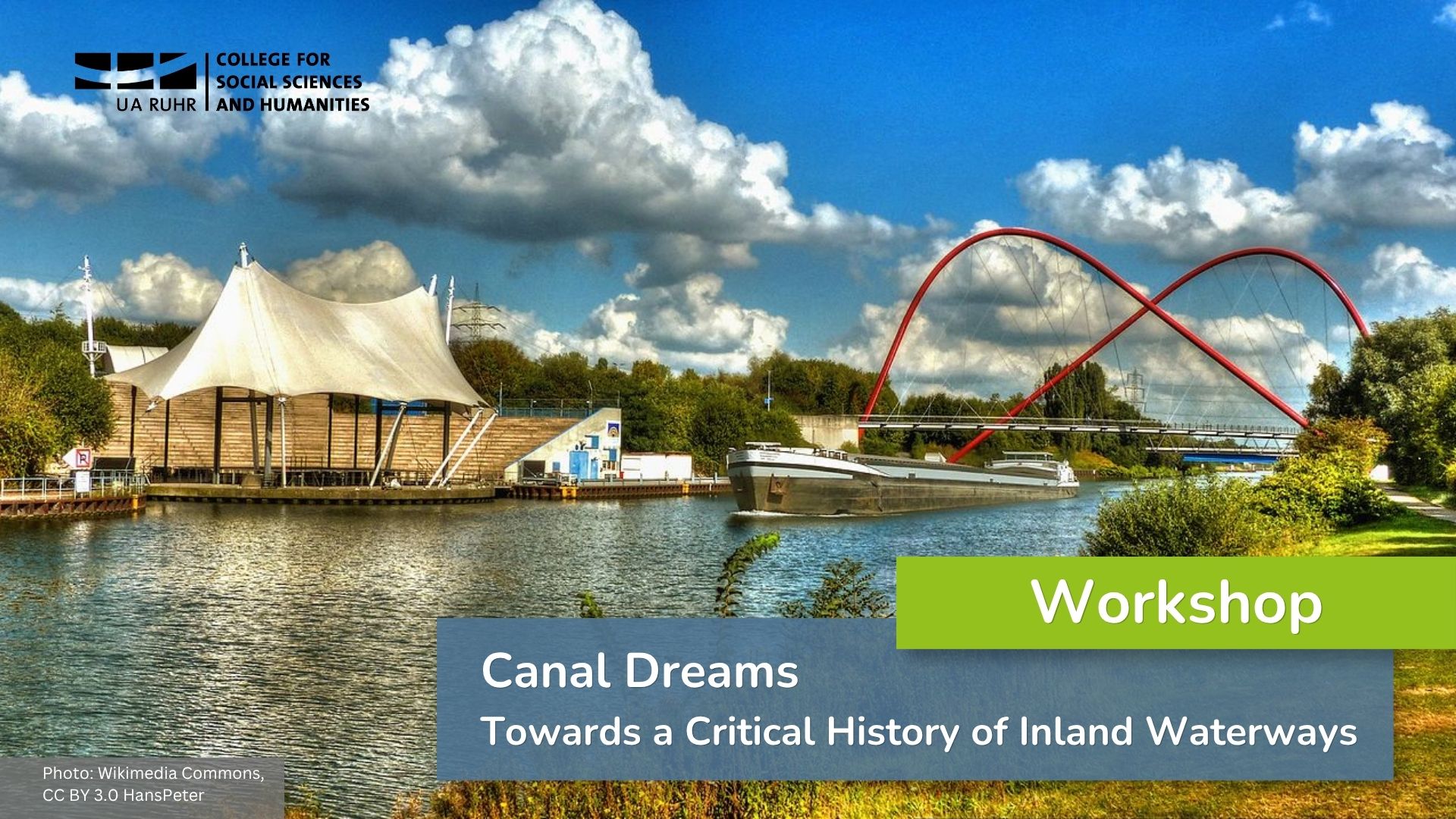 ©
© Photo: Wikimedia Commons, CC BY 3.0 HansPeter
©
© Photo: Wikimedia Commons, CC BY 3.0 HansPeter
Shipping canals have been an important feature of inland waterway navigation since late medieval times. Some canals still serve as important transport routes, others see little if any commercial traffic and plenty of pleasure boats, and some are defunct and barely visible in the landscape. At the same time, the canals that were actually built are just a fraction of those that were imagined and planned at some point in time. There is a great number of canal projects, some highly ambitious, that were proposed, discussed, and even partially constructed but failed to produce a complete, usable waterway.
Canal dreams were about more than transportation needs. They were often part of overarching schemes that sought to transform economies, create modern societies, and engage in nation-building. In hydrological terms, building canals could be an element in comprehensive plans that aimed for river regulation, independence from navigation in the open sea, or the redesign of entire river systems. Recent scholarship has explored how canals were a form of geo-engineering avant la lettre.
The workshop assembles an interdisciplinary group of researchers who have worked on the imagination, construction and operation of artificial inland waterways. Contributions explore the tension between dreams and hopes and built realities. Emphatically global in scope, the workshop builds on the assumption that canals have transnational features that provide windows on the material and imagined scaffolding of global modernity.
Fingerfood
Ingo Heidbrink, Old Dominion University (USA) & Senior Fellow (9/2025–2/2026), College for Social Sciences and Humanities |
Frank Uekötter, Ruhr University Bochum (Germany)
Of Canal Dreams and Canal Nightmares. The Erie Canal and the New York State Barge Canal (Opening Remarks)
Ingo Heidbrink, Old Dominion University (USA)
Building Communism through Water. The Kakhovka Hydroelectric Complex and Social Engineering in Soviet Ukraine
Tetiana Perga, Humboldt-Universität zu Berlin (Germany)
“Canal Nightmares”. Canal Construction and Social Engineering under Stalin
Eva-Maria Stolberg, University of Duisburg-Essen (Germany)
Break
The ‘Emporium of the World’, or Only Its Highway? Visions of a Nicaraguan Canal with Regard to Nationhood and (In-)Dependence
Andreas Beer, Institut für Hochschulforschung Halle-Wittenberg (Germany)
Authoritarian Canal Dreams. Mega-Projects, Political Power, and Geopolitical Reordering in Istanbul
Hikmet Kuran, Cappadocia University (Turkey)
Break
A Post-War Folly. What You Can Learn about the Federal Republic of Germany from a Senseless Canal
Frank Uekötter, Ruhr University Bochum (Germany)
Dinner (at participants’ expense)
Der Mittellandkanal
Phillip Meißner, Museum der deutschen Binnenschifffahrt Duisburg (Germany)
Comprehensive Vision and Fragmented Realities. Planning the Waterways for the Remodeling of Berlin during National Socialism, ca. 1935-1945
Jannik Noeske, University of Applied Sciences Potsdam (Germany)
Protecting Monstrous Rivers against Monstrous Canals. The Danube’s Flood Infrastructure in Modernity
Anna Barcz, Tadeusz Manteuffel Institute of History Polish Academy of Sciences Warsaw (Poland)
Break
The Discursive Agency of Not-Yet River Navigation along the Prut
Claudia Eggart, Leibniz-Zentrum Moderner Orient Berlin (Germany) &
Sandra Parvu, School of Architecture Paris-Val de Seine (France)
Canal Dreams and Hard Realities. Labor, Social Engineering, and the Imperial State on the Kiel Canal
Maxim Greiser, Humboldt-Universität zu Berlin (Germany)
Concluding Discussion
End of workshop
Earliest departure 14:00
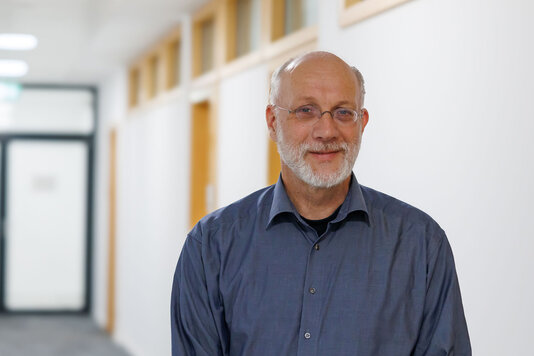
Prof. Ingo Heidbrink
Old Dominion University (USA) | Maritime and Economic History
E-mail: IHeidbri@odu.edu
Ingo Heidbrink is a maritime historian and Professor of History and Chair of the Department of History at Old Dominion University (ODU) in Norfolk (USA). He studied at the universities of Hamburg and Bremen and has worked with various maritime museums in Germany from the mid-1990s until 2007. During this time, he taught at the University of Bremen and was co-founder of the Bremen International Graduate School for Marine Sciences – GLOMAR. In 2007 he accepted a professorship in maritime history at Old Dominion University.
Ingo Heidbrink is a specialist for inland waterway history, fisheries and whaling history, and polar history. He taught two terms at Ilisimatusarfik, the University of Greenland, and was research fellow and visiting professor at institutions all around the globe, including the Hanse-Wissenschaftskolleg - Institute for Advanced Study (Germany), the Rachel Carson Center for Environment and Society at the LMU Munich (Germany), the Maritime Studies Centre at the University of Hull (UK), and the Higher School of Economics in St. Petersburg (Russia).
He has authored or edited more than 12 books and published approximately 100 scholarly articles. He is President of the International Maritime History Association (IMHA) and Secretary of the International Polar Heritage Committee (IPHC). His last major research project was funded by the Norwegian Research Council and dealt with the topic of natural ice as an agent of modernisation.
Website
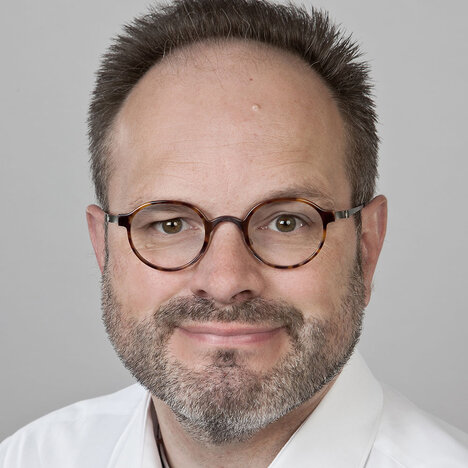
Prof. Frank Uekötter
Ruhr University Bochum | History of Technology and Environmental History
E-mail: frank.uekoetter@rub.de
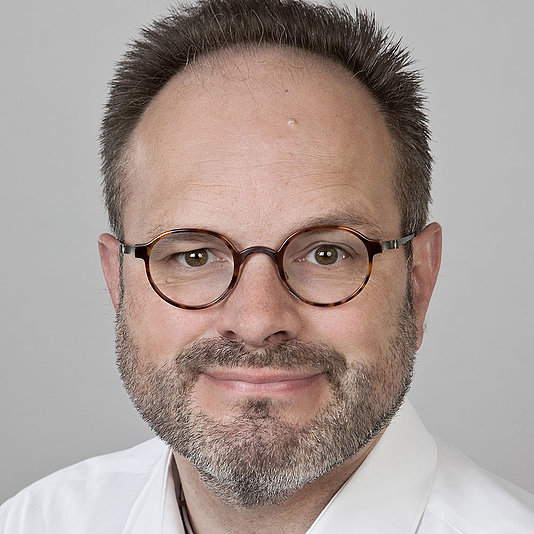
Prof. Frank Uekötter
Ruhr University Bochum | History of Technology and Environmental History
E-mail: frank.uekoetter@rub.de
Frank Uekötter studied history, political science and social sciences at the universities of Freiburg and Bielefeld (Germany) and Johns Hopkins University in Baltimore (USA). He received his PhD from Bielefeld University in 2001, where he continued to work for several years before moving to Munich in 2006. He taught at LMU Munich and was among the founders of the Rachel Carson Center for Environment and Society, an Institute for Advanced Studies in the environmental humanities jointly run by LMU Munich and the Deutsches Museum. This helped him to move beyond his primary focus on German and US history towards more global perspectives on the past.
Frank Uekötter left Germany in 2013 and joined the history department at the University of Birmingham (UK), where he worked on an environmental history of the modern world that was finally published as The Vortex. An Environmental History of the Modern World in 2023. During his time in Britain, he received fellowships from the Max Planck Institute for the History of Science in Berlin, the Deutsches Museum in Munich and the Centre for Apocalyptic and Post-Apocalyptic Studies at Heidelberg University. He received an Advanced Grant from the European Research Council for the project ‘The Making of Monoculture: A Global History’ (MaMoGH) in 2021. He joined Ruhr University Bochum in June 2023. A major strand of his work revolves around questions on how infrastructure projects construct modern societies.