
This research project explores the violent victimisation experiences of women displaced by Bokoharam terrorists to internally displaced persons (IDP) camps in Adamawa, northeast Nigeria. Existing research has focused on motivation, causes and processes of women’s involvement in terrorism with scant attention paid to the lived experiences of victimised women in terror spaces of northeast Nigeria. The study asks: what are the victimisation experiences of the women affected by Bokoharam insurgency, and what do their experiences tell us about women agency and resilience? How do women navigate the terror spaces and disruptions occasioned by Bokoharam’s violent threats and attacks? What are the unmet needs of these female victims, and how might policy capture these to ensure justice and peace?
By focusing on women in terror spaces, this project contributes to knowledge about how women experience terror and deploy their agency to negotiate, navigate and cope with violent victimisation. This exploratory study purposively selected 60 women from four IDP camps in Adamawa state, one of the states hit worst by Bokoharam. The camps host displaced persons who fled from Borno and Yobe to Adamawa. The data illuminates the lived experiences and the social contexts of decision making, principally for themselves and for the safety of their children and husbands. It unpacks the nature and dimensions of victimisation and how women negotiate ‘living’ with their children and their bodies.
The experiences of those who escaped unveil the evolution of victim-targeting by the Bokoharam terrorists. While some participants witnessed the gruesome killing of their husbands and children, others suffered ambiguous loss, unsure of the status (dead or alive) of their missing children or husbands. At the host community, they live with the negative label of ‘wives of Bokoharam’. Surviving with trust in God, menial jobs in the community and reliance on relief materials from government and non-governmental organisations, the women see their displacement as injustice and cherish being at home to be in charge of their lives and livelihood.
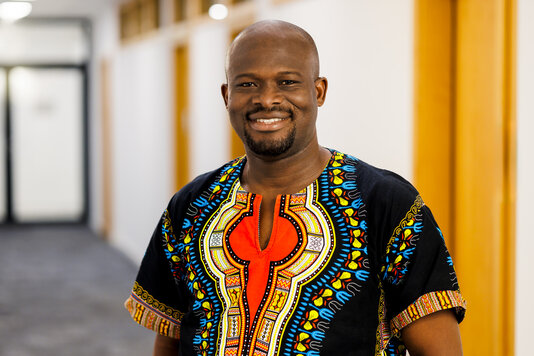
Prof. Oludayo Tade
University of Ibadan (Nigeria) | Sociology, Criminology
Oludayo Tade is a sociologist (criminology, victimology and security studies) currently teaching at the University of Ibadan (Nigeria). He is the founding president of the Nigeria Society for Criminology (NSC), Head of Communications at the Conflict Research Network West Africa (CORN) and affiliated with the African Diaspora Resource and Research Center. A former fellow at the Institute for Money, Technology and Financial Inclusion (IMTFI) at the University of California Irvine (USA) and at the Merian Institute for Advanced Studies in Africa (MIASA), Oludayo Tade’s research covers victims of crime, cybercriminality, deviance and social problems, conflict and peace studies, protests, diaspora and transnational studies.
He has received research grants from the Tertiary Education Trust Fund, Nigeria (TETFund), the Gates Foundation (USA), and the African Studies Center at the University of Michigan (USA), among others. He is a member of the Editorial Board of the International Journal of Offender Therapy and Comparative Criminology (IJOTCC) and of the Nigerian Journal of Criminology and Security Studies.
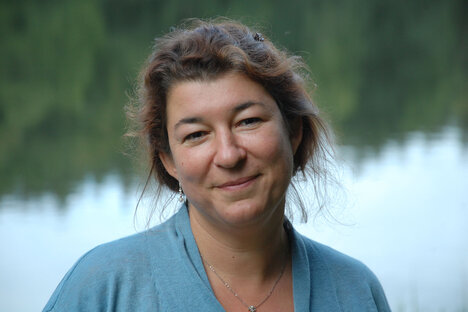
Prof. Christine Morgenstern
Ruhr University Bochum | Law, Criminology
E-mail: christine.morgenstern@rub.de
Prof. Christine Morgenstern
Ruhr University Bochum | Law, Criminology
E-mail: christine.morgenstern@rub.de
Christine Morgenstern is a lawyer and criminologist with research interests in human rights in the criminal justice system, gender aspects in criminology, and comparative criminal justice. Since 2023, she has been Professor of Criminology at the Faculty of Law of Ruhr University Bochum where she teaches criminology and criminal law. She also directs the continuing education Master’s programme in Criminology, Criminalistics, and Police Studies there. Prior to this, she was Professor for Criminal Law and Gender Studies at Freie Universität Berlin and Research Fellow at Trinity College Dublin (Ireland). Currently, her work engages with prisoner’s rights and with gender aspects of criminalisation processes.
Website
https://www.kriminologie.rub.de/index.php?option=com_content&view=article&id=4&Itemid=117