
The project examines cross-confessional theological exchange in 18th-century Constantinople through Armenian translations of Greek Orthodox treatises by Eustratios Argenti on Baptism and the Eucharist. In the context of intensified debates over sacramental validity, particularly following Patriarch Cyril V’s 1755 decree mandating the rebaptism of Catholic converts, Argenti emerged as a key defender of Orthodox baptismal practice grounded in patristic tradition. While his Greek works have been studied, their Armenian translations, produced in Constantinople in the 1760s by the deacon Melk‘isedek Banasēr, remain largely unexplored. Preserved today in Yerevan, these translations are accompanied by extensive colophons that document editorial censorship, omissions and revisions imposed on the Greek originals.
Central to the project is a censored chapter in Argenti’s baptismal treatise affirming the legitimacy of Armenian Baptism, which was removed from the Greek print under patriarchal pressure but survives embedded in an Armenian translation of Argenti’s letter to the Armenian theologian Gēorg Mkhlayim. This case reveals an exceptional level of ecclesiastical intervention in theological print, where patriarchal authority reshaped content for polemical ends. Through a close, side-by-side comparison of Greek printed texts and their Armenian translations, the project investigates how theological knowledge was transmitted, altered, and reinterpreted across confessional boundaries.
Approaching these works as culturally embedded artifacts, the study combines philological analysis with contextual history to trace linguistic choices, shifts in tone, and doctrinal negotiations between Chalcedonian and Miaphysite positions. By reconstructing censored content and examining translation as a site of mediation, the project illuminates authority, authorship, and inter-communal relations in the multi-confessional Ottoman Empire and contributes perspectives of Christian theology.
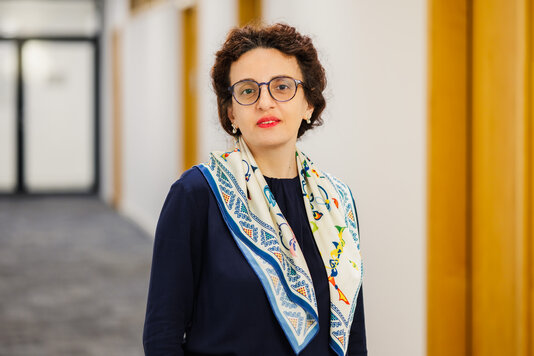
Prof. Anna Ohanjanyan
Mesrop Mashtots Research Institute of Ancient Manuscripts (Armenia) | Historical Theology, Religious Studies
Anna Ohanjanyan holds a PhD in Historical Theology and Religious Studies. She is Head of the Department for the Study of the Armenian Texts of the 15th–19th Centuries at the Mesrop Mashtots Institute of Ancient Manuscripts ‘Matenadaran’ (Armenia), Associate Professor at Yerevan State University, and senior researcher at the Armenian Genocide Museum-Institute.
Anna Ohanjanyan conducted postdoctoral research at the Central European University in Budapest within the ERC project ‘OTTOCONFESSION’ and at the New Europe College (Institute for Advanced Study) in Bucharest. She is the author of the monographs The Book ‘Key of Truth’ and Its Historiographical Significance (YSU Press 2015), and Tōnapatchar (The Causes of Feast Days): Introduction and Text, Part I (Holy Etchmiadzin Press 2016). She is currently preparing her new book entitled Orthodoxy and Orthopraxy in the Armenian Polemical Literature from Ottoman and Safavid Context (17th–18th centuries).
 ©
© Konstantinos Evangelidis
©
© Konstantinos Evangelidis
Prof. Margarita Voulgaropoulou
Ruhr University Bochum | Art History, Mediterranean Studies
 ©
© Konstantinos Evangelidis
©
© Konstantinos Evangelidis
Prof. Margarita Voulgaropoulou
Ruhr University Bochum | Art History, Mediterranean Studies
Margarita Voulgaropoulou is Junior Professor of History of Materiality in trans-Mediterranean Contexts at Ruhr-University Bochum as of 2020. Previously, she has worked as a researcher at the Center for Eastern Mediterranean Studies of Central European University, Budapest (Hungary) in the ‘OTTOCONFESSION’ project, and at the Seeger Center for Hellenic Studies, Princeton University (USA). He holds a PhD in Art History from Aristotle University of Thessaloniki (Greece).
Margarita Voulgaropoulou’s research focuses on intercultural encounters and religious conflicts in the Adriatic Sea in the early modern period during the rapid expansion of the Ottoman Empire. Her work seeks to show how the confessional coexistence of Orthodox and Catholic populations on the Adriatic Sea affected material culture. Through the combined examination of archival sources and visual material, with a focus on icon painting, her research traces intersections in the movements of people and objects in order to gain a more comprehensive understanding of the eastern Mediterranean and the Adriatic as spaces of intercultural and transcultural exchange.