
Interview with Rashed Uz Zaman
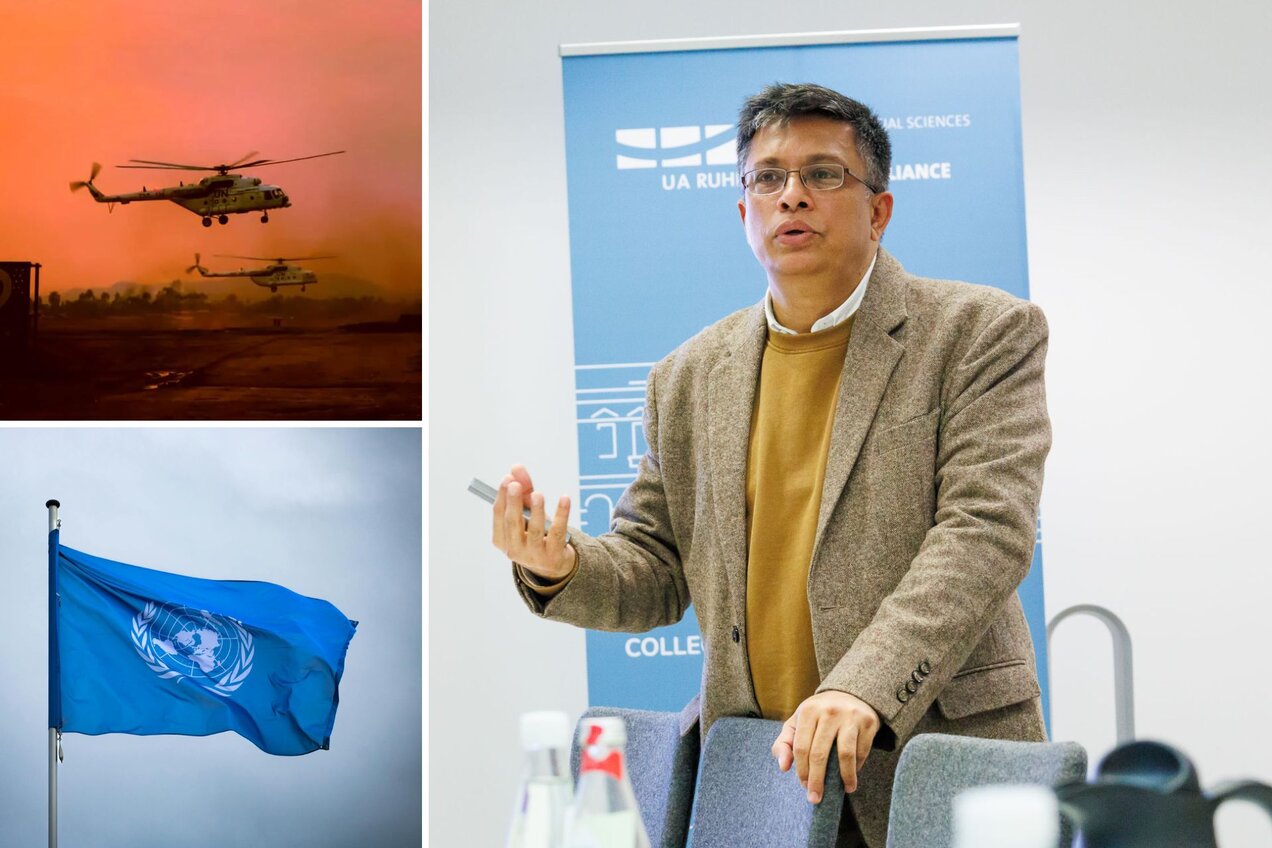
In United Nations peacekeeping, global norms, particularly those concerning human rights and gender equality, are promoted and institutionalised. Their implementation, however, ultimately depends on troop-contributing countries. Focusing on Bangladesh and Nepal as two of the largest contributors to UN peace operations, Rashed Uz Zaman examines how peacekeeping norms influence local political, legal, and military structures. By analysing gender mainstreaming as a critical human rights norm cluster, his research explores the incentives, constraints, and contestations shaping norm adherence in South Asia. In this interview following a lecture given at the College in February 2026, Rashed Uz Zaman relates how international norms are negotiated within national institutions and how they are reshaped through practice in the case of Bangladesh. He also discusses socio-cultural and structural obstacles to the increased participation of women in peacekeeping operations.
Rashed Uz Zaman is a professor at the Department of International Relations at the University of Dhaka (Bangladesh) and was a Senior Fellow at the College for Social Sciences and Humanities from September 2025 to February 2026.
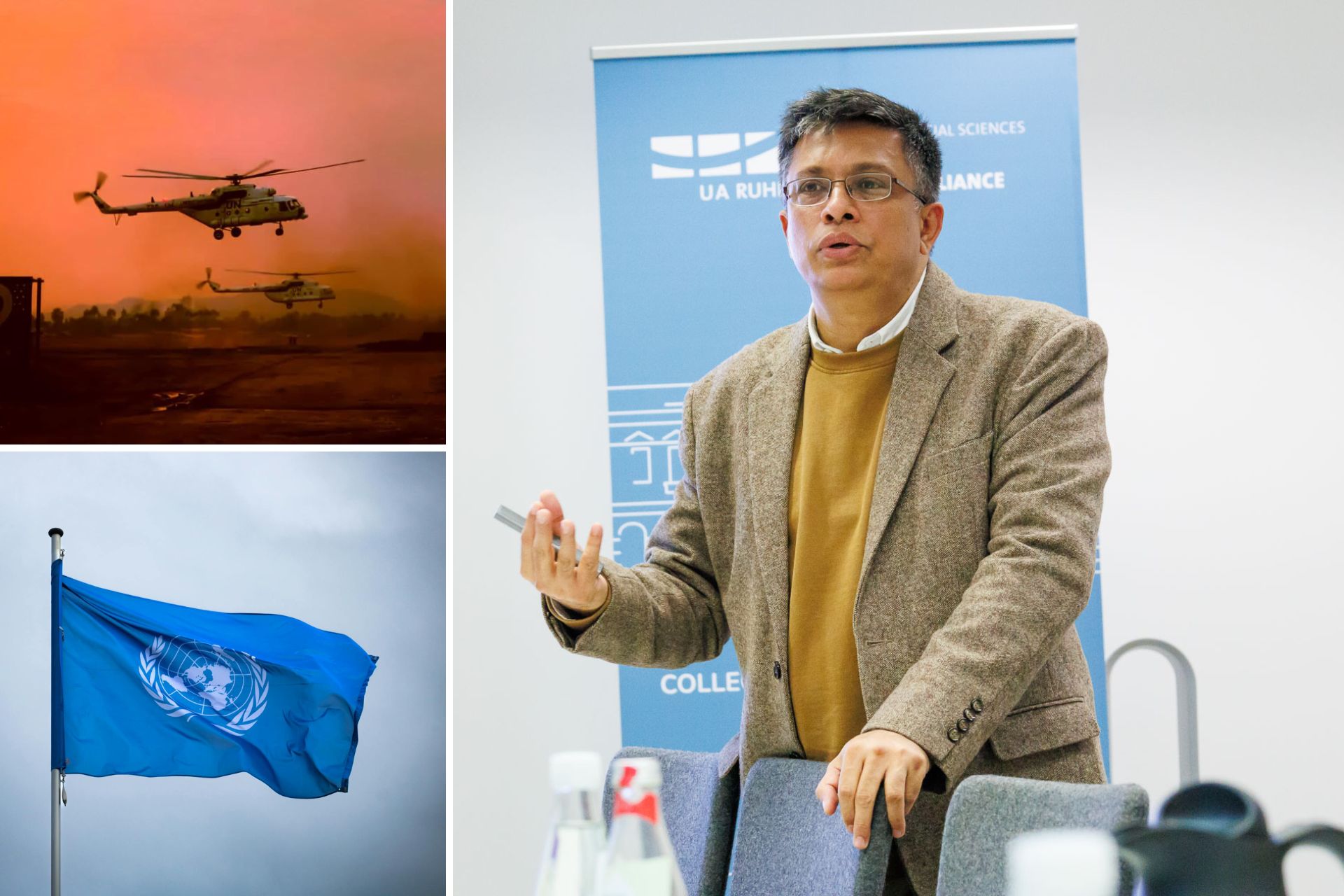
Bangladesh became involved in United Nations peacekeeping at the end of the Cold War, a moment of significant transformation in global politics, and a plethora of reasons worked behind it. First, participation enabled Bangladesh to maintain constructive relations with Western powers, particularly the United States of America. Second, it provided an opportunity to show the country as a responsible member of the international community, committed to global peace and security under the auspices of the United Nations. Financial incentives also played a role, particularly in the early years.
Bangladesh’s continued participation today is shaped primarily by foreign policy considerations, adherence to the UN Charter, and the institutional interests of the Bangladesh Armed Forces. Peacekeeping remains central to the country’s international identity and strategic outlook.
The United Nations emphasises several core norms for peacekeeping personnel: commitment to democratic principles, protection of civilians, respect for human rights, advancement of gender equality, and prevention of gender-based violence. In Bangladesh, these norms are institutionalised through structured pre-deployment training at the Bangladesh Institute of Peace Support Operation Training (BIPSOT). Personnel from the armed forces, police, and civilian sectors undergo specialised courses covering protection of civilians; international humanitarian law; Women, Peace and Security (WPS); conflict-related sexual violence; civil-military coordination; logistics; and language training. The norms covered in training include respect for civilian control of the military, political neutrality, rigorous human rights protection, gender mainstreaming, judicious restraint in the use of force, and robust accountability within multinational command structures. This systematic preparation ensures that peacekeeping norms become operational standards embedded in professional practice.
This was the focus of my research at the College for Social Sciences and Humanities. I examine how nearly four decades of peacekeeping engagement have shaped Bangladesh’s armed forces and broader policy orientation. Over this period, Bangladeshi personnel have participated in 63 missions across 40 countries. Such sustained exposure has influenced institutional attitudes toward civil-military relations, democratic norms, and gender mainstreaming within the armed forces. For example, the demonstrations in July and August 2024 and the military’s firm position on upholding people’s desire and unwillingness to assume power in spite of prevailing circumstances bear witness to this change.
At the national level, successive governments have prioritised peacekeeping as a key pillar of foreign policy, reiterating Bangladesh’s commitment to the UN Charter and multilateralism. Given that many contemporary missions are located in Africa, Bangladesh has expanded its diplomatic efforts in key African states. Participation has also facilitated professional cooperation with foreign militaries, exposure to international operational standards, and adoption of evolving military practices through joint military exercises, multinational command structures and standardised rules of engagements in peacekeeping missions. Peacekeeping has thus enabled Bangladesh to project a positive international image and, in many ways, to ‘punch above its weight’ in global affairs.
“I examine how nearly four decades of peacekeeping engagement have shaped Bangladesh’s armed forces and broader policy orientation. [...] Such sustained exposure has influenced institutional attitudes toward civil-military relations, democratic norms, and gender mainstreaming within the armed forces.”
Despite Bangladesh’s long-standing involvement in UN peacekeeping, scholarly engagement with the societal dimension remains limited. Some academic work, conducted by myself and colleagues, including Niloy R. Biswas at the University of Dhaka, has explored aspects of this engagement. Both retired and active military officers have also penned down their mission experiences, as a basis for studying various technical and policy aspects of Bangladesh in these missions. However, comprehensive research on how peacekeeping participation has shaped the armed forces institutionally and how the broader public perceives this engagement remains underdeveloped. This represents an important knowledge gap.
Bangladesh played an active role in promoting UN Security Council Resolution 1325, which calls for increased participation of women in peace and security processes. Institutional reforms followed domestically: women were commissioned as officers in 2000 and recruited as soldiers in 2006. Since 2019, Female Engagement Teams have been incorporated into battalion deployments, and women are now routinely included in major contingents. To date, 1,718 Bangladeshi women have participated in UN peace operations, with 373 currently deployed.
To incentivise women, the armed forces offer six months of paid maternity leave, flexible working arrangements, and equal access to military academies and training institutions. Four of the country’s thirteen military schools, known as Cadet Colleges, are exclusively for girls and serve as feeder institutions for recruitment.
Bangladesh has been a strong advocate for gender equality in peacekeeping and has adopted a Defence Action Plan to support the implementation of its National Action Plan (NAP) on Women, Peace and Security (2019–2025). The country took a lead role in the adoption of UN Security Council Resolution 1325 on Women, Peace, and Security (WPS) in October 2000. Gender Advisor positions and Gender Focal Points have been established to mainstream gender considerations institutionally. As a top contributor to United Nations peacekeeping, Bangladesh continues to prioritise the deployment of women personnel across all mission roles. Since 2018, women peacekeepers have received pre-deployment training at the Bangladesh Institute of Peace Support Operation Training (BIPSOT), which also offers different courses on conflict, gender and security topics. Seminars and workshops to promote dialogue on gender parity in peace operations are held regularly, reflecting the continued resolve of the armed forces to strengthen an inclusive, gender-responsive institution aligned with global standards.
Bangladesh has demonstrated a sustained institutional commitment to gender mainstreaming within UN peacekeeping. However, progress has unfolded within a broader socio-political environment marked by structural constraints and normative ambivalence. While women are now eligible to serve as officers across all branches of the armed forces, their representation within the rank-and-file remains comparatively limited – though this is gradually evolving. This imbalance is not unique to Bangladesh; rather, it reflects enduring institutional hierarchies and recruitment patterns common to many military establishments globally.
The challenges of gender mainstreaming extend beyond institutional policy into deeper societal norms. Prevailing expectations regarding women’s primary responsibilities within the family, combined with protectionist attitudes toward women in security roles, continue to shape both recruitment and deployment patterns. Whilst a few, mostly Western countries, have slowly moved towards greater parity across the board on military and police duties performed by women, most South Asian countries contest such gender mainstreaming. In several contexts, reluctance to place women in combat or politically sensitive assignments is often justified through narratives of biological vulnerability or through symbolic constructions of women as bearers of national honour and communal identity. These deeply rooted cultural frames complicate efforts to normalise women’s full-spectrum participation in military institutions.
Empirical evidence shows the persistence of structural barriers. A 2022 study conducted by the Geneva Centre for Security Sector Governance, Cornell University (USA), and the Elsie Initiative, collaborating with scholars from the University of Dhaka, applied the Measuring Opportunities for Women in Peace Operations (MOWIP) framework to Bangladesh. It identified several obstacles to meaningful participation: the relatively small number of women within the armed forces, enduring societal expectations regarding domestic roles, and the persistence of ‘gender protection norms’, which assume that women soldiers require heightened protection.
“While women are now eligible to serve as officers across all branches of the armed forces, their representation within the rank-and-file remains comparatively limited – though this is gradually evolving. This imbalance is not unique to Bangladesh; rather, it reflects enduring institutional hierarchies and recruitment patterns common to many military establishments globally.”
My current work examines how four decades of peacekeeping have fundamentally influenced and shaped the Bangladesh Armed Forces. I argue that international norms are embedded, transmitted, and vigorously contested through institutional practices. United Nations peace missions constitute one of the most consequential normative transmission mechanisms in contemporary international politics.
Peacekeeping is not merely a technical or military activity but a profoundly norm-laden global governance practice, carrying weighty expectations about appropriate state and military behaviour. Drawing on constructivist scholarship, UN peacekeeping can be understood as a critical site of norm diffusion and socialisation, where troop-contributing countries are repeatedly exposed to internationally legitimated standards of conduct.
During the course of my intellectually enriching stay at the College and from the extensive fieldwork I conducted in Bangladesh, I have come to realise that norm diffusion through peacekeeping does not imply that these norms are automatically internalised. As Amitav Acharya's concept of localisation suggests, global norms are invariably filtered through domestic political, institutional, and cultural contexts. Troop-contributing countries may adopt, adapt, reinterpret, or selectively comply with peacekeeping norms depending on their congruence with existing domestic norms, civil-military relations, and institutional interests. Strategic framing and grafting allow peacekeeping norms to be seamlessly linked to pre-existing national narratives of professionalism, legitimacy, and international responsibility. Repeated participation in UN peacekeeping operations, therefore, functions as a long-term transformative socialisation process. Over time, peacekeeping may fundamentally reshape military professionalism, recalibrate institutional incentives, and redefine foreign policy identity, while simultaneously producing tensions, contradictions, and bring to light limits in norm internalisation.
During his fellowship at the College for Social Sciences and Humanities, Rashed Uz Zaman worked on the project 'Norms Adherence and United Nations Peacekeeping: The Case of Bangladesh and Nepal'. He collaborated with Dennis Dijkzeul from the Institute for International Law of Peace and Armed Conflict (IFHV) at Ruhr University Bochum.
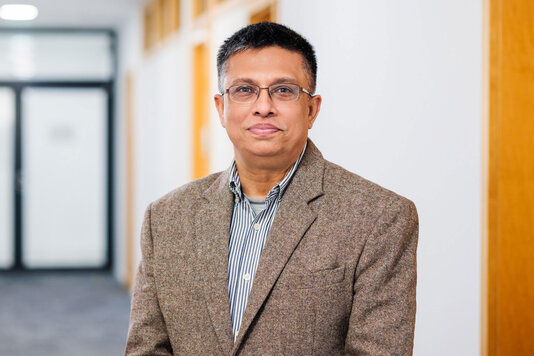
Prof. Rashed Uz Zaman
University of Dhaka (Bangladesh) | International Relations
Rashed Uz Zaman has been a lecturer and researcher at the Department of International Relations of the University of Dhaka, Bangladesh, since 1998. He holds a PhD in strategic studies from the University of Reading, UK. He was an Alexander von Humboldt postdoctoral research fellow at the University of Erfurt, Germany (2009–2011) and a Fulbright Visiting Scholar in the Department of Political Science at Vanderbilt University, USA, in 2012.
Rashed Uz Zaman works on strategic and international security issues and, in recent years, on civil-military relations in Bangladesh. Latest publications include an article titled ‘Defence Diplomacy and Civil-Military Relations in Bangladesh’ in the Journal of Political & Military Sociology (2024) and a chapter on ‘Defence Diplomacy and Civil-Military Relations: The Case of Bangladesh’ in the volume Asian Military Evolutions: Civil Military Relations in Asia (2023).
Rashed Uz Zaman speaks regularly at various international and national educational, defence and administrative institutions including the Defence Services Command & Staff College (DSCSC), the National Defence College (NDC), Bangladesh, the Tribhuvan University, Nepal, the National Defence College, Sri Lanka, the Foreign Service Academy of the Ministry of Foreign Affairs, Bangladesh, and the Public Administration Training Center (BPATC) and Police Staff College, Bangladesh.

Prof. Dennis Dijkzeul
Ruhr University Bochum, Institute for International Law of Peace and Armed Conflict (IFHV) | Conflict and Organisation Research
E-mail: dennis.dijkzeul@rub.de
 Back to FEATURES